Hydrangeas can be a little confusing because the reason they do not bloom often depends on what kind of hydrangea you have. A plant that blooms on last year’s stems needs different care than one that blooms on new growth.
The good news is that most “no blooms” issues are fixable with a few targeted changes. We will walk through the most common causes, how to diagnose them quickly, and what to do next.
Quick tip: If you still have the plant tag, look for the species name (like Hydrangea macrophylla) and the cultivar. If you do not, use leaf shape and bloom shape to narrow it down before you prune.
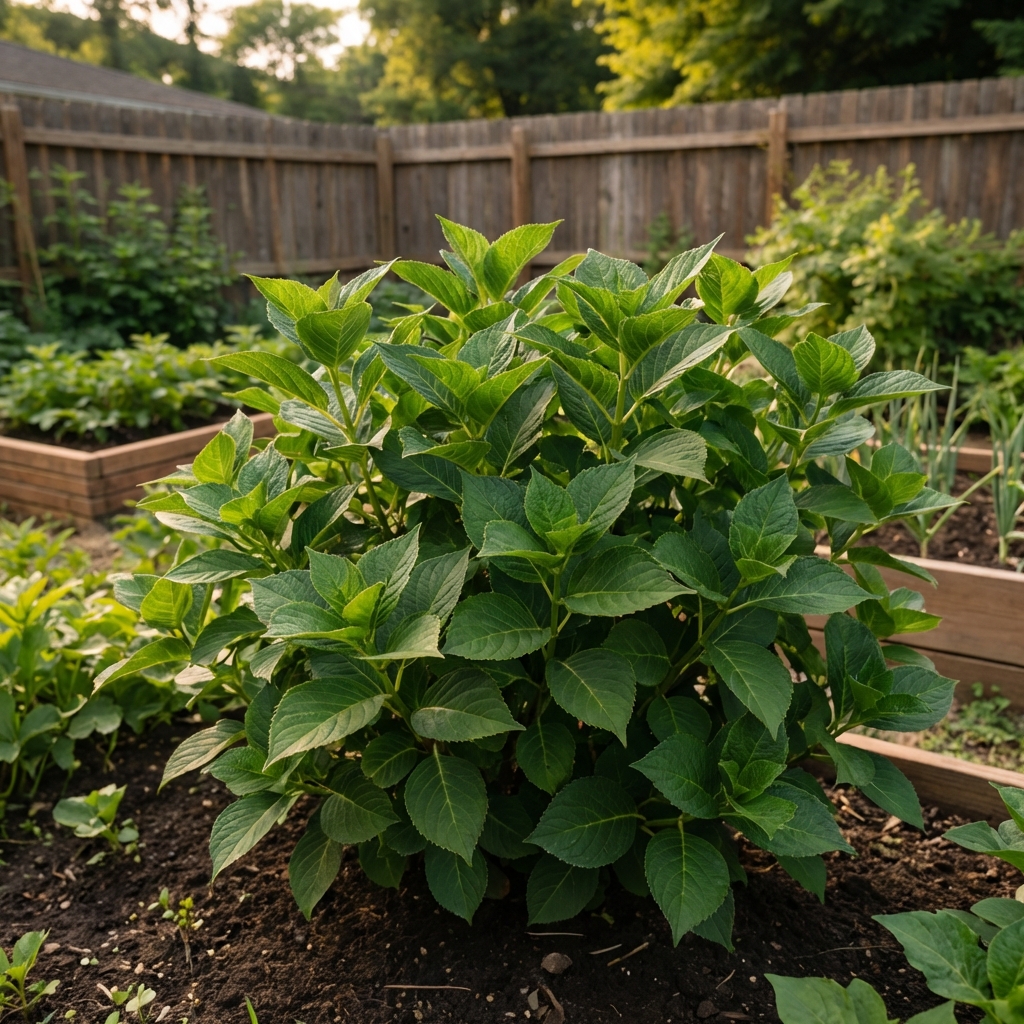
Start here: what type of hydrangea is it?
Before changing anything, identify your hydrangea type. Bloom timing and pruning rules depend on it.
Quick ID tips
- Bigleaf hydrangea (Hydrangea macrophylla): Round mophead or lacecap blooms, big glossy leaves. Common in foundation plantings. Many bloom on old wood, and many newer cultivars are reblooming (old and new wood).
- Oakleaf (Hydrangea quercifolia): Leaves shaped like oak leaves, cone-shaped blooms, often with peeling bark as it matures. Blooms on old wood.
- Panicle (Hydrangea paniculata): Cone-shaped blooms, often white turning pink, more tolerant of sun. Blooms on new wood.
- Smooth (Hydrangea arborescens): Round white or greenish blooms like ‘Annabelle’, softer leaves. Blooms on new wood.
- Mountain hydrangea (Hydrangea serrata): Similar to bigleaf but usually smaller leaves and lacecap blooms. Often blooms on old wood.
If you are not sure, do not prune yet. Keep reading and use the pruning section to avoid cutting off future flowers.
Most common reason: pruning removed the flower buds
This is the number one reason bigleaf and oakleaf hydrangeas skip blooming. Many set their flower buds the year before. If those budded stems get cut, the plant has leaves but no flowers.
Signs this is your issue
- You pruned in fall, winter, or early spring.
- You “shaped it up” after it got big and leggy.
- The plant leafed out normally but produced zero blooms.
Fix
- Bigleaf, mountain, oakleaf: Prune right after flowering, and only lightly. Remove dead wood and a few of the oldest stems at the base if needed. Avoid “shearing” the whole shrub, which removes next year’s buds.
- Panicle, smooth: You can prune in late winter or early spring because they bloom on new growth. They often bloom better with a moderate prune.
Reblooming bigleaf note: Rebloomers are more forgiving because they can also flower on new growth, but timing still matters. Heavy pruning can still reduce the first flush and delay blooms.
If you already pruned at the wrong time, the fix is mostly patience. Focus on good light, steady watering, and skip heavy pruning next season.
Winter damage: buds were killed by cold or late frost
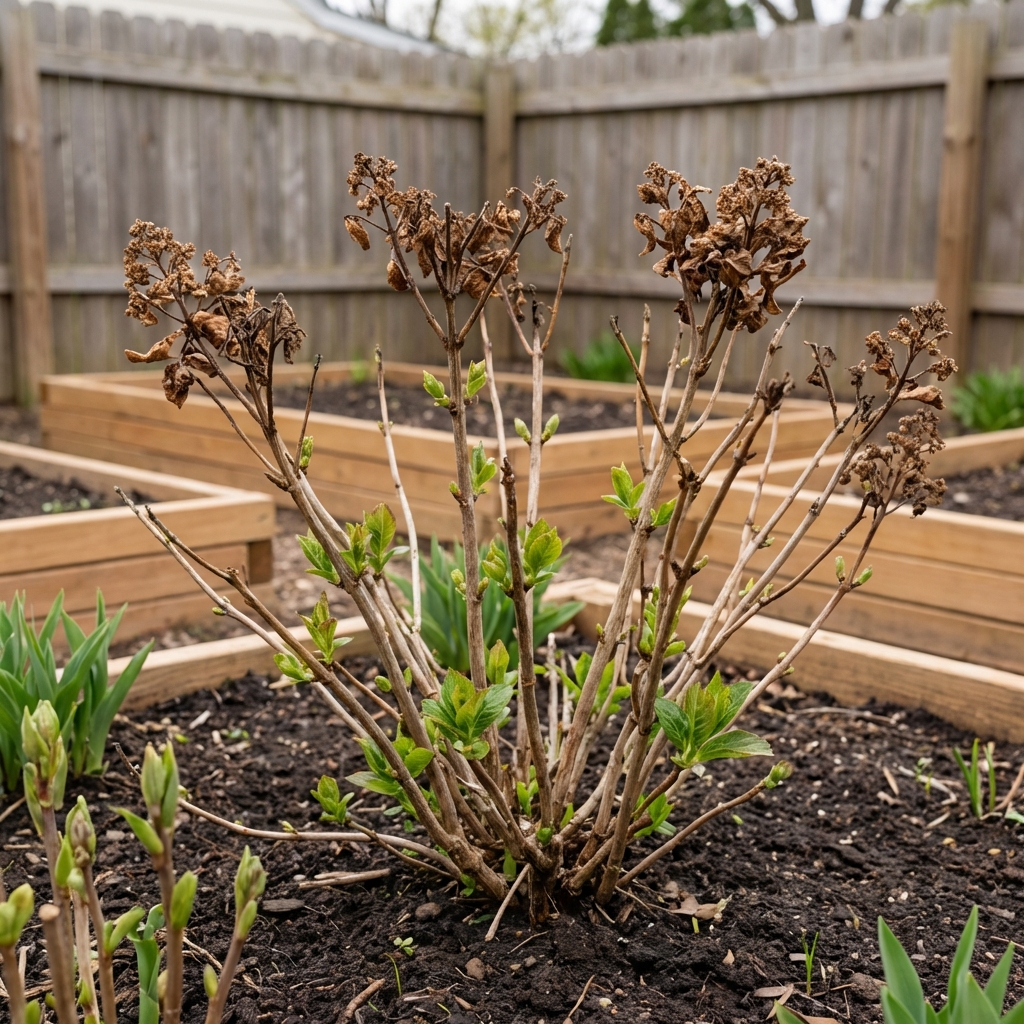
Even if you did not prune, bigleaf and mountain hydrangeas can lose blooms when winter temperatures or a late spring frost kills the buds sitting on last year’s stems. This is especially common when the plant is borderline hardy for your area.
Clues
- Stems look alive at the base but the tips are dead.
- You see leaf growth low on the plant, but little to no growth up top.
- The plant bloomed fine in a milder year, then stopped after a harsh winter.
Fix
- Check your USDA zone and the variety’s hardiness. Some bigleaf types struggle to bloom reliably in colder zones without protection.
- Plant in a sheltered spot. Protection from north winds helps a lot.
- Mulch 2 to 4 inches over the root zone to buffer temperature swings.
- In colder zones, consider wrapping with burlap or using a simple leaf cage in late fall, especially for bigleaf types.
- If your area gets frequent late frosts, avoid early spring pruning that encourages tender new growth.
Not enough sun (or the wrong kind of sun)
Hydrangeas love morning sun and afternoon shade in many climates, but too much shade can mean lots of leaves and few blooms. On the other hand, scorching afternoon sun can stress the plant so badly that it does not set blooms well.
Climate matters: In hot climates, they often need more afternoon shade. In cooler climates, they can take more sun.
What to aim for
- Bigleaf and mountain: 3 to 6 hours of sun, ideally morning sun.
- Oakleaf: Part shade is fine, but deeper shade reduces flowering.
- Panicle: 6+ hours of sun is often best for heavy blooming.
- Smooth: Part sun to sun, depending on heat and moisture.
Fix
Watch the area for a full day and count direct-sun hours. “Bright shade” can still be too dark for blooms, like under a dense maple canopy or in the shadow of a fence all day. If the plant is in heavy shade, the most reliable fix is moving it in early fall or early spring. If moving is not an option, prune nearby shrubs or thin a tree canopy to increase morning light.
Also check competition: Hydrangeas under big trees often fight for water and nutrients. Even if the light seems okay, heavy root competition can reduce blooms.
Too much nitrogen: big leaves, no flowers
High-nitrogen fertilizer pushes leafy growth. Hydrangeas fed like lawns often look lush but bloom poorly.
Common ways this happens
- Lawn fertilizer applied near hydrangeas.
- Frequent feeding with a high first number (like 30-0-0 or 24-8-16).
- High-nitrogen amendments, especially uncomposted manure. (Compost is usually milder, but very rich mixes can still push leafy growth.)
Fix
- Stop using lawn fertilizer within the shrub’s root zone.
- If you fertilize, use a slow-release, balanced shrub fertilizer, or one slightly lower in nitrogen.
- Do not fertilize late in the season. Late feeding can encourage soft growth that winter-kills.
In many average garden soils, hydrangeas do fine with just a spring layer of compost and no extra fertilizer at all.
Drought stress or inconsistent watering
Hydrangeas are not swamp plants, but they are not drought lovers either. If the plant dries out repeatedly, it may focus on survival and skip flowers.
What steady moisture looks like
- Keep soil evenly moist, not waterlogged.
- Check moisture 2 to 4 inches down, not just the surface. Sandy soils dry fast, and clay can look dry on top while staying wet underneath.
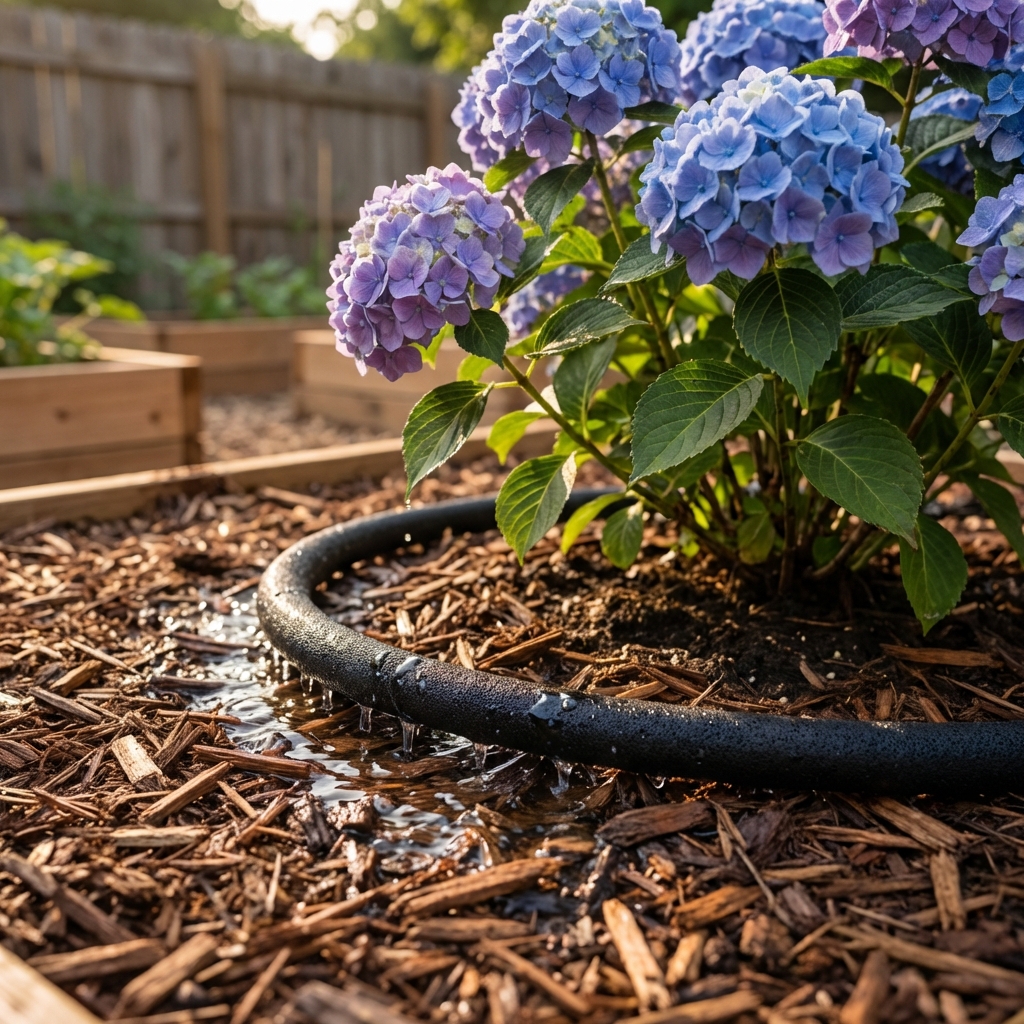
- Mulch to reduce rapid drying and summer heat stress.
- Extra attention during bud formation, typically late spring into early summer.
Fix
Water at the base, not over the leaves. If your soil dries fast, add mulch and consider a soaker hose. If your soil stays soggy, improve drainage because stressed roots also reduce blooming. Root rot from poor drainage can also cause weak growth and fewer flowers.
Browsing: deer or rabbits
Browsing animals can remove the very stems that carry flower buds, especially in winter and early spring when food is scarce.
Clues
- Rabbits: Clean, sharp, angled stem ends that look clipped.
- Deer: Ragged, torn ends and shredded foliage because they pull and tear (they do not leave a neat cut).
- Missing tips on many stems at the same height.
- Budless stems even though the plant seems otherwise healthy.
Fix
- Use fencing or netting during late fall through spring.
- Apply an animal repellent consistently, especially after rain.
- In high-pressure areas, place hydrangeas closer to the house where deer feel less comfortable, or choose more resistant shrubs.
Your hydrangea is too young or was cut back hard
Newly planted hydrangeas often spend their first year building roots. You may get a few blooms, but not always. Also, a hydrangea that was cut back severely might need a season to rebuild flowering wood.
Fix
- Give it a full season with consistent watering and mulch.
- Avoid heavy pruning on old-wood bloomers.
- Do not expect peak flowering until year two or three after planting in many yards.
Reblooming varieties: why they still may not rebloom
Some bigleaf hydrangeas are sold as reblooming, meaning they can bloom on both old and new growth. This helps after winter damage, but it is not magic. Performance can vary by cultivar and climate.
What can stop reblooming
- Too much shade.
- High nitrogen feeding.
- Dry spells during bud set.
- Repeated tip damage from browsing or late frosts.
Think of reblooming as a backup plan, not a guarantee. The same basics still matter.
Other stress that can reduce blooms
Most hydrangeas still bloom with minor leaf issues, but heavy stress can reduce flowering.
- Overcrowding: Dense shrubs packed together reduce light and airflow, and can push growth at the expense of blooms.
- Disease pressure: Severe powdery mildew or leaf spot can weaken the plant over time. Improve airflow, avoid overhead watering, and remove heavily infected leaves at season’s end.
- Poor drainage: Chronic wet feet can lead to root decline and fewer flowers.
Fast troubleshooting checklist
- Did I prune at the wrong time? If yes and it is bigleaf, oakleaf, or mountain, that can explain everything.
- Did I prune too much? Removing lots of older stems at once can reduce flowering, even when timing is correct.
- Were there harsh freezes or late frosts? Bud kill is common on old-wood bloomers.
- How many hours of direct sun? If it is under 3 to 4 hours, shade is likely the culprit.
- Am I feeding the lawn nearby? Nitrogen drift can stop blooms.
- Is it staying evenly moist? Drought stress or soggy roots can both reduce flowering.
- Is something eating it? Look for clipped (rabbit) versus torn (deer) tips.
- Is it hardy here? Bigleaf types in marginal zones may need winter protection to bloom well.
What to do this season if it already missed blooms
If your hydrangea is not blooming right now, here is the most helpful plan that does not risk making it worse:
- Do not do a big prune. Remove only dead wood once you are sure it is dead.
- Water consistently during hot spells.
- Stop high-nitrogen fertilizer.
- Increase morning light if possible.
- Make notes: frost dates, pruning dates, and sunlight hours. That info solves the puzzle faster than guesswork.
Hydrangea pruning timing cheat sheet
Use this as your quick reminder each year. If you are unsure what type you have, remove only dead wood until you can confirm it.
- Bigleaf and mountain: Prune right after flowering, if you prune at all.
- Oakleaf: Prune right after flowering, minimal shaping.
- Panicle: Prune late winter or early spring.
- Smooth: Prune late winter or early spring. Cutting very low can produce big blooms but weaker stems that may flop, so a moderate prune is often a good balance.
If you only remember one thing, remember this: old-wood bloomers should not be pruned in fall or early spring.

Jose Brito
I’m Jose Britto, the writer behind Green Beans N More. I share practical, down-to-earth gardening advice for home growers—whether you’re starting your first raised bed, troubleshooting pests, improving soil, or figuring out what to plant next. My focus is simple: clear tips you can actually use, realistic expectations, and methods that work in real backyards (not just in perfect conditions). If you like straightforward guidance and learning as you go, you’re in the right place.