Bed bugs are sneaky. A lot of people do not realize they have them until the problem is already established. The good news is there are a handful of very specific symptoms you can look for, and you can confirm them with simple, low-tox steps before you start throwing chemicals around.
Below are the most common symptoms of bed bugs, what they actually mean, and quick organic tips you can do today to get clarity and start controlling the issue.
First, what counts as a bed bug symptom?
A “symptom” is anything that suggests bed bugs might be present. Some symptoms show up on your body. Others show up on your bedding, furniture, or walls. The tricky part is that a single symptom alone can be misleading.
The most reliable approach is to look for a cluster of signs that all point in the same direction.
- Body symptoms: itchy welts, rashes, swelling, sleep disruption
- Home symptoms: black dots, rusty smears, shed skins, eggs, live bugs, musty odor
What bed bugs look like (quick ID)
If you can spot the bug, everything gets easier. Adult bed bugs are small, flat, and oval, about the size of an apple seed. They are usually reddish-brown, and after feeding they look darker and more swollen.
- Nymphs (young bed bugs): smaller and paler, sometimes almost translucent
- Eggs: tiny, white, and often cemented in place in cracks and seams
Quick tip: If you find a suspicious bug, trap it in tape or a zip-top bag (or take a clear close-up photo next to a coin) for confirmation.
Skin symptoms: bites, welts, and rashes
1) Itchy bites that appear after sleeping
Bed bug bites often show up in the morning or within a day. They can look like small red bumps, larger swollen welts, or a rashy patch depending on your skin.
Quick tip: Do not assume every bite is bed bugs. Mosquitoes, fleas, chiggers, and even allergic reactions can look similar. Use bites as a clue, not proof.
2) Clusters or lines of bites
A common pattern is several bites close together, sometimes in a rough line. People often describe this as “breakfast, lunch, and dinner,” but real life is messier than that. Still, multiple bites in the same area after sleeping is a classic symptom.
Quick tip: Take a clear photo of the bites each day for 3 days. Patterns help you and any pest pro you call later.
3) Not everyone reacts
One of the most confusing symptoms is when one person is covered in bites and another has none. Some people have little to no reaction, especially at first.
Quick tip: If one household member has “mystery bites,” inspect the bed area anyway. Lack of bites is not a clean bill of health.

Bedroom symptoms: what to look for on beds and furniture
4) Black dots like pepper (fecal spots)
These look like tiny black ink dots on:
- mattress seams and piping
- box spring edges
- bed frame joints
- headboards, especially cracks and screw holes
If you dab a suspected spot with a slightly damp cotton swab, it may smear like ink.
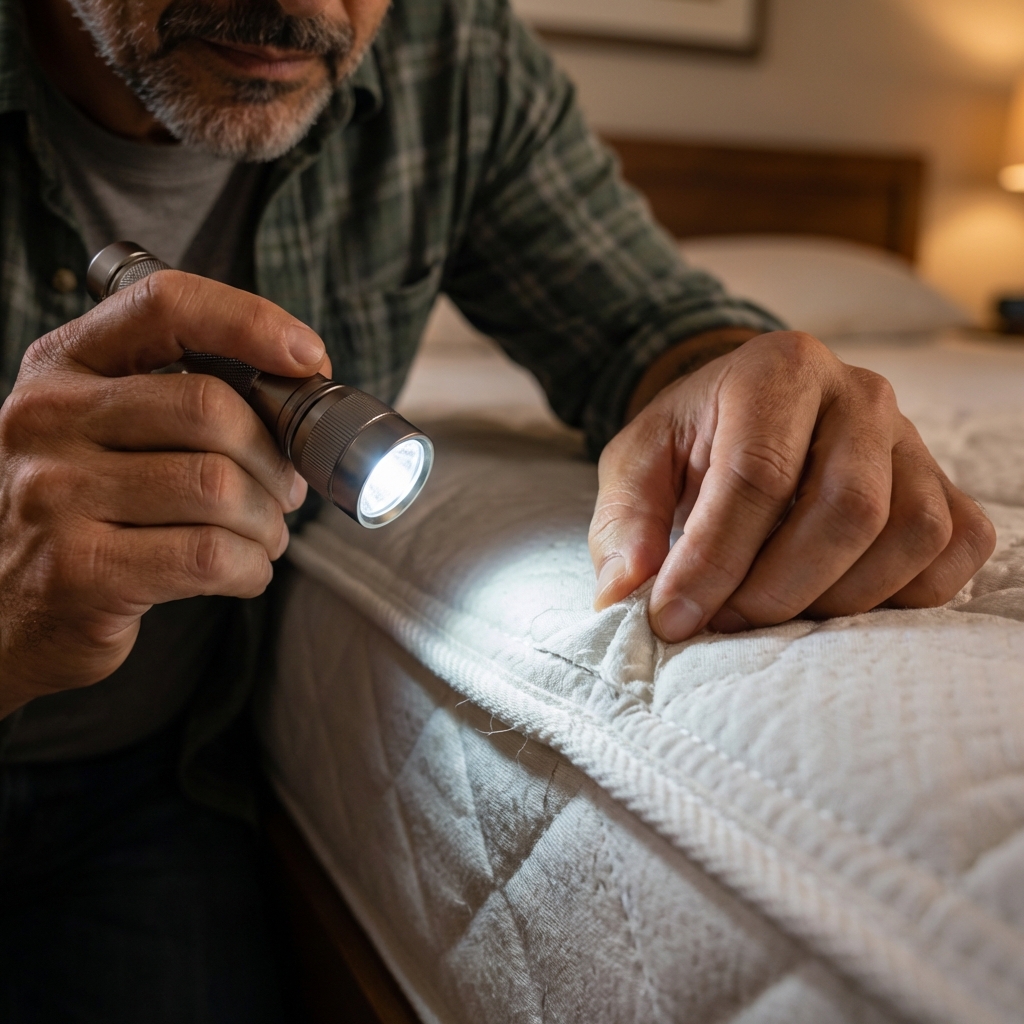
Quick tip (organic): Use a flashlight and a credit card to gently open seams and folds. Do not rip fabric. You are inspecting, not destroying the mattress.
5) Rusty or reddish smears on sheets
These can be crushed bugs or blood spots. They often appear near where you sleep, especially along edges.
Quick tip: Put clean white sheets on for a few nights. It makes spotting new stains easier.
6) Shed skins and “shells”
Bed bugs molt as they grow. You might find tan, papery skins tucked in corners, seams, or around the bed frame.
Quick tip: Check behind the headboard. It is a favorite hiding spot and often ignored.
7) Tiny white eggs or eggshells
Eggs are small, white, and often laid in hidden cracks where they are cemented to the surface. Seeing eggs usually means the infestation is established.
Quick tip: If you find eggs, move quickly to containment steps below. Organic control works best early and with consistency.
Smell symptoms: the “musty” clue
Some infestations produce a musty, sweet, stale odor. It is usually more noticeable in larger infestations. People describe it like:
- old wet towels
- mildewy clothes
- sweet, heavy must
Quick tip: Odor alone is not enough to diagnose bed bugs, but if you notice it plus stains or bites, treat that as a strong signal to inspect closely.
Where to inspect in 10 minutes (high yield spots)
If you want fast answers, focus where bed bugs actually like to hide, which is close to where people sleep.
- Mattress seams: especially near the head of the bed
- Box spring: underside fabric, corners, staples, and wood joints
- Bed frame: screw holes, joints, cracks, and slats
- Headboard: back side and mounting points
- Nightstand: drawer corners and underside
- Baseboards: where the bed touches the wall
Tools that help: flashlight, thin card, disposable gloves, zip-top bags for samples, and tape to trap tiny evidence.
Quick tip: Avoid carrying loose bedding, pillows, or clothes to other rooms while you inspect. Bag items first so you do not accidentally spread hitchhikers.

Organic quick tips: what to do right now
Low-tox bed bug control is all about heat, physical removal, sealing, and monitoring. Sprays alone usually disappoint, especially if they are mild.
1) Contain the bed (tonight)
- Pull the bed 6 to 12 inches away from the wall.
- Make sure bedding does not drape onto the floor.
- Declutter around the bed so you can inspect and clean.
2) Heat treat your bedding and clothes
Heat is one of the most reliable non-chemical tools. In many cases, the dryer on high heat is what does the killing.
- Wash and dry bedding on the hottest safe settings.
- Use the dryer even for items that cannot be washed. Dry on high for at least 30 minutes after items are fully hot, and longer for bulky loads and thick fabrics.
- Bag clean items so they stay clean.
Quick tip: Move items in sealed bags from the bedroom to the laundry area to avoid dropping hitchhikers through the house.
3) Vacuum the right way
Vacuuming removes bugs, skins, and eggs, but only if you do it with intention.
- Vacuum mattress seams, bed frame joints, and baseboards.
- Use the crevice tool and go slow.
- If you have one, use a vacuum with a HEPA filter to help contain fine particles.
- Immediately empty the vacuum into a sealed bag and take it outside.
Quick tip: Avoid aggressive brushing that can flick bugs or debris into the room. If you have a bagless vacuum, wipe the canister with hot soapy water after emptying. Let it dry fully.
4) Use mattress and box spring encasements
Quality bed bug encasements trap bugs inside and remove hiding places outside.
- Choose encasements labeled for bed bugs with a strong zipper and zipper lock.
- Keep them on long-term, because bed bugs can survive for several months without feeding (in cool conditions, sometimes longer).
5) Add interceptors under bed legs
Interceptor cups (pitfall traps) catch bed bugs traveling up or down the bed. They are non-toxic and also act as a monitoring tool.
Quick tip: Interceptors are most useful after you isolate the bed from walls and floor-touching blankets.
6) Consider food-grade diatomaceous earth carefully
Food-grade diatomaceous earth can help in cracks and voids, but more is not better. A visible pile may cause bugs to go around it, and airborne dust is not something you want to breathe.
- Apply a very light dusting in cracks, not on open surfaces.
- Keep it away from kids and pets, and avoid using it where it can be kicked up.
- Wear a well-fitting mask and avoid creating airborne dust during application and cleanup.
Important: Never use pool-grade diatomaceous earth indoors.
7) Skip foggers and bug bombs
Bug bombs and foggers can scatter bed bugs deeper into hiding spots and rarely solve the problem on their own.
Quick tip: If you are trying to keep things low-tox, stick to heat, vacuuming, sealing, and targeted products used carefully, not room-wide fogging.
Common look-alikes (do not get tricked)
Before you commit to a full bed bug plan, rule out these common imposters.
- Fleas: bites often around ankles, and pets may scratch more
- Mosquitoes: more random bites, often after evening exposure
- Carpet beetles: can cause itchy rashes from hairs, but do not bite
- Allergies: new detergent, lotion, or bedding can irritate skin
Quick tip: If you can find physical evidence like spots, skins, eggs, or a live bug, you move from guessing to knowing.
When to call a professional
Organic and low-tox steps can make a big dent early, but there are times you should bring in help.
- You see live bugs in multiple rooms.
- You find eggs or lots of fecal spotting.
- Bites continue after 1 to 2 weeks of consistent heat, vacuuming, and monitoring.
- Someone in the home has severe allergic reactions or infections from scratching.
If you hire a pro, ask about IPM (integrated pest management). The best companies combine targeted treatments with monitoring and prevention, instead of fogging everything and hoping for the best.
If you rent
Tell your landlord or property manager early. Bed bugs can become a building issue, and early reporting usually leads to faster, more coordinated treatment.
Quick checklist you can save
- Inspect mattress seams and box spring edges with a flashlight
- Look for black pepper-like spots and rusty smears
- Check headboard cracks and bed frame joints
- Heat dry bedding and bag clean items
- Vacuum seams and cracks, then seal and discard vacuum waste outside
- Isolate the bed and use interceptors to monitor
- Use encasements to reduce hiding spots
If you want the fastest progress, focus on two things: confirm the signs with physical evidence, and break the bed bug routine with heat, containment, and monitoring.

Jose Brito
I’m Jose Britto, the writer behind Green Beans N More. I share practical, down-to-earth gardening advice for home growers—whether you’re starting your first raised bed, troubleshooting pests, improving soil, or figuring out what to plant next. My focus is simple: clear tips you can actually use, realistic expectations, and methods that work in real backyards (not just in perfect conditions). If you like straightforward guidance and learning as you go, you’re in the right place.