Ants are tiny, organized, and stubborn. When they show up in your kitchen, patio, or garden beds, it can feel like they popped up overnight. The good news is you can handle most ant problems with natural tools if you use them the right way. The key is to pick a method that matches what the ants are doing: foraging for crumbs, building a nest near your foundation, or protecting aphids on your plants.
This page covers natural ant killer options that are simple, realistic, and effective for typical home situations. You will also learn when a “natural” approach needs a little patience, and when it is time to change tactics.
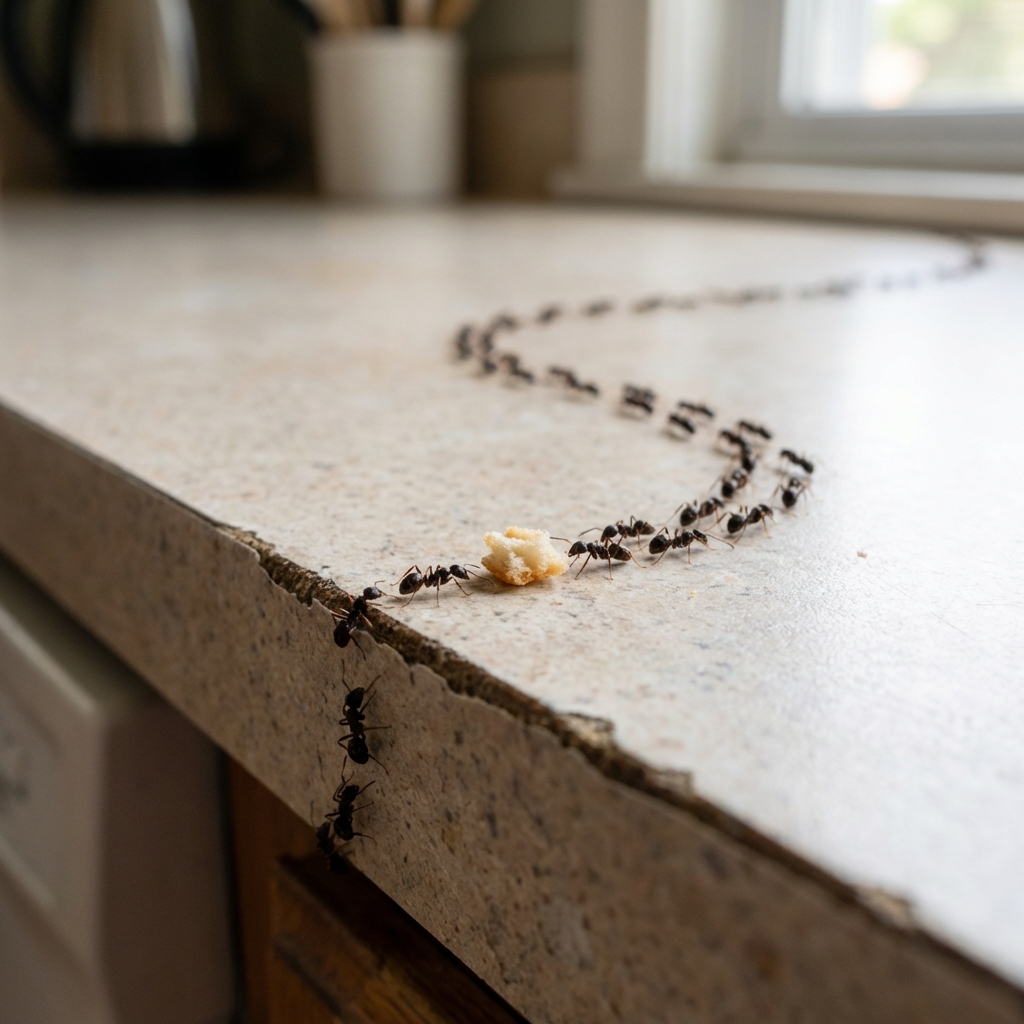
Know what you are fighting
Before you sprinkle anything or set out bait, take two minutes to observe. It saves a lot of trial and error.
Foragers vs. the colony
The ants you see are usually foragers. Killing foragers helps in the moment, but it rarely fixes the problem long-term. To actually reduce the population, you need to hit the colony by using baits or by finding and treating the nest outdoors.
Follow the trail
Ants leave scent trails. If you wipe up the visible ants but do not remove the trail and the food source, they often come right back.
- Indoors: trails often lead to a gap at baseboards, under the sink, around a window, or behind appliances.
- Outdoors: look for trails along foundations, edging, pavers, and irrigation lines.
Quick bait clue (optional, but useful)
If the ants are swarming sugar, syrup, or fruit, start with a sweet bait. If they are after pet food, grease, or meat drippings, start with a protein or grease bait. Some species also shift preferences seasonally, so switching bait type can be the fastest fix.
Natural ant killers that work best
Here are the most reliable natural approaches for typical home and backyard situations. If you want a fast knockdown, choose a contact method. If you want long-term control, choose a bait or nest-focused method.
1) Borax or boric acid bait (best overall for colony control)
This is one of the most effective “natural-ish” solutions because it targets the colony. Borax and boric acid are minerals, and they work best when they are slow-acting so ants can carry it back and share it.
Key point: stronger is not always better. If the mix is too concentrated, it can kill foragers too fast or reduce feeding, which can make the bait less effective.
How to do it (start low, adjust if needed):
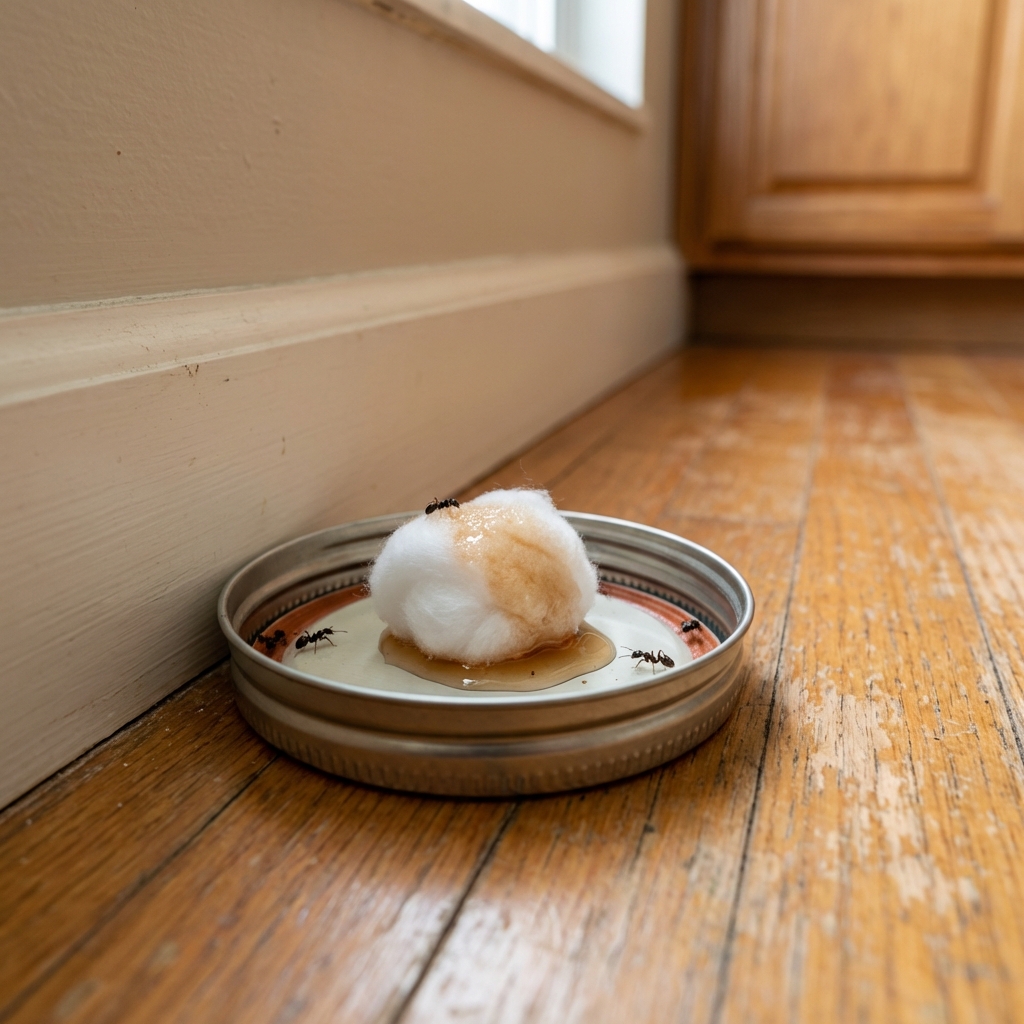
- Sweet liquid bait (common for many household ants): aim for about 0.5 to 2% boric acid or borax in a sugar-water bait. A practical way to do this at home is to mix sugar into warm water to make a light syrup, then add a small amount of borax or boric acid so the solution still tastes sweet (not bitter). Soak cotton balls and place them in shallow lids.
- Protein or grease bait: mix a tiny amount of borax or boric acid into peanut butter or a greasy bait. Use only a light dusting so ants keep feeding and sharing.
Placement tips: Put baits right along the trail, but not where pets or kids can access them. Keep bait off food-prep surfaces. Use a jar with small holes in the lid, a covered bait station, or a container you can label and tape in place so it does not tip or drip. Wash hands after handling bait stations.
What to expect: You may see more ants at first. That is usually a good sign. Activity often drops in 3 to 10 days, but larger colonies can take 2 weeks or longer. Keep bait available consistently and refresh it if it dries out or gets dusty.
Important: Do not spray vinegar or essential oils on the trail right next to your bait. Strong odors can disrupt feeding and slow the colony hit.
2) Food-grade diatomaceous earth (best for cracks and dry entry points)
Food-grade diatomaceous earth, often called DE, is a fine powder made from fossilized algae. It works mechanically by abrasion and dehydration, which leads insects to dry out. It needs to be dry to work.
Where it shines:
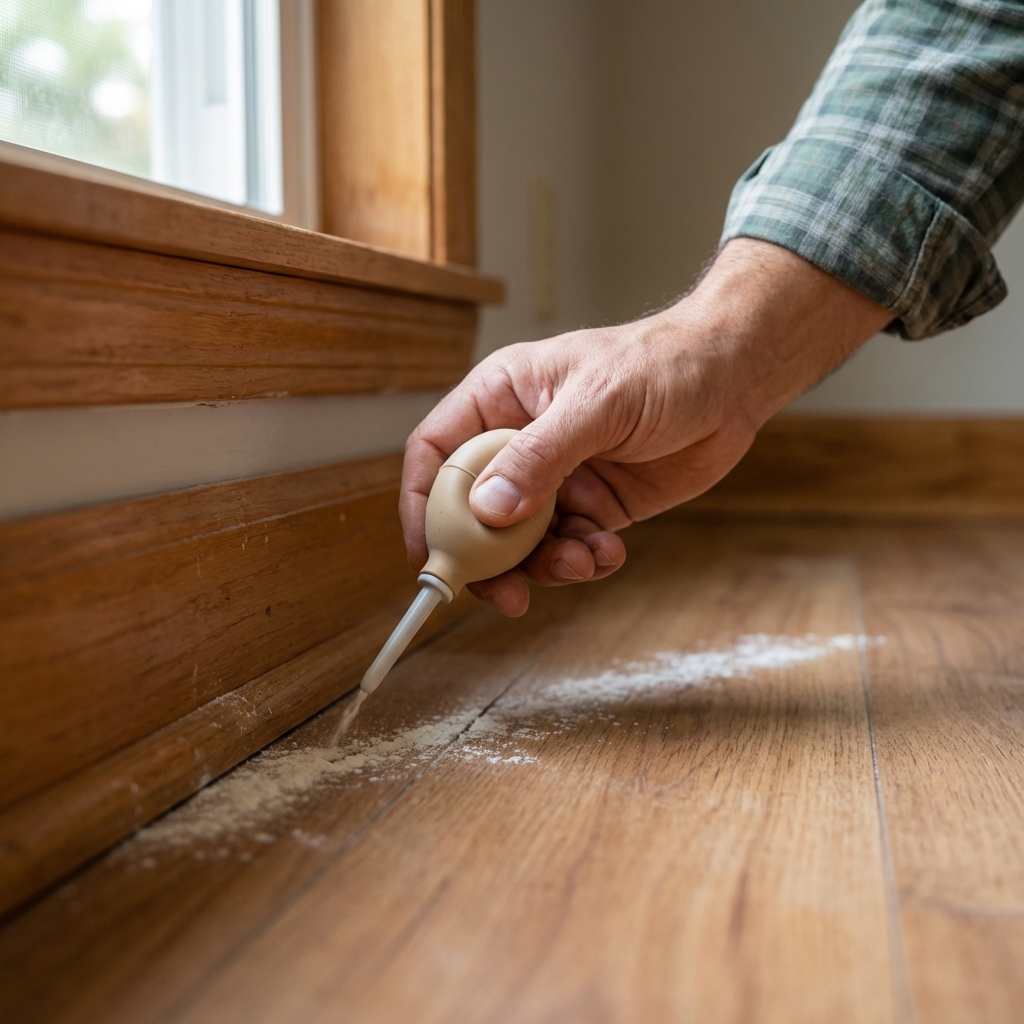
- Under sinks, behind appliances, and along baseboards (lightly applied)
- In cracks in patios and along foundation edges
- Around ant nests in dry soil (reapply after rain)
How to apply: Use a duster or a spoon and make a thin, barely visible layer. Ants avoid thick piles.
Safety note: Use food-grade only. Avoid breathing the dust. Keep it out of eyes.
3) Vinegar and soapy water (best for trail cleanup and quick knockdown)
Vinegar does not usually wipe out a colony, but it is excellent for removing scent trails and discouraging re-travel. Dish soap in water is a good contact killer for the ants you can see.
Simple trail wipe:
- Mix equal parts white vinegar and water in a spray bottle.
- Spray the trail, then wipe thoroughly.
Quick ant spray:
- Add a few drops of unscented dish soap to a spray bottle of water.
- Spray directly on ants, then wipe.
Heads up: Vinegar can etch some natural stone surfaces. Test a small spot first.
4) Boiling water (best for small, visible outdoor nests)
If you can clearly see a nest opening in a safe location, boiling water is a simple, chemical-free knockdown. It works best for shallow nests in open soil.
How to do it safely:
- Pour slowly into the nest entrance early morning or evening when more ants are home.
- Use caution around plants. Boiling water can damage roots and nearby stems.
Reality check: boiling water rarely eliminates established colonies, especially if the nest is deep or has multiple entrances. If you see activity again in a day or two, switch to baiting or repeated treatments.
5) Baking soda and sugar (sometimes helps, less consistent)
This is popular online, but results vary. Some ants may not take enough of it, and it does not always spread through the colony well.
If you try it: Mix equal parts powdered sugar and baking soda. Place in shallow lids along trails and keep it dry.
If you want the most reliable natural bait approach, borax or boric acid is typically stronger.
6) Essential oils (best as a short-term deterrent)
Peppermint, clove, tea tree, and citrus oils can disrupt ant trails and deter scouting. They are usually not enough by themselves for a strong infestation.
Use carefully: Essential oils are concentrated. Always dilute them (follow product guidance) and do not apply them directly to pets. Be cautious with oils around pets, especially cats, and avoid using them where pets lick, groom, or sleep. Some oils can also stain surfaces, so spot-test first.
Simple indoor plan
If ants are in the house, you want to do three things in the right order: remove food, erase trails, then bait or block the entry.
Step 1: Remove the reason they are there
- Wipe counters with warm soapy water.
- Vacuum edges and corners where crumbs collect.
- Store sugar, cereal, pet food, and snacks in sealed containers.
- Rinse recyclables and take out trash regularly.
Step 2: Clean the trail
Use a vinegar and water wipe or a soapy wipe along the path. This breaks the scent trail so new foragers do not automatically follow the same route.
Step 3: Choose bait or barrier
- If you want long-term control: set out a borax or boric acid bait near the trail but away from pets and kids, in a secured container.
- If the problem is minor: DE in cracks and sealing gaps can be enough.
Simple yard and garden plan
Outdoor ants are not always a problem. Many are beneficial scavengers and help aerate soil. The goal is control, not necessarily total eradication.
When ants outside matter
- They are building mounds in raised beds and drying out seedlings.
- They are getting into outdoor eating areas.
- You see ants protecting aphids on vegetables or roses, which can worsen plant damage.
Target the cause: ants and aphids
If ants are clustering on tender growth, check for aphids. Ants often protect honeydew-producing insects like aphids.
- Blast aphids off with a strong stream of water.
- Use insecticidal soap if needed, following the label.
- Once aphids drop, ant activity often decreases on its own.
For nests near patios or walkways
- Use boiling water on clear nest entrances in open soil (best for small or shallow nests).
- Dust DE lightly into cracks and dry voids where ants travel.
- Reduce moisture issues around foundations and hoses, since some ants prefer damp sites.
Prevention that sticks
Natural ant control works best when you combine killing with prevention. Otherwise, you end up treating the same trail every week.
Seal common entry points
- Caulk gaps where baseboards meet walls, and around plumbing under sinks.
- Check window screens and door sweeps.
- Patch cracks in foundations and around exterior vents if accessible.
Remove outdoor “ant highways”
- Trim branches that touch the house, especially near the kitchen.
- Keep mulch from piling directly against the foundation.
- Store firewood away from the home and off the ground.
Control moisture
Fix dripping outdoor spigots, adjust irrigation to avoid constant wet zones, and clean gutters so water is not pooling near the foundation.
What not to do
- Do not spray strong-smelling deterrents right next to bait. It can stop ants from taking it back to the colony.
- Do not lay thick lines of DE. A light dusting works better because ants will walk through it.
- Do not ignore food sources like pet bowls, sticky spots, or recycling drips. You will keep feeding the trail.
- Do not assume outdoor ants always need treatment. If they are not harming plants or invading the home, they can be part of a healthy yard ecosystem.
Kid and pet safety notes
“Natural” does not automatically mean harmless. Use extra caution with baits and powders.
- Keep borax or boric acid baits out of reach, in a closed station, and clearly placed so they cannot be knocked over.
- Do not place baits on food-prep surfaces. Avoid drips and crumbs from bait mixtures.
- Use food-grade DE and avoid airborne dust during application.
- Be cautious with essential oils around pets, especially cats, and do not apply them where pets lick or groom.
If you have a heavy infestation and you cannot place baits safely, focus on exclusion, sanitation, and outdoor nest control first.
When to call a pro
Natural methods solve most everyday ant problems, but some situations deserve a professional inspection.
- Possible carpenter ants: large ants, ants coming from damp wood, or piles of sawdust-like frass. Carpenter ants can signal a moisture issue and may nest in walls or structural wood.
- Recurring indoor trails: you baited correctly for 2 to 3 weeks, cleaned, sealed obvious gaps, and they still keep coming back.
- Nests in walls or hard-to-reach areas: especially if you hear rustling in voids or see ants emerging from outlets, trim, or ceiling cracks.
Quick troubleshooting
The ants ignore my bait
- Switch from sweet to protein-based (or the other way around).
- Lower the borax or boric acid concentration so it is more attractive.
- Place the bait closer to the trail and away from bright light or heavy traffic.
I still see ants after a week
- Keep bait out consistently for 10 to 14 days, and longer for large colonies.
- Look for a second entry point or a second colony.
- Seal gaps after activity drops, not while ants are still heavily trailing through that crack.
Ants are in my raised bed
- Check soil moisture. Very dry beds can encourage nesting.
- Knock down small nests with a deep watering, then mulch lightly to stabilize moisture.
- If they are protecting aphids, address the aphids first.
Bottom line
If you want the simplest natural approach that gives real results, start with sanitation + trail cleanup, then use a low-concentration borax or boric acid bait for colony control. Add DE in cracks and sealing entry points to prevent the next round. In the garden, only treat when ants are causing a real problem, and always check for aphids before you blame the ants.

Jose Brito
I’m Jose Britto, the writer behind Green Beans N More. I share practical, down-to-earth gardening advice for home growers—whether you’re starting your first raised bed, troubleshooting pests, improving soil, or figuring out what to plant next. My focus is simple: clear tips you can actually use, realistic expectations, and methods that work in real backyards (not just in perfect conditions). If you like straightforward guidance and learning as you go, you’re in the right place.