Mealybugs are one of those pests that seem small until you realize they can be everywhere: tucked in leaf joints, clustered on stems, and hiding at the soil line like little bits of cotton. The good news is you do not need fancy products to beat them. You need a simple, repeatable routine and a little patience.
This guide walks you through how to identify mealybugs, what to do today, and how to keep them from coming back.
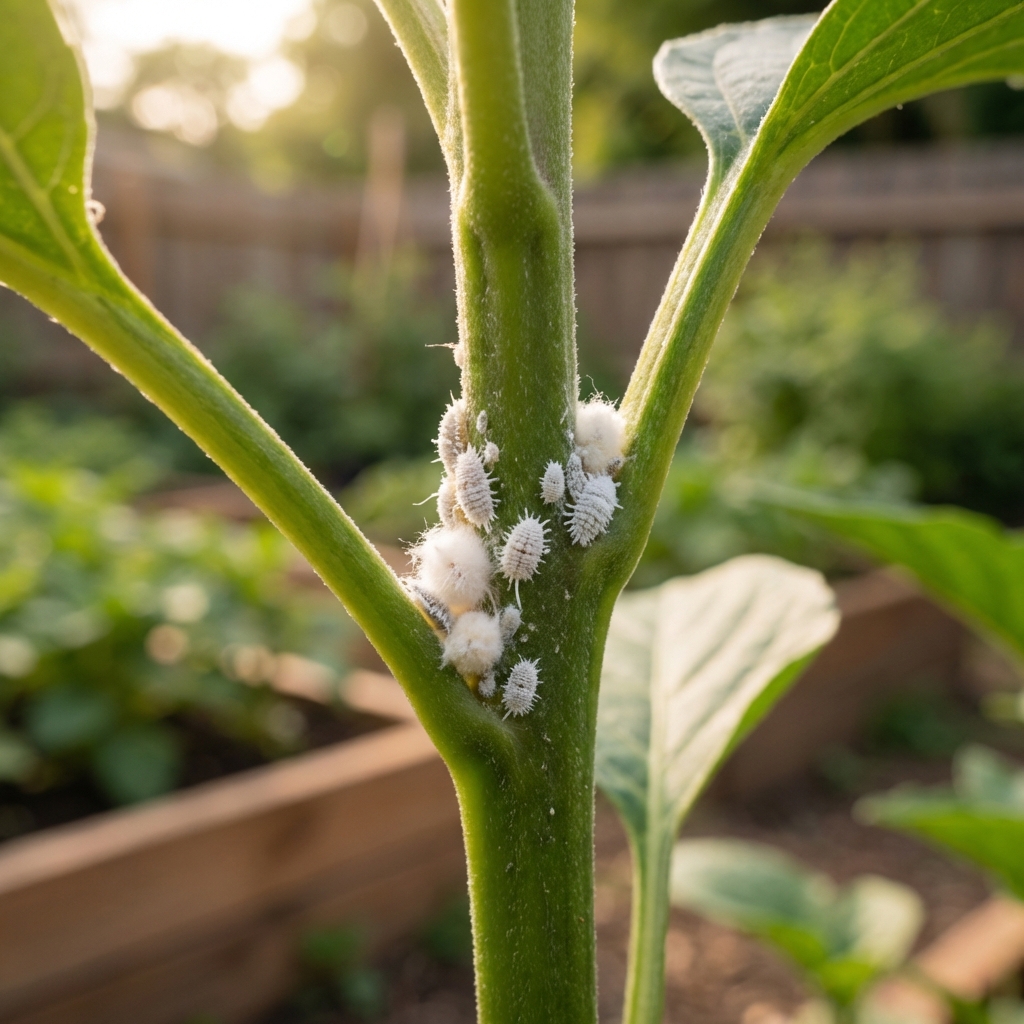
Quick ID: Is it really mealybugs?
Mealybugs are soft-bodied insects covered in a waxy, white coating. They often look like tiny cotton tufts or white lint stuck to your plant. They feed by sucking sap, which weakens the plant and can cause yellowing, leaf drop, and stunted growth.
Common signs
- White cottony clusters in leaf axils, on stems, under leaves, and around the crown.
- Sticky residue (honeydew) on leaves or nearby surfaces.
- Ant activity outdoors, since ants farm mealybugs for honeydew.
- Sooty mold, a black film that can grow on the honeydew.
- Slow decline even when watering and light seem fine.
If you see white fuzz but it wipes away like dust and there are no insects, it could be mineral residue or powdery mildew. Mildew tends to look more uniform or patchy across the leaf surface. Mealybugs usually show up as discrete tufts in clusters. They smear when pressed, and you can often spot the bug body underneath.
Do this first
1) Isolate the plant
Mealybugs spread easily plant-to-plant, especially on indoor collections where leaves touch. Move the plant away from others immediately.
2) Inspect nearby plants
Check plants within a few feet, and anything that shares watering tools, drip trays, or contact on shelves. Focus on new growth, leaf joints, and the underside of leaves.
3) Protect surfaces and tools
Honeydew is sticky and can make a mess indoors. Put the plant on a washable tray and wipe nearby shelves or windowsills. Wash your hands and tools after working on an infested plant so you do not carry crawlers to the next one.
4) Decide if you will repot
Some species are above-ground feeders, but others can live in the potting mix (root mealybugs). If you see white fuzzy buildup at the soil line, the plant keeps rebounding with bugs after treatment, or growth stays weak, plan on a repot with fresh mix.
Simple treatment plan
Mealybugs have a waxy coating that protects them from many sprays. That is why the most reliable approach is a combination: physically remove what you can, then use a spray that reaches the ones you missed, then repeat on schedule.
Step 1: Rinse and remove clusters
For sturdy plants, take them to a sink, shower, or outside and rinse with a firm stream of water. Aim into leaf joints and under leaves. This does not solve the problem alone, but it removes a lot of pests fast.

Step 2: Spot-treat with 70% alcohol
This is the classic low-cost mealybug fix. Dip a cotton swab or cotton pad in 70% isopropyl alcohol and dab each visible bug and cottony cluster. They should darken or dissolve quickly.
- Best for: houseplants, small infestations, and detailed cleanup in tight spaces.
- Tip: Use a small paintbrush dipped in alcohol to reach crevices.
- Caution: Test on a small area first. Avoid very tender new growth. Some plants can burn even with careful spot treatment (ferns, delicate-leaved plants, and some succulents and hoyas). Do not treat in hot, direct sun.
Step 3: Follow with insecticidal soap
After wiping, spray the plant thoroughly. You want full coverage: stems, leaf undersides, petioles, and the crown. Insecticidal soap works by contacting and disrupting soft-bodied insects.
- Use a labeled insecticidal soap when possible, since it is formulated to be plant-safe when used as directed.
- If you choose a DIY option, be conservative and product-aware. Use a true soap (such as a pure liquid castile soap), not a detergent or degreasing dish liquid. Start mild (for example, 1/2 to 1 teaspoon per quart of water), spot test, and rinse the plant if you see leaf stress.
- Let the spray sit for the label time, then lightly rinse if the product recommends it or if your plant is sensitive.
Step 4: Repeat on a schedule
One treatment almost never finishes mealybugs. Eggs and hidden juveniles keep the cycle going.
- Repeat every 5 to 7 days (or per label) until you stop seeing new bugs. Plan on 3 to 6 weeks depending on temperature, plant size, and how hidden the infestation is.
- Keep inspecting in between, and swab any stragglers with alcohol.
Important: Always follow product labels and local regulations, especially for outdoor use and any plant near edibles.
Neem and horticultural oil
Oils can help by coating pests and disrupting feeding. Some neem products also contain azadirachtin, which can act as an insect growth regulator. Not all “neem oil” products have meaningful azadirachtin levels, so check the label if you want that added effect. Oils can work well, but they are not always the fastest and they can burn leaves if used incorrectly.
When oil makes sense
- Outdoor ornamentals where full-plant coverage is easier.
- When you are already doing repeat treatments and want extra support.
- On thicker-leaved plants that tolerate sprays better.
Oil safety basics
- Spray in the early morning or evening, not in hot sun.
- Follow label rates. More is not better.
- Do a spot test and wait 24 hours.
- Do not combine products unless the label says it is okay.
If it returns: root mealybugs
Root mealybugs are sneaky. You may not see much on the leaves, but the plant stays stressed. You might notice white fuzzy material around drainage holes or at the soil surface.
Repotting steps that help
- Remove the plant from the pot and gently shake off as much mix as you can.
- Rinse roots with lukewarm water to dislodge pests.
- Discard old potting mix. Do not reuse it.
- Wash the pot with hot, soapy water. If the pot is sturdy, a brief soak in a diluted bleach solution (about 1 part bleach to 9 parts water) then a thorough rinse can help.
- Replant in fresh, clean mix and isolate the plant during follow-up treatments.
If the infestation is severe, repotting alone may not fully solve it. In some regions and situations, a labeled systemic insecticide or repeated soil drenches are used as a last resort. If you go that route, follow the label exactly and avoid use on flowering outdoor plants where pollinators can be exposed.

Outdoor plants: what changes
Outdoors, you have two extra factors: weather and beneficial insects. Often, a small mealybug population gets controlled naturally by lady beetles, lacewings, and parasitic wasps. The goal is to step in without wiping out the good guys.
Smart outdoor approach
- Prune heavily infested tips and bag them.
- Blast with water first, then use soap or oil if needed.
- Control ants with barriers or baits, since ants protect mealybugs.
- Spray in the evening to reduce impact on pollinators.
Prevention that works
Mealybugs love stressed plants and crowded collections. Prevention is mostly about catching them early and not giving them an easy ride from plant to plant.
Simple habits
- Quarantine new plants for 2 weeks and inspect twice.
- Check hidden spots: leaf joints, undersides, new growth, and the soil line.
- Do not over-fertilize. Soft, lush growth can attract sap-suckers.
- Improve airflow and avoid leaves constantly touching.
- Wipe leaves occasionally with plain water or a damp cloth to remove dust and early pests.
Mealybugs FAQ
How long does it take to get rid of mealybugs?
With consistent treatments every 5 to 7 days, many infestations improve fast in 1 to 2 weeks, but full control often takes 3 to 6 weeks. The key is repeating to break the life cycle.
Do I need to throw the plant away?
Not usually. Consider tossing a plant if it is severely infested, declining quickly, and easy to replace, or if you have a large collection and cannot risk spread. Otherwise, isolate and treat.
Can I use rubbing alcohol spray on the whole plant?
Some gardeners use diluted alcohol sprays, but plant sensitivity varies a lot. The safer simple solution is targeted dabbing with 70% alcohol plus a follow-up soap spray. Always spot test first, and avoid very tender new growth.
Why do mealybugs keep coming back?
Most repeat infestations come from missed hiding spots, untreated nearby plants, or root mealybugs in the potting mix. Isolation plus a repeat schedule fixes most of that.
Quick checklist
- Isolate the plant and inspect neighbors.
- Rinse the plant (if it can handle it).
- Dab visible mealybugs with 70% isopropyl alcohol.
- Spray with insecticidal soap, full coverage.
- Repeat every 5 to 7 days (or per label) for 3 to 6 weeks.
- If it returns, check the roots and consider repotting.
Want a plant-specific game plan? Leave a comment below with the plant name and whether it is indoors or outdoors, and I will point you toward the gentlest option that still gets results.

Jose Brito
I’m Jose Britto, the writer behind Green Beans N More. I share practical, down-to-earth gardening advice for home growers—whether you’re starting your first raised bed, troubleshooting pests, improving soil, or figuring out what to plant next. My focus is simple: clear tips you can actually use, realistic expectations, and methods that work in real backyards (not just in perfect conditions). If you like straightforward guidance and learning as you go, you’re in the right place.