Kalanchoe (most commonly Kalanchoe blossfeldiana) is the kind of plant that makes people think they have a green thumb. It comes home covered in flowers, it tolerates normal indoor humidity, and it can go a little while if you forget to water.
The two things that decide whether it thrives or slowly fizzles out are light and how you water. Get those right and kalanchoe is low drama.
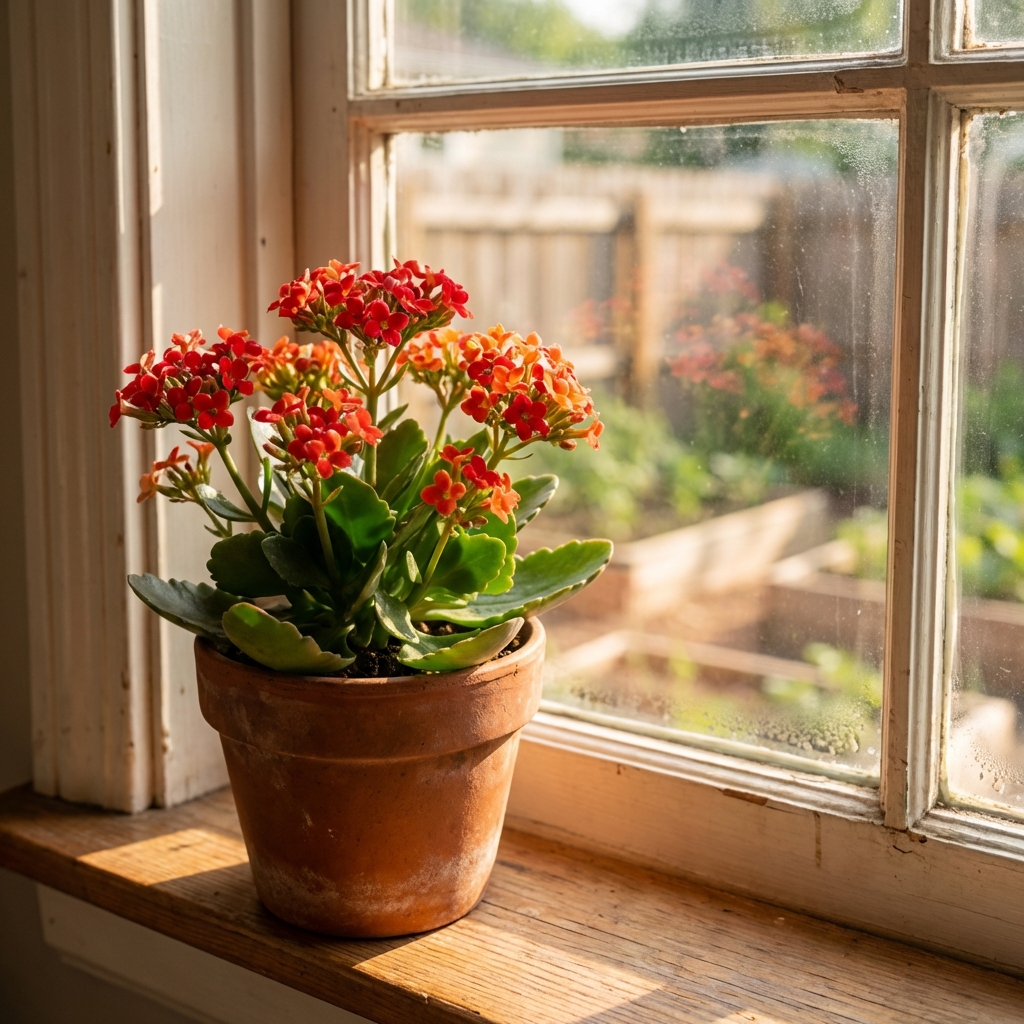
Quick care snapshot
- Light: Bright light with several hours of sun is ideal. An east or south window is usually best.
- Water: Let the soil dry out most of the way, then water thoroughly and drain.
- Soil: Fast-draining cactus or succulent mix.
- Temp: Ideal is about 60 to 80°F (16 to 27°C). Protect from cold drafts and any frost.
- Humidity: Normal home humidity is fine. Give it decent airflow and avoid constantly wet leaves.
- Blooming: Deadhead spent flowers, then use short-day timing to rebloom.
- Toxicity: Toxic to pets if ingested. If a pet eats any part, contact your vet or pet poison control.
Choosing a good spot indoors
Kalanchoe is a succulent that flowers. That means it wants more light than most “regular” houseplants, especially if you want it to keep buds coming.
Best windows
- East-facing: Great starter option. Morning sun is strong enough to help blooming without scorching.
- South-facing: Usually the best for flowering. In very hot climates, or when a window intensifies heat through very clear glass, pull it back a foot or two if leaves look stressed.
- West-facing: Works, but afternoon sun can be intense. Watch for leaf scorch in summer.
- North-facing: Usually too dim long-term. The plant may stay alive but will not bloom well.
Real backyard tip: If your kalanchoe is getting leggy, leaning hard toward the window, or dropping buds, assume it needs more light before you assume it needs more water.
One more easy save: If your plant came wrapped in a decorative foil sleeve, take it off (or cut drainage holes). Those sleeves love to trap water against the pot.
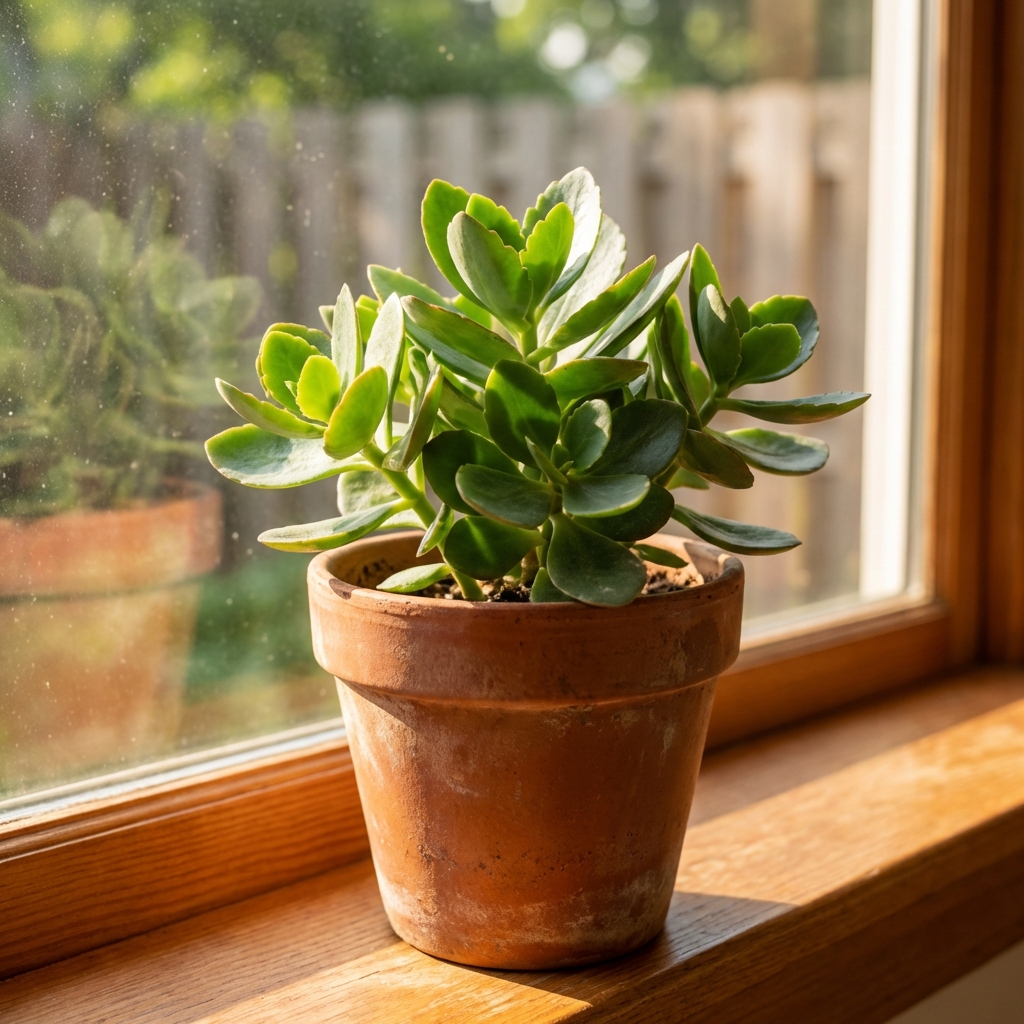
Watering the simple way
Overwatering is the fastest way to lose a kalanchoe. It stores water in its leaves, so it would rather be a little dry than constantly damp.
How often to water
There is no perfect schedule because pot size, light, temperature, and soil all change the drying speed. Instead, use a quick check:
- Stick your finger into the soil 1 to 2 inches deep.
- If it feels dry at that depth and the pot feels noticeably lighter, it is time to water.
- If it still feels cool and damp, wait.
How to water (so roots stay healthy)
- Water slowly until it runs out the drainage holes.
- Empty the saucer so the pot is not sitting in water.
- Do not “sip water” with small amounts every few days. Small waterings often do not soak the full root ball, so the top stays damp while deeper roots never get a proper rinse.
Common mistake: A decorative cachepot with no drainage. If you use one, keep the kalanchoe in a nursery pot inside it and pour off standing water every time.
Soil and pot
If you want a kalanchoe that lives for years, put it in a mix that dries predictably.
Best soil mix
- Easiest: Cactus and succulent potting mix.
- Upgrade: Cactus mix plus a handful of perlite or pumice for extra drainage.
Pot choice
- Use a pot with drainage holes.
- Terracotta is helpful if you tend to overwater because it breathes and dries faster.
- Do not oversize the pot. A pot that is too big stays wet longer.
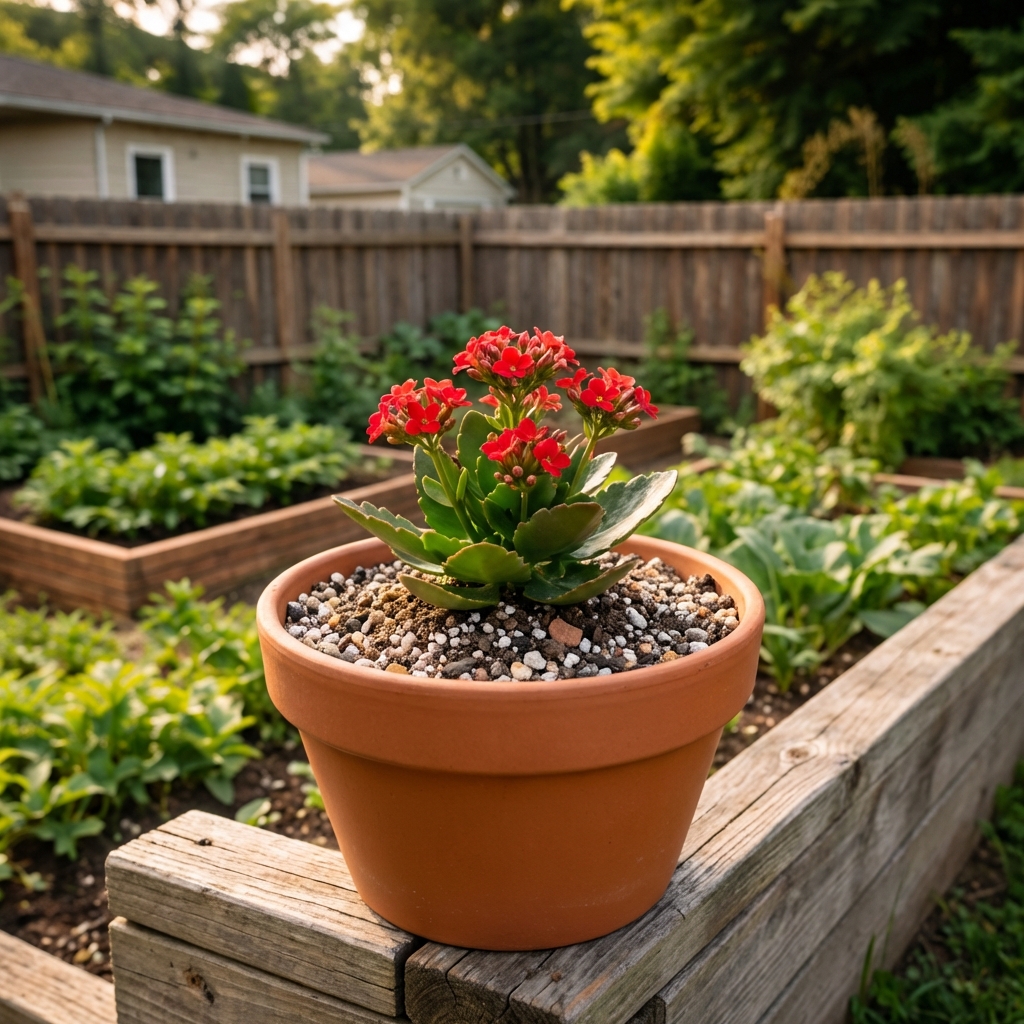
Keep it blooming longer
Most kalanchoes bloom for weeks, sometimes a couple of months, especially in bright light. You can extend the show with a few simple habits.
Deadhead well
As flowers fade, pinch or snip off the whole spent flower cluster down to the first set of healthy leaves. This keeps the plant from putting energy into seed production and it also helps it look clean.
Fertilizer during bloom
During heavy bloom, focus on light and watering. You can skip fertilizer, or feed lightly if you want, but avoid heavy feeding and avoid high-nitrogen fertilizer that pushes soft, leafy growth instead of flowers.
Keep conditions steady
- Do not let it sit in cold drafts near a door.
- Avoid moving it from bright light to dim corners. Bud drop is common after sudden light changes.
How to rebloom indoors
This is where most people get stuck. Kalanchoe is a short-day plant, which means it forms flower buds when nights are long and uninterrupted. Indoors, normal household lighting at night can interrupt that signal.
The rebloom plan
- After flowering: Deadhead spent blooms and keep the plant in bright light.
- Rest period: Water a bit less than usual for a few weeks, letting it dry well between waterings.
- Short-day treatment: For about 6 to 9 weeks, give it 12 to 14 hours of complete darkness each night and 10 to 12 hours of bright light during the day. Some plants set buds sooner or later depending on cultivar and temperature.
- When buds form: Move it back to your brightest spot and resume normal care. Do not keep changing locations.
How to do the darkness part
- Put it in a spare room or closet each evening and bring it back to a sunny window in the morning.
- Or cover it with a box that blocks all light. Do not use a thin cloth if light bleeds through.
Important: “Complete darkness” means no lamp light, no TV glow, no kitchen lights. This is usually the difference between reblooming and getting nothing but leaves.
Pruning and shaping
Kalanchoe can stretch with low light, age, or a long time without pruning. The fix is usually more sun and a simple haircut.
When to prune
Best time is right after a bloom cycle ends. You can cut back long stems to encourage branching.
How much to cut
- Trim stems back to just above a leaf node.
- Aim to remove no more than about one-third of the plant at a time if it is stressed.
Bonus: Those healthy cuttings can be rooted to make new plants.
Fertilizing
Kalanchoe does not need heavy feeding. Too much fertilizer can lead to floppy growth and fewer flowers.
- Use a balanced houseplant fertilizer at half strength.
- Feed about once a month in spring and summer if the plant is actively growing.
- Skip feeding in fall and winter unless it is clearly pushing new growth under strong light.
Common problems and fixes
No flowers
- Most likely: Not enough light or nights are not dark enough.
- Fix: Move to a brighter window and use the 6 to 9 week short-day routine.
Leggy, stretched stems
- Most likely: Light is too weak, or it has not been pruned in a while.
- Fix: Increase light, rotate the pot weekly, prune after bloom.
Yellow leaves or mushy stems
- Most likely: Overwatering or soggy soil.
- Fix: Let it dry, switch to a gritty mix, confirm drainage, water less often.
Wrinkled leaves
- Most likely: Underwatering for too long.
- Fix: Water thoroughly and let excess drain. Then return to the dry-down method.
Bud drop
- Most likely: Sudden changes in light, cold drafts, or inconsistent watering.
- Fix: Keep it in one bright spot and water consistently once dry.
Sticky leaves or tiny bugs
- Likely: Aphids or scale.
- Fix: Isolate the plant and check stems and leaf undersides. Wipe off pests and treat with insecticidal soap as needed.
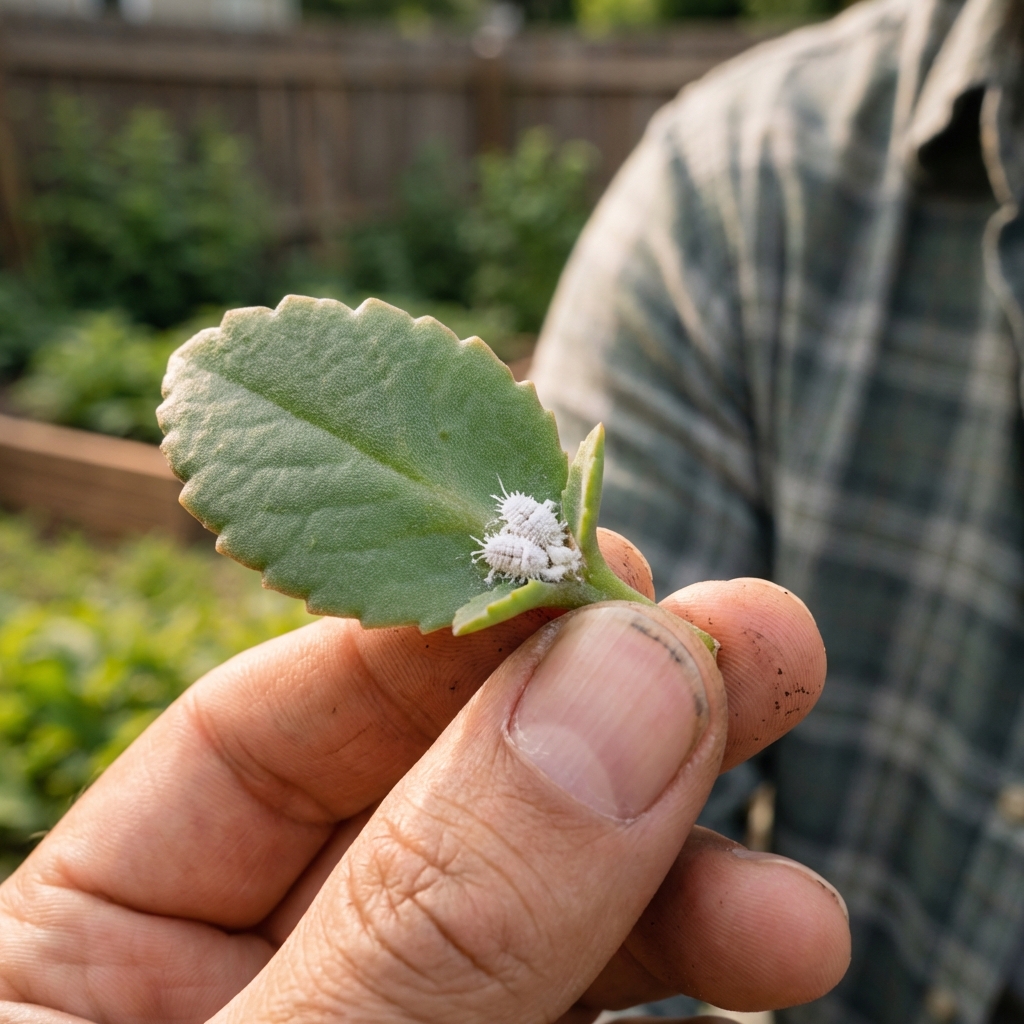
White cottony spots
- Likely: Mealybugs.
- Fix: Isolate the plant. Dab pests with rubbing alcohol on a cotton swab. Repeat weekly and check leaf joints.
Fine webbing and speckling
- Likely: Spider mites (more common in very dry air).
- Fix: Rinse the plant, wipe leaves, and treat with insecticidal soap. Improve airflow.
Repotting
Kalanchoe does not need frequent repotting. Usually every 1 to 2 years is plenty, or when you see roots circling the bottom and drying becomes too fast.
- Repot in spring if possible.
- Go up only 1 pot size.
- Use fresh succulent mix and avoid packing it down tightly.
Propagation
If your kalanchoe is getting tall or you want backups, propagation is easy.
Stem cutting method
- Cut a healthy stem 3 to 5 inches long.
- Let the cut end dry and callus for 1 to 2 days.
- Stick it into lightly moist succulent mix.
- Keep it in bright, indirect light (gentle morning sun is fine) and water sparingly until rooted.
Once it resists a gentle tug, roots are forming. After that, treat it like an adult plant.
My simple indoor routine
- Bright window, rotate the pot weekly.
- Water only when the pot feels light and the soil is dry a couple inches down.
- Deadhead right away as blooms fade.
- After bloom, prune lightly and plan the short-day routine if you want rebloom.
If you do nothing else, do this: give it more light than you think and water less often than your other houseplants. That combination solves most kalanchoe problems.

Jose Brito
I’m Jose Britto, the writer behind Green Beans N More. I share practical, down-to-earth gardening advice for home growers—whether you’re starting your first raised bed, troubleshooting pests, improving soil, or figuring out what to plant next. My focus is simple: clear tips you can actually use, realistic expectations, and methods that work in real backyards (not just in perfect conditions). If you like straightforward guidance and learning as you go, you’re in the right place.