Bananas are one of those fruits that feel like they go from green to perfect to brown-spotted overnight. The good news is you can slow that down with a few small changes in how you store them. No fancy gadgets needed, just a better setup on your counter, plus a couple of tricks for when they are ripening too fast.
Quick timing note: At typical room temperature, bananas often go from green to yellow in a few days, then turn spotted a few days after that. Cooler rooms slow things down, warmer kitchens speed everything up.
Why bananas ripen so fast
Bananas produce ethylene gas, a natural ripening hormone. Ethylene can build up around the fruit and speed the ripening process. Heat, bruising, and being packed tightly together can make it worse.
So most “keep bananas fresh” advice is really about doing three things:
- Reducing ethylene exposure around the bunch
- Keeping them cooler at the right time
- Preventing bruises that turn into brown spots fast
Best everyday method: counter storage that works
1) Keep them out of direct sun and away from heat
A warm windowsill, top of the fridge, or next to the stove will push ripening into overdrive. Aim for a cool, shaded spot on the counter with decent airflow.
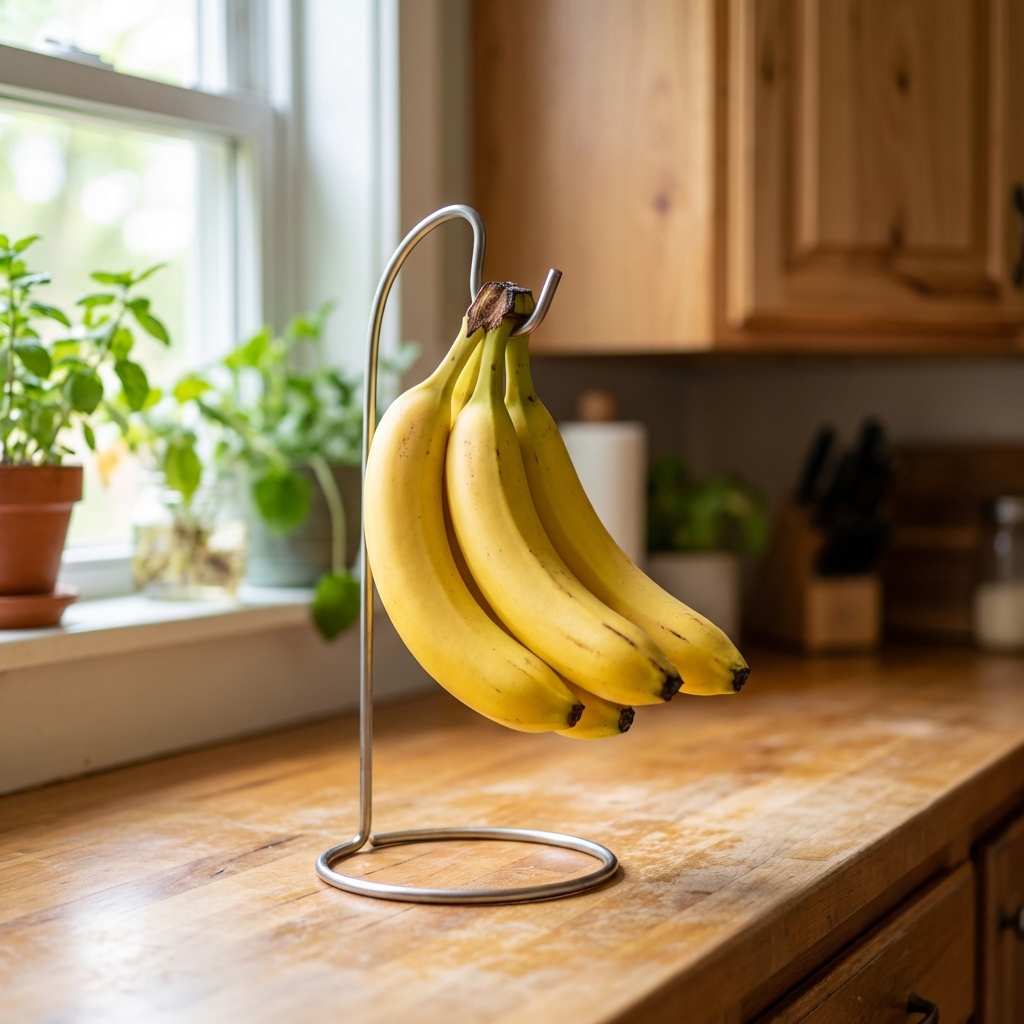
2) Hang the bunch (or keep it off hard surfaces)
Hanging reduces pressure points that cause bruises. If you do not have a banana hook, set them on a soft towel and avoid stacking anything on top.
3) Separate the bananas if you want to slow the whole bunch
Keeping a tight bunch together concentrates ethylene. Pulling them apart slightly increases airflow and may buy you a little extra time, depending on temperature and how ripe they were to begin with.
4) Wrap the stems to slow ripening
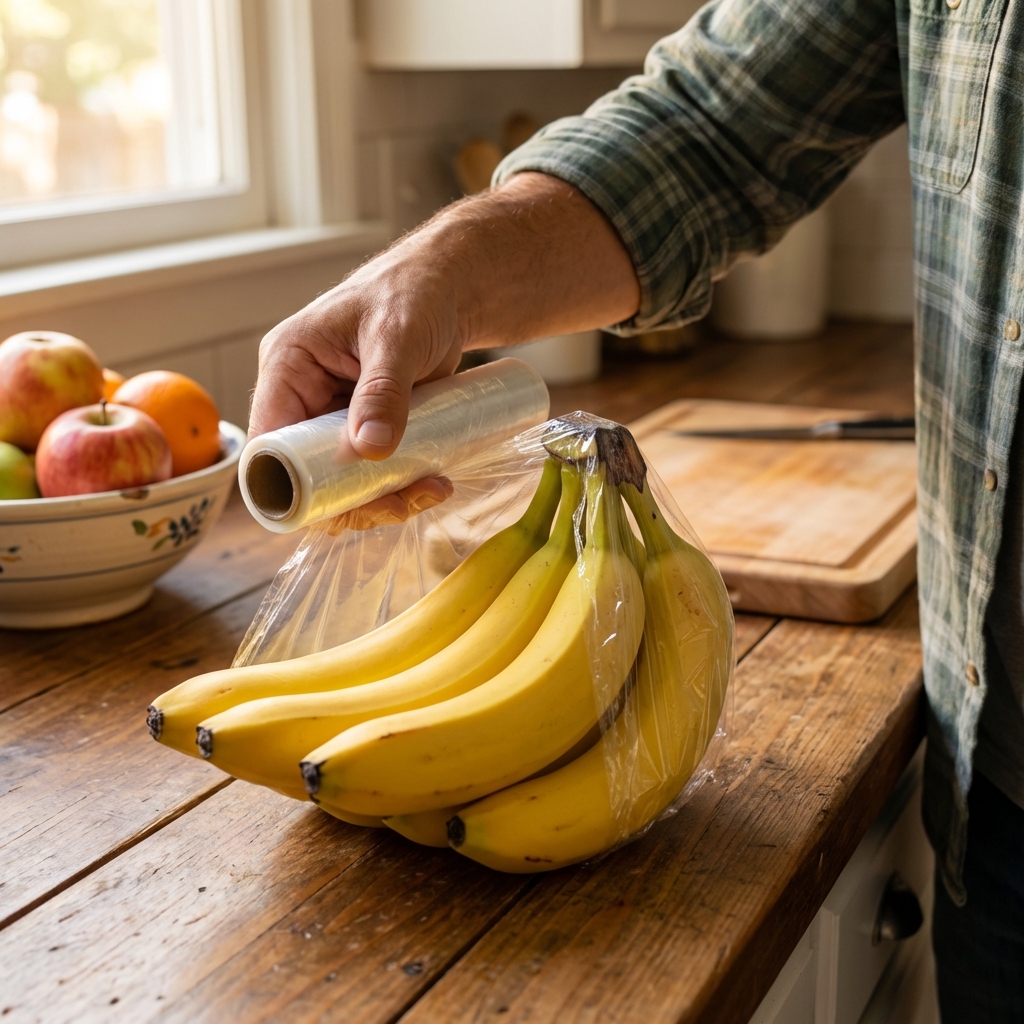
A lot of ethylene is released near the crown and stem end. Wrapping the top of the bunch (or each individual stem if they are separated) with plastic wrap or reusable silicone wrap can help slow things down, especially in warmer kitchens.
- Wrap snugly and cover the stem end well.
- Replace the wrap if it gets loose or wet.
Counter, fridge, or freezer
When bananas are green
Keep them on the counter. If you refrigerate very green bananas, ripening can slow down a lot and the peel may discolor. In some cases, ripening can also be uneven. If you need them ripe sooner, keep them in a slightly warmer spot in the room (still out of direct sun).
When bananas are yellow and you want to hold them there
This is the sweet spot for using the fridge. Put them in the refrigerator once they are at the ripeness you like. The peel will darken in the cold, but the inside usually stays fresher longer.
When bananas are spotted and heading toward “banana bread now”
Freeze them. Freezing stops the clock and helps prevent food waste.
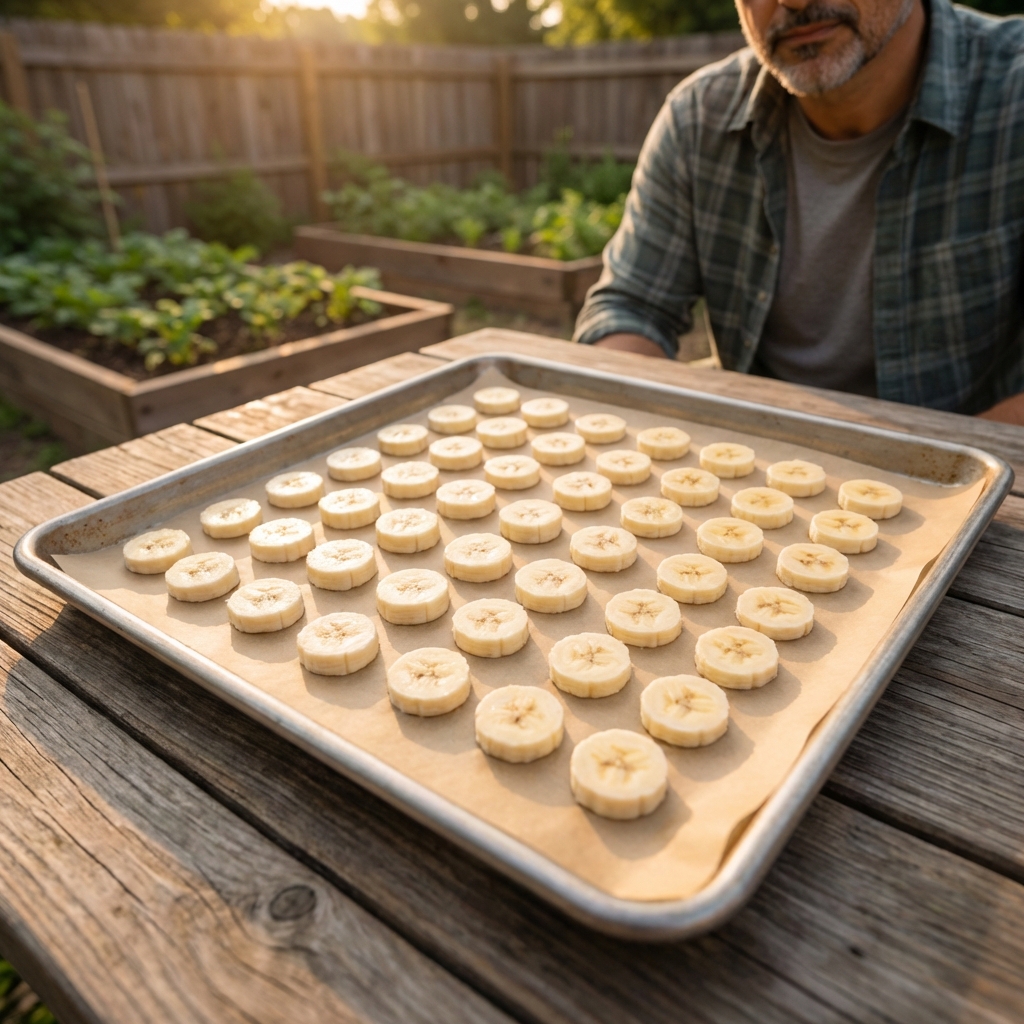
- Best for smoothies: peel, slice, freeze on a tray, then store in a bag.
- Best for baking: freeze peeled bananas whole in a bag, then thaw when needed.
Thawing tip: Frozen bananas thaw soft and a little watery. They are perfect for smoothies, muffins, and banana bread, but not great for slicing onto cereal.
What not to store bananas next to
Because of ethylene, bananas can speed up ripening in other produce. They also ripen faster when paired with other ethylene producers.
Keep bananas away from:
- Apples
- Avocados
- Tomatoes
- Stone fruit like peaches and plums
- Melons
- Leafy greens (they can yellow or wilt faster around ethylene)
If you do want to ripen something faster, placing it near bananas can help. Just do it on purpose, not by accident.
How to prevent bruising
Bananas often look like they spoiled quickly, but a lot of that is bruising that turns brown fast. A few handling habits make a big difference.
- Do not toss them in the grocery bag first. Put them on top, not under cans and jars.
- Avoid separating by yanking. Twist gently at the crown to reduce damage.
- Skip the fruit bowl pile. A heavy stack puts pressure on the bottom bananas.
Common problems and quick fixes
Problem: My bananas ripen too fast
- Move them to a cooler spot on the counter.
- Separate them and wrap the stems.
- Once yellow, refrigerate to hold ripeness longer.
Problem: The peels turn brown in the fridge
Normal. Cold temperatures darken banana peel. The fruit inside is usually fine for several days.
Problem: Fruit flies show up around the bananas
- Rinse bananas briefly when you bring them home and dry them. Fruit flies and their eggs can hitchhike on produce surfaces, but they also thrive on sticky residue and overripe fruit.
- Keep the area clean, wipe up sticky spots, and empty the compost often.
- Store ripe bananas in the fridge if fruit flies are a recurring issue.
Problem: Bananas split open while ripening
Splitting can happen with very fast ripening, high humidity, rough handling, or temperature swings. Move the bunch to a cooler, steady spot and handle gently. Use split bananas quickly or freeze them.
Simple freshness plan
If you want a straightforward routine, here is an easy one that fits most households.
- Day 1: Keep bananas on the counter, out of sun. Wrap stems.
- As they yellow: Separate if needed to slow the bunch.
- When perfect: Move to the fridge to hold them there.
- When too ripe: Peel and freeze for smoothies or baking.
FAQ
Should you refrigerate bananas?
Yes, but timing matters. Refrigerate when they are as ripe as you like. The peel darkens, but the inside usually stays good longer.
Does wrapping banana stems really work?
It can help, especially in warmer kitchens. The goal is to reduce ethylene release and buildup around the fruit near the crown and stem end.
Can I store bananas in a sealed container?
Not ideal on the counter. Sealing traps ethylene and moisture, which often speeds ripening and can encourage mold. If you are refrigerating or freezing peeled bananas, sealed containers or bags are great.
What is the best way to freeze bananas?
Peel them first. For smoothies, slice and freeze in a single layer, then bag. For baking, freeze peeled bananas whole and thaw when needed.
Bottom line
To keep bananas fresh, focus on airflow, gentle handling, and the right temperature at the right time. Start with a cool counter spot, wrap the stems, and once they hit your ideal ripeness, use the fridge to slow things down. Anything past that goes straight to the freezer, and future-you will be glad you did.

Jose Brito
I’m Jose Britto, the writer behind Green Beans N More. I share practical, down-to-earth gardening advice for home growers—whether you’re starting your first raised bed, troubleshooting pests, improving soil, or figuring out what to plant next. My focus is simple: clear tips you can actually use, realistic expectations, and methods that work in real backyards (not just in perfect conditions). If you like straightforward guidance and learning as you go, you’re in the right place.