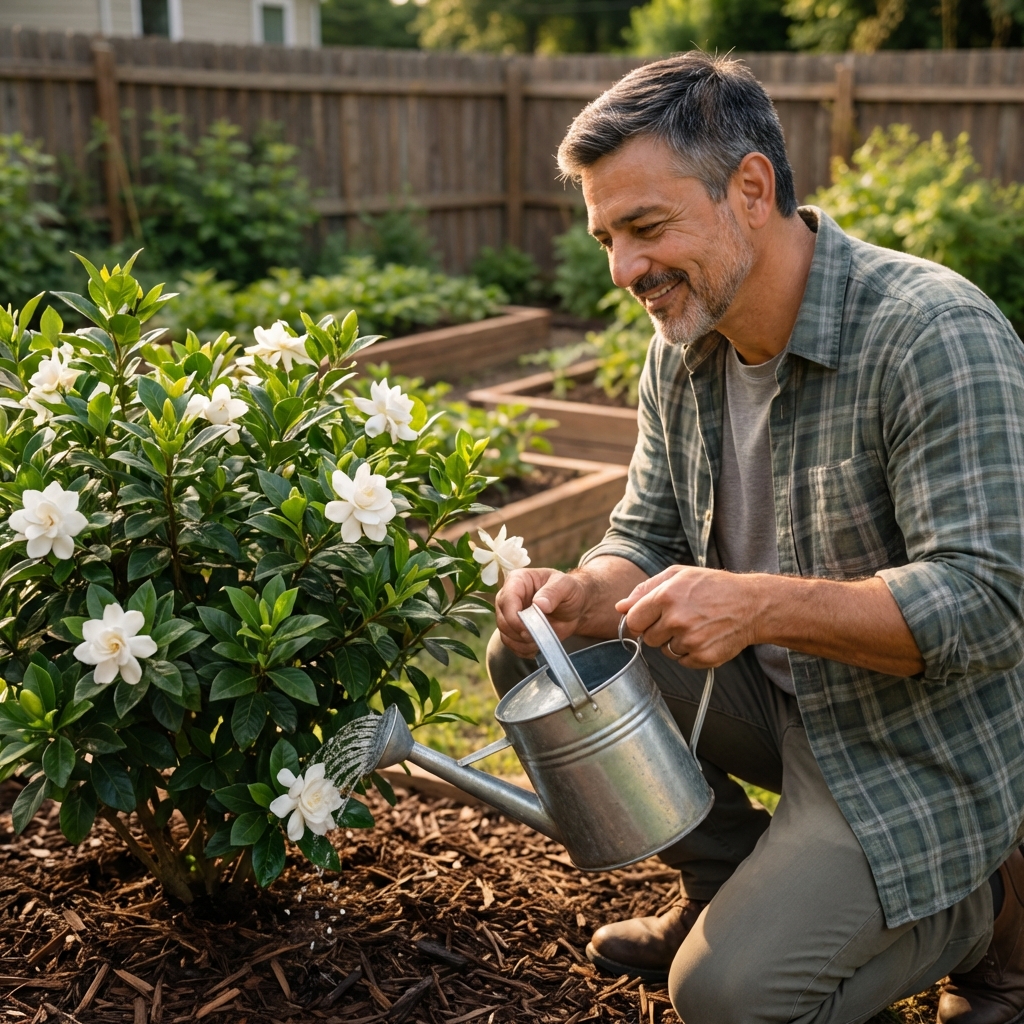
Gardenias are famous for two things: that incredible fragrance and their ability to look unhappy when one little thing is off. Fertilizer is often the missing piece, but it is also easy to overdo. The goal is simple: keep the soil slightly acidic, feed at the right times, and use the right product so the plant can set buds and hold onto them.
This guide walks you through exactly what to use, when to apply it, and how to troubleshoot the most common problems like yellow leaves and weak flowering.
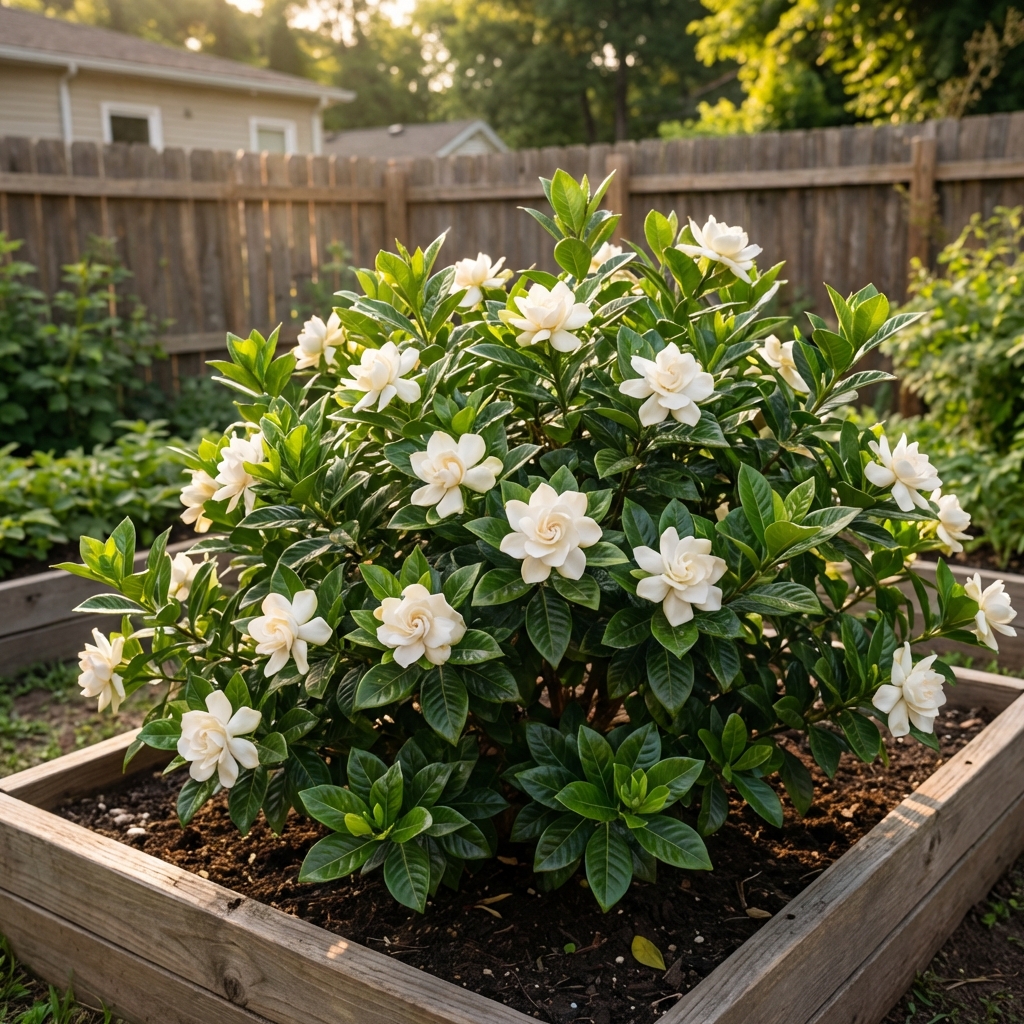
What gardenias need from fertilizer
Gardenias are acid-loving shrubs. When the soil pH drifts too high, they struggle to absorb iron and other micronutrients even if those nutrients are present. That is why feeding gardenias is not just about adding nitrogen, phosphorus, and potassium. It is about keeping nutrients available.
Key nutrients to look for
- Nitrogen (N): drives leafy growth and that deep green color.
- Phosphorus (P): supports roots and bloom development. Too much can backfire when soil phosphorus is already high, and it can contribute to nutrient imbalances that make micronutrients harder to use.
- Potassium (K): helps overall vigor, flowering, and stress tolerance.
- Iron and manganese: most important for preventing the classic “yellow new leaves with green veins” chlorosis tied to higher pH.
- Magnesium: supports chlorophyll and can matter, but deficiency more often shows up on older leaves first rather than brand-new growth.
Target soil pH: about 5.5 to 6.5 (many plants do fine a bit lower). If your gardenia is in the ground and struggling despite feeding, a simple soil test often explains why.
Best fertilizers for gardenias
The “best” fertilizer depends on whether your gardenia is in the ground or in a pot, and whether you need quick correction or slow, steady feeding.
1) Fertilizer for acid-loving plants
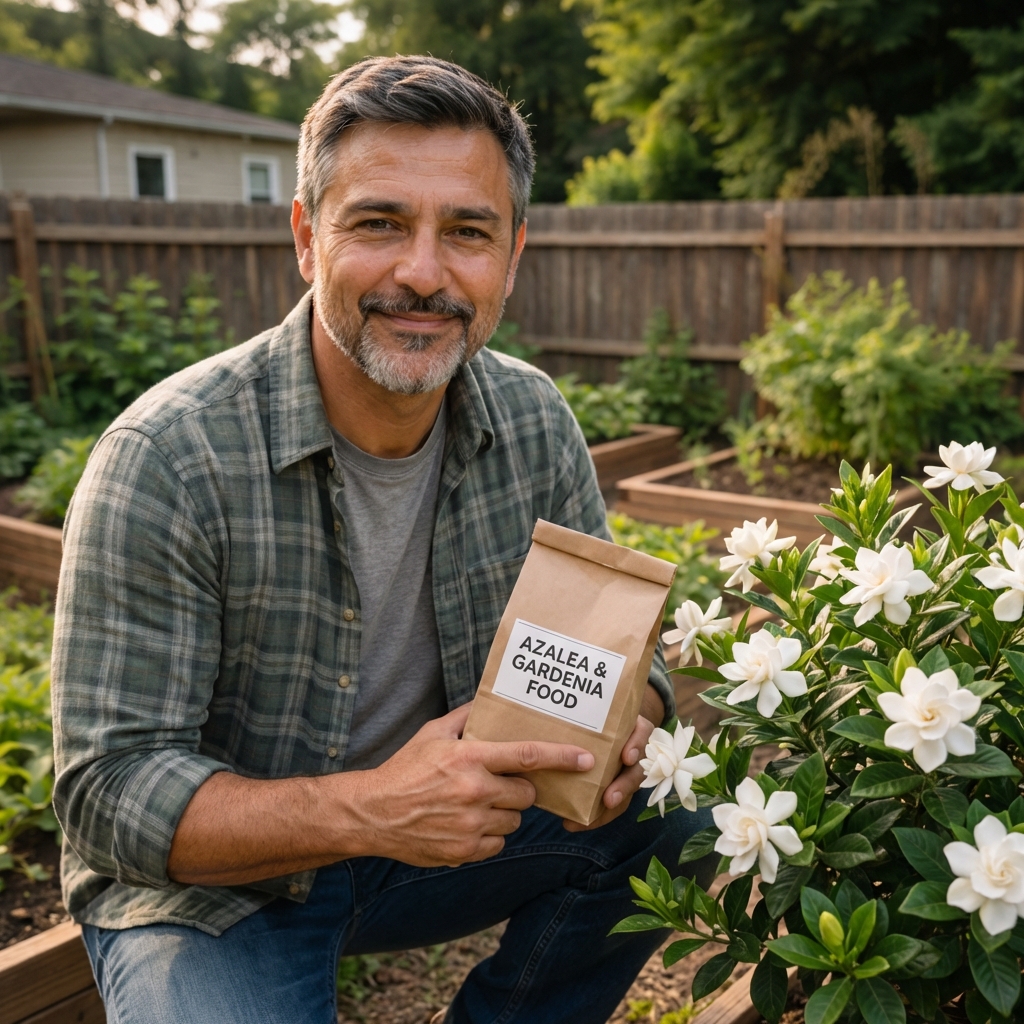
This is the easiest, most reliable choice for most home gardens. Look for labels that say for azaleas, camellias, rhododendrons, or gardenias. These formulas are made to perform well in low pH soil and usually include micronutrients like iron. Some are mildly acidifying, but the bigger win is that they are formulated with acid-lovers in mind.
- When it shines: routine feeding, keeping growth and blooms steady
- What to look for: includes iron and other micronutrients
- Common NPK examples: often in the neighborhood of 10-10-10, 12-6-6, or similar. Do not chase numbers. Follow the label rate for your plant size.
2) Slow-release granular fertilizer
Slow-release granules feed over weeks to months, which helps prevent sudden nutrient spikes that can burn roots or push too much soft growth.
- When it shines: in-ground plants, busy schedules, consistent feeding
- Tip: apply to moist soil and keep granules a few inches away from the trunk
3) Liquid fertilizer (for quick support)
Liquid feeding is useful when a plant is recovering, when growth is slow, or when container gardenias need more frequent nutrition.
- When it shines: potted gardenias, fast correction, mid-season support
- Tip: dilute carefully and apply to already moist potting mix
4) Chelated iron (for chlorosis)
If new leaves are turning yellow but the veins stay green, that is classic iron chlorosis. Chelated iron can green up new growth when pH and iron availability are the issue.
- When it shines: yellowing new leaves, especially in higher pH soil
- Important: iron helps, but if pH stays high the problem often returns. Also note that root stress from soggy soil can mimic nutrient problems, so check drainage before repeatedly adding iron.
When to fertilize gardenias
Timing matters as much as the product. Feeding at the wrong time can lead to lots of green growth and fewer flowers, or tender growth that gets damaged by cold.
General schedule for in-ground gardenias
- Early spring: feed when you see new growth starting.
- Late spring to early summer: feed again to support bud formation and flowering.
- Mid to late summer (optional): a light feeding only if the plant looks pale or growth is weak.
- Stop in late summer: avoid fertilizing about 6 to 8 weeks before your first expected frost.
For potted gardenias
Container plants typically need more frequent, lighter feeding because nutrients wash out through drainage holes.
- Spring through midsummer: feed lightly every 2 to 4 weeks (or use slow-release and follow the label).
- Late summer through winter: reduce or pause feeding, especially if the plant is indoors and growth slows.
Indoor note: If you overwinter a gardenia indoors, low light often means slower growth. In that case, it is normal to feed very lightly or not at all until you see active new growth again.
Real backyard note: If you are in a very warm climate where gardenias grow longer into fall, you can sometimes extend feeding slightly. Still, avoid pushing tender new growth right before cool weather.
How to fertilize gardenias
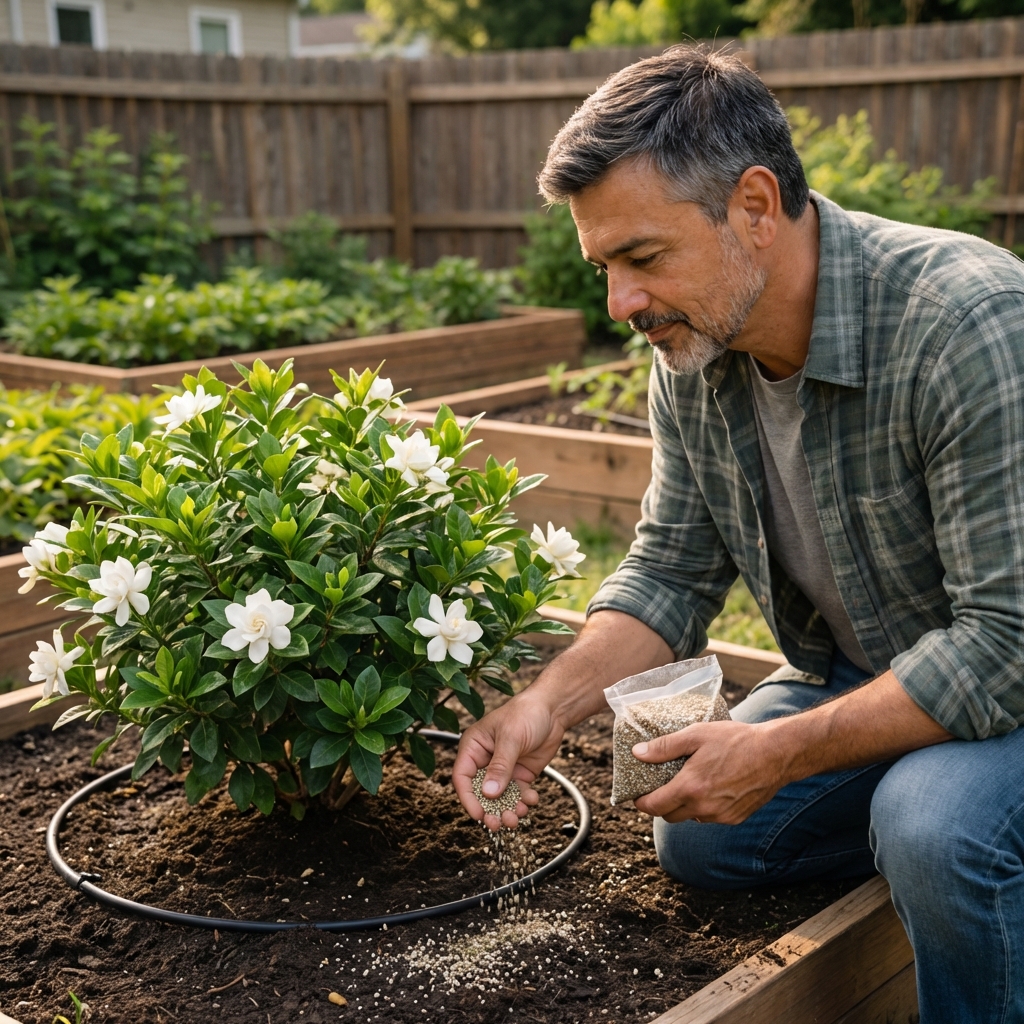
For in-ground shrubs (granular fertilizer)
Water first if the soil is dry. Fertilizer on dry roots is one of the easiest ways to burn a plant.
Measure the dose using the package directions for shrub size. When in doubt, use the low end.
Spread evenly from a few inches away from the trunk out to the drip line (the outer edge of the canopy).
Scratch in lightly with your fingers or a hand rake if possible. Do not dig deep.
Water in well so nutrients move into the root zone.
For container gardenias (liquid or slow-release)
Check that drainage works. Gardenias hate sitting in water, and fertilizer salts can worsen stress in waterlogged roots.
Water lightly first if the mix is dry.
Apply diluted liquid fertilizer until water runs out the bottom, or apply slow-release granules and water in.
Flush occasionally by watering thoroughly with plain water to reduce salt buildup, especially if you fertilize often.
How much fertilizer to use
More fertilizer does not equal more flowers. Overfeeding gardenias is a common reason for leaf burn, bud drop, and weak, floppy growth.
Signs you may be overfertilizing
- Brown, crispy leaf edges or tips
- Sudden leaf drop after feeding
- White crust on soil surface in pots (salt buildup)
- Fast green growth with few buds
Simple rule that prevents most problems
Use the label rate and err slightly lower, especially with quick-release fertilizers. If the plant needs more, you can always feed again later. You cannot easily undo fertilizer burn.
Fixing yellow leaves on gardenias
Yellow leaves are the number one complaint, and fertilizer is only part of the story. Here is how to narrow it down quickly.
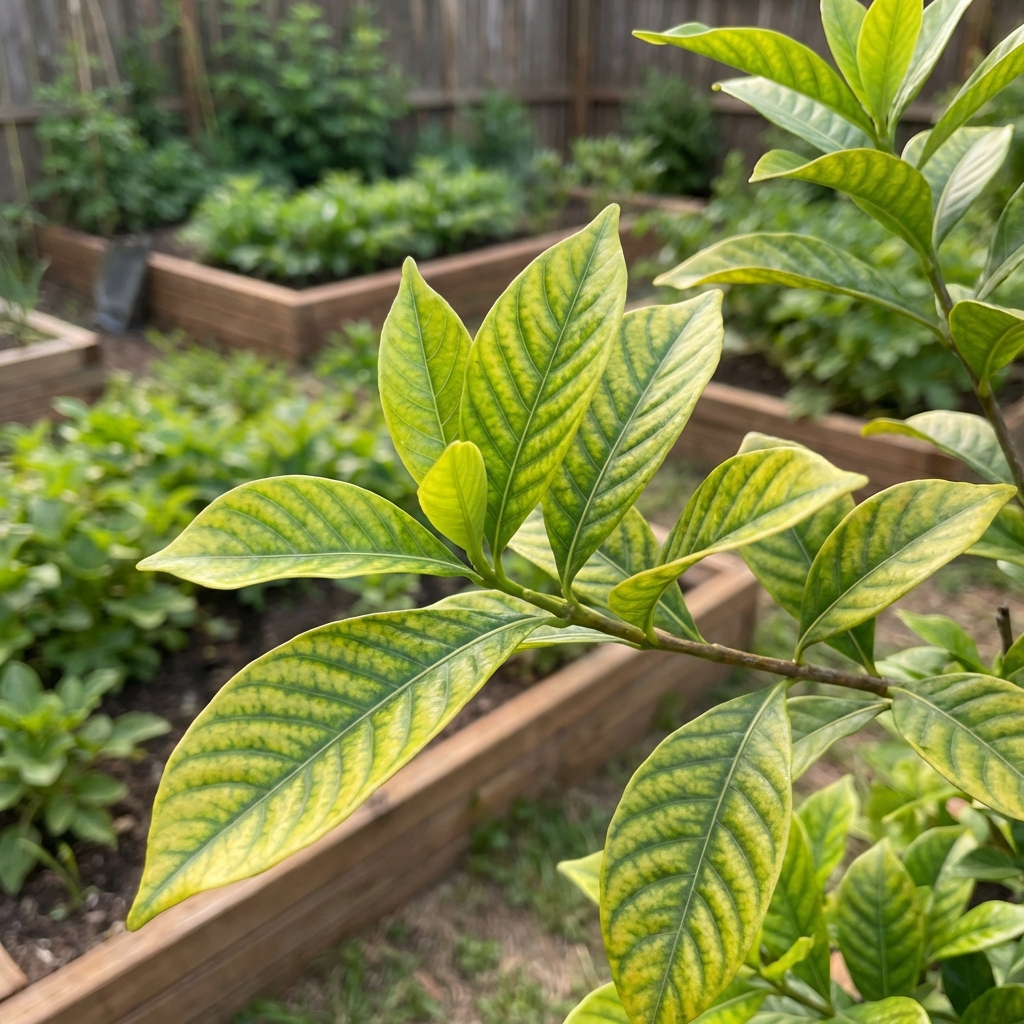
Yellow new leaves with green veins
This usually points to iron deficiency (and sometimes manganese), often triggered by soil pH that is too high. It can also show up when roots are stressed from poor drainage, even if you are feeding correctly.
- What helps now: chelated iron (follow label), and a fertilizer formulated for acid-loving plants.
- What helps long term: confirm soil pH, improve drainage if needed, then adjust pH only if tests show it is actually high.
Older leaves turning uniformly yellow
This can be nitrogen deficiency, but it can also be root stress from overwatering, poor drainage, or cold snaps.
- What to do: check moisture first. If drainage is good, use an acid-lover fertilizer at a modest rate.
Older leaves with yellowing between veins
This pattern can point to magnesium deficiency, especially in pots where nutrients wash out or salts build up.
- What to do: consider a fertilizer that includes magnesium, and flush pots occasionally. Use Epsom salt only if you have a reason to suspect magnesium is low.
Yellow leaves plus buds dropping
Bud drop is often caused by stress: irregular watering, hot dry wind, sudden temperature swings, or a plant that is being moved around.
- What to do: stabilize watering, protect from afternoon scorch, and avoid heavy feeding while the plant is stressed.
Soil and mulch tips
Feeding is more effective when the root zone stays evenly moist, cool, and slightly acidic.
Mulch the right way
- Apply 2 to 3 inches of pine bark, pine needles, or shredded bark.
- Keep mulch a few inches away from the main stem to prevent rot.
- Mulch helps reduce watering swings, which reduces bud drop.
Water quality matters
If your tap water is hard and alkaline, it can gradually push pH up in pots and even in garden beds over time. If you suspect that is happening, consider:
- Collecting rainwater when possible
- Using a fertilizer formulated for acid-loving plants consistently rather than switching products constantly
- Testing soil pH once a year if gardenias are a priority plant for you
Safe ways to adjust pH (test first)
If a soil test shows pH is too high, you have a few common options:
- Elemental sulfur: a slower, steadier way to lower pH over time. It takes patience and works best when applied according to soil test guidance.
- Aluminum sulfate: can lower pH faster, but it is easier to overdo. Follow label directions carefully and avoid repeated heavy applications.
If you are not sure, start with testing and small adjustments. It is much easier to lower pH gradually than to fix an overcorrection.
Seasonal quick plan
- Spring: feed with an acid-lover fertilizer as new growth starts, then water in.
- Late spring: feed again to support buds and blooms.
- Summer: feed only if color fades or growth stalls. Keep watering consistent.
- Late summer: stop feeding in time for the plant to harden off before cold.
Common fertilizing mistakes
- Fertilizing a dry plant: always water first if soil is dry.
- Feeding during extreme heat: wait until the heat breaks, then feed lightly.
- Piling fertilizer near the trunk: spread around the drip line, not at the base.
- Ignoring pH: if the plant stays yellow despite feeding, test soil and address alkalinity.
- Chasing problems with constant product changes: stabilize watering and pH, then feed consistently.
FAQ
Can I use coffee grounds to fertilize gardenias?
Used coffee grounds are not a complete fertilizer. The safest approach is to compost them first, then use the finished compost around the plant. If you want to use grounds directly, keep it very thin and mixed into mulch or compost so it does not form a dense, water-shedding layer on the soil surface. For consistent results, use a fertilizer made for acid-loving plants.
Is Epsom salt good for gardenias?
Epsom salt provides magnesium, which can help if magnesium is actually low. It will not fix most iron-related yellowing on new growth. Use it only if you have a reason to suspect magnesium deficiency, and follow label guidance. Overuse can throw other nutrients out of balance.
What is the best month to fertilize gardenias?
In many regions, the first feeding is in early spring as growth starts, followed by another in late spring. Instead of a specific month, watch the plant and your frost dates.
Should I fertilize gardenias while they are blooming?
A light, steady feeding schedule that includes the lead-up to blooming is usually better than heavy feeding during peak bloom. If the plant is blooming well, focus on even moisture and avoid overfeeding.
Takeaway
Gardenias do best with steady, modest feeding and soil that stays slightly acidic. Start with a fertilizer formulated for acid-loving plants that includes micronutrients, feed in spring and again in late spring, and stop before cold weather. If yellow leaves keep showing up, check pH and drainage first, then consider chelated iron for quick support when new growth is yellowing. Get those basics right and gardenias become a lot less mysterious.

Jose Brito
I’m Jose Britto, the writer behind Green Beans N More. I share practical, down-to-earth gardening advice for home growers—whether you’re starting your first raised bed, troubleshooting pests, improving soil, or figuring out what to plant next. My focus is simple: clear tips you can actually use, realistic expectations, and methods that work in real backyards (not just in perfect conditions). If you like straightforward guidance and learning as you go, you’re in the right place.