Most people assume rats only get in through something obvious like a broken door or an open garage. In reality, rats are opportunists. If your home offers warmth, food, water, and a hidden travel route, they will take it. The tricky part is that the entry point is often small, low to the ground, and easy to miss during a quick walkthrough.
Below is practical guidance on how rats get into houses, what signs to look for, and what actually works to stop them. No perfect-world advice, just the steps that hold up in real homes.
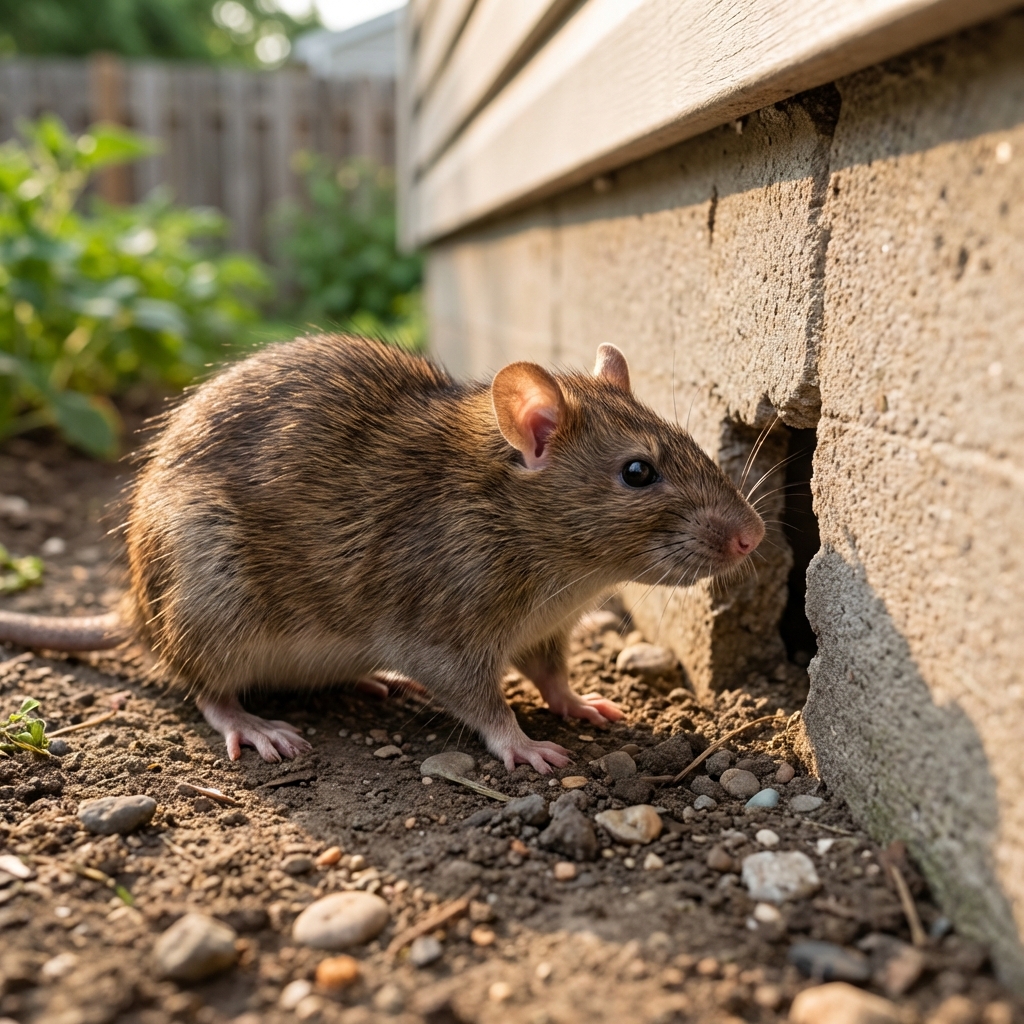
The short version: rats follow edges and exploit weak spots
Rats usually enter homes the same way they move outdoors: staying close to walls, fences, and foundation lines. They look for any opening that feels sheltered and leads to a consistent reward, like a pantry, pet food bowl, compost, or dripping hose bib.
Two things make rat entry so common:
- They can fit through small openings. As a rule of thumb, young rats can squeeze through gaps as small as about 1/2 inch (roughly nickel-sized). Adults typically need around 3/4 inch, and they can sometimes make an opening bigger.
- They are strong chewers. If a gap is “almost” big enough, they may enlarge it by gnawing on wood, plastic, foam, and weather stripping. Do not rely on soft patches to hold up.
Most common ways rats get into your house
1) Gaps at the foundation and sill plate
Small cracks where the foundation meets the framing, or where utility lines pass through the wall, are classic entry points. Rats hug the foundation line and can work into openings you never see from standing height.
- Cracks in concrete or mortar joints
- Openings where siding meets masonry
- Gaps behind shrubs, planters, or stored items
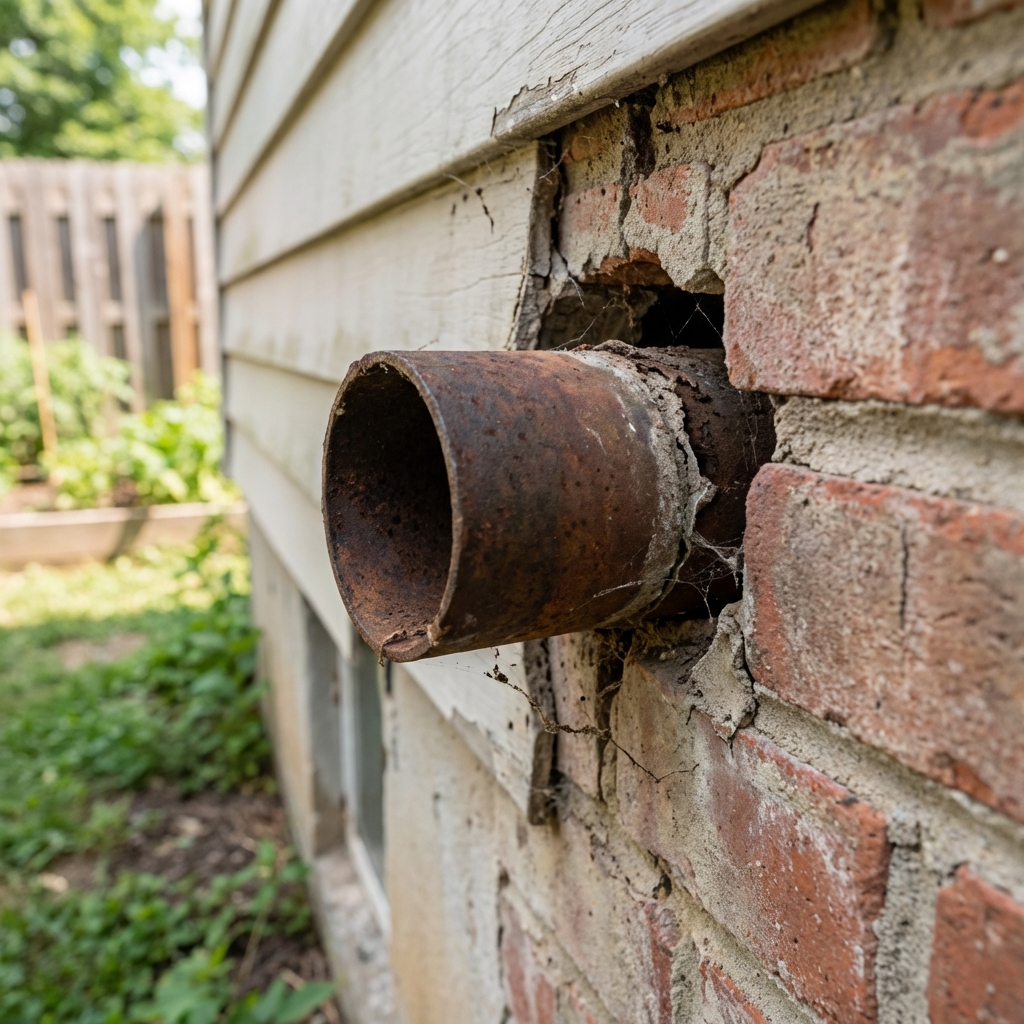
2) Holes around pipes, cables, and AC lines
Plumbing penetrations, electrical conduit, internet cable, and HVAC refrigerant lines often have sloppy gaps around them. Sometimes it is just aging caulk. Sometimes there is no seal at all.
3) Doors, garage doors, and worn weather stripping
If you can see daylight under an exterior door or garage door, treat that as a likely entry point. Rats can push through flexible rubber thresholds and can slip in as the door opens, especially in garages where food, seed, or pet supplies are stored.
- Worn door sweeps
- Gaps at the corners of garage doors
- Warped side doors and loose thresholds
4) Roof, attic, and eaves access
Roof rats and other climbing rodents can enter higher up than people expect. They use fences, trellises, stacked firewood, and tree limbs as ladders. Once on the roofline, weak soffits, open vents, and damaged fascia become entry points.
- Gaps at soffit returns and eaves
- Broken attic vents
- Loose roof tiles or flashing gaps
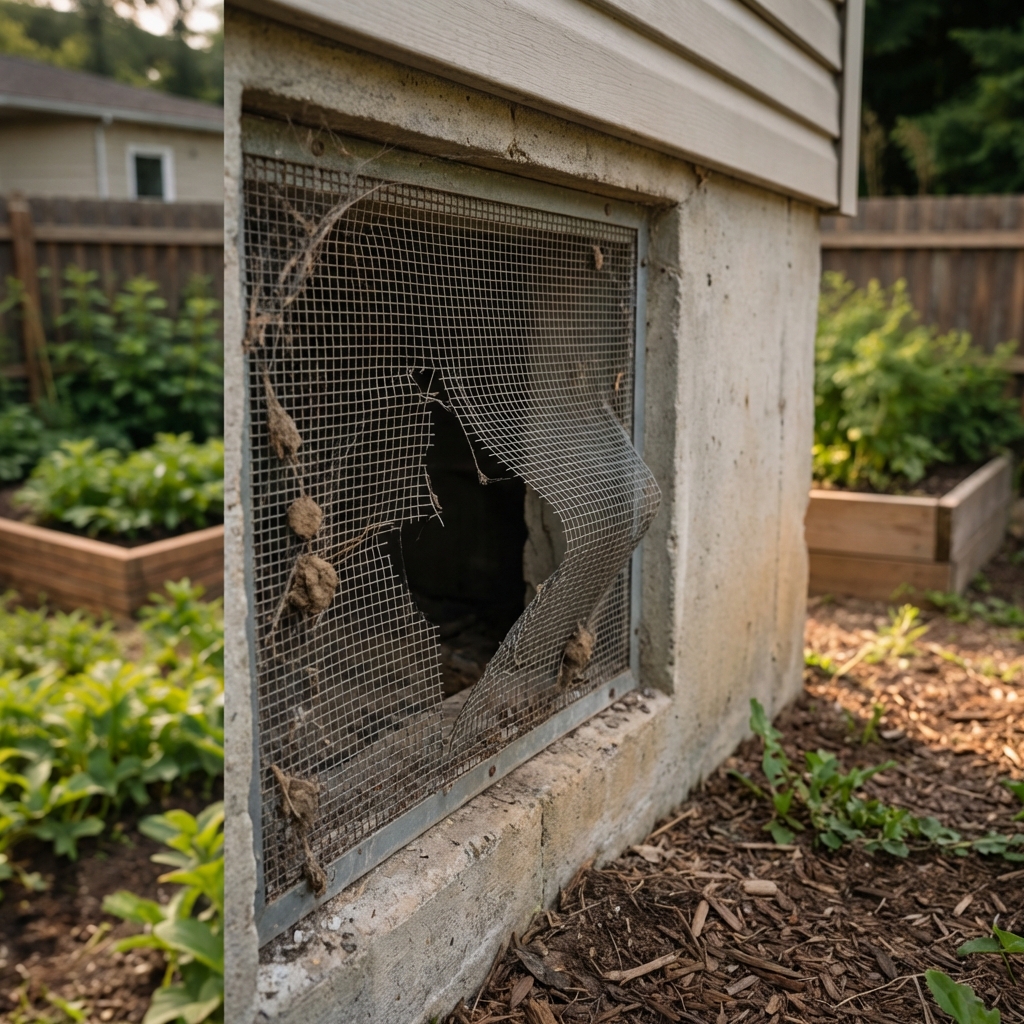
5) Vents and crawlspace openings
Unscreened crawlspace vents, dryer vents, and bathroom exhaust outlets are common problems. Even when screens exist, they may be torn, loose, or made of thin material that gets bent open.
6) Chimneys and old flues
Less common than foundation gaps, but still possible. An uncapped chimney or damaged chimney cap can allow rats to drop into a flue and find their way into walls or living areas.
What attracts rats to a home in the first place
Even if you seal one gap, rats will keep probing if your yard is basically a free buffet. Most infestations are a combination of easy food, easy water, and good cover.
Outdoor food sources
- Bird seed on the ground under feeders
- Pet food left on porches, patios, or in garages
- Fallen fruit and nuts (citrus, apples, figs, walnuts, etc.)
- Compost piles with exposed kitchen scraps
- Trash cans without tight-fitting lids
Water sources
- Leaky hose bibs and irrigation fittings
- Pet water bowls left out overnight
- Condensate lines that drip near the foundation
- Low spots that stay wet after watering
Cover and nesting spots
- Dense groundcover and overgrown shrubs touching the house
- Woodpiles stacked against the wall
- Clutter in garages, sheds, and crawlspaces
- Stored bags of seed, grass seed, or potting mix
How to confirm rats are getting in (signs that matter)
If you are hearing scratching at night or finding droppings, you do not need to guess. A few specific signs can point to both activity and likely routes.
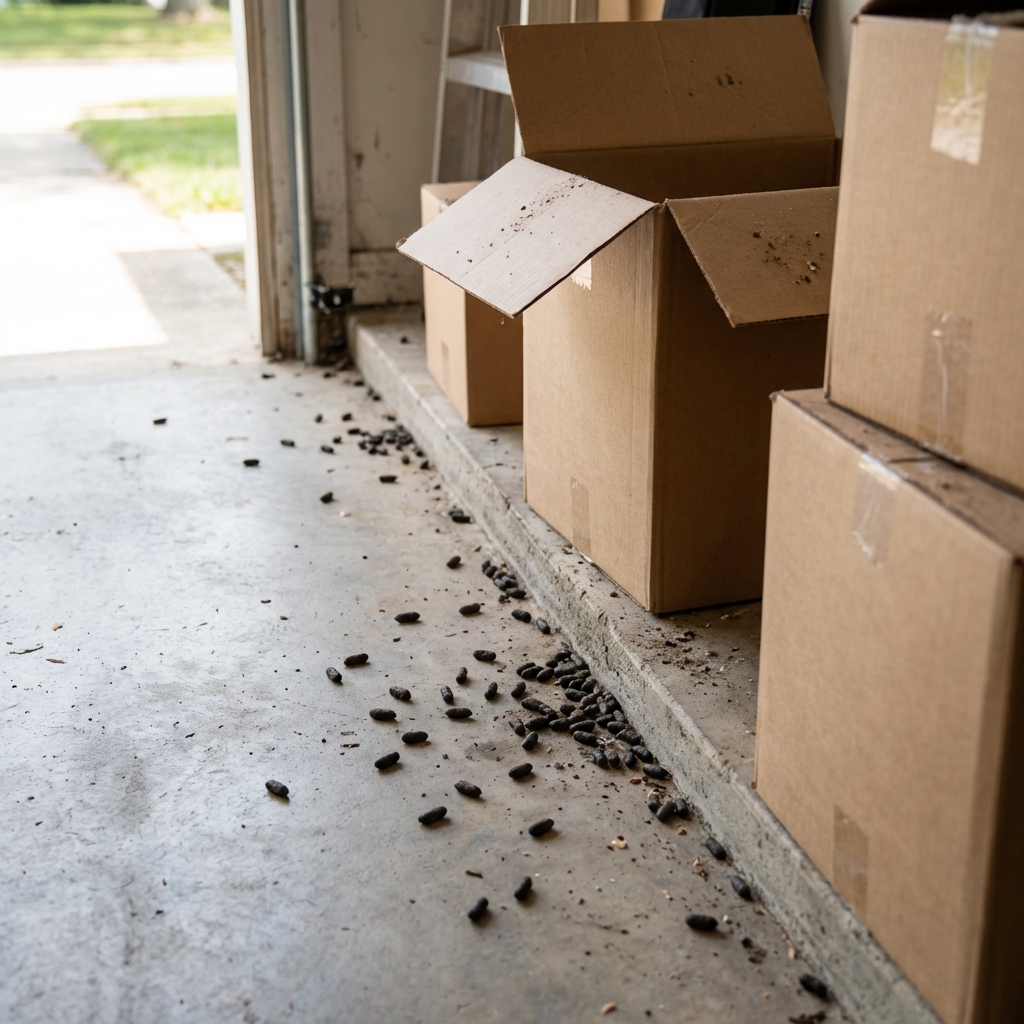
- Droppings: Usually dark, capsule-shaped, often found along walls, behind appliances, in garages, and near stored food.
- Rub marks: Greasy smudges along baseboards or exterior walls where they travel the same route repeatedly.
- Gnawing: Chewed corners of boxes, pet food bags, plastic bins, wiring, or foam seals.
- Runways: Flattened grass or narrow trails along fences and foundations.
- Burrows: Holes near slabs, under sheds, beneath dense shrubs, or at the base of compost piles.
Health and cleanup basics (do this first)
Rat droppings and urine can carry pathogens. If you are cleaning up signs of activity, do it safely.
- Wear disposable gloves and a mask (an N95 is a smart upgrade for heavy droppings).
- Do not sweep or vacuum dry droppings.
- Spray droppings and dusty areas with disinfectant, let it sit, then wipe up with paper towels.
- Bag waste, seal it, and wash hands thoroughly.
Quick ID: roof rats vs Norway rats
You do not have to be a rodent expert, but it helps to know why the entry points look different.
- Norway rats: More likely to burrow and enter low, near foundations, slabs, and crawlspaces.
- Roof rats: Better climbers and more likely to enter high, near eaves, attics, and rooflines.
- Either one: Will use pipes, wires, and vegetation as routes if it gets them to food and cover.
Expert approach: stop entry, then remove the reason they stay
Here is the order that typically works best. If you do it backwards, you often end up chasing rats around the property instead of solving the problem.
Step 1: Do a slow exterior inspection (foundation to roofline)
Walk the full perimeter with a flashlight, even in daylight. Look low first, then work your way up. Many entry points are low to the ground, but roofline access is common in some areas and with climbing species.
- Check where pipes and cables enter
- Check door corners and the garage door seal
- Check vents and crawlspace openings
- Check behind plants, stored items, and bins
- Look for gaps at or above about 1/2 inch and any gnawed, soft, or loose materials
Step 2: Seal openings the right way (materials that hold up)
Rats chew through spray foam and weak plastic covers. For long-term control, use chew-resistant materials and fasteners that do not pull loose.
- Copper mesh or stainless steel wool plus sealant: Pack copper mesh or stainless steel wool into small gaps, then seal with exterior-grade caulk or a pest-rated sealant. Standard steel wool can rust and fall apart outdoors.
- Hardware cloth: Use 1/4-inch galvanized hardware cloth for vents and crawlspaces.
- Metal flashing: Great for larger chewed edges, corners, and transitions on wood.
- Door sweeps: Install a heavy-duty sweep and fix threshold gaps so the door closes tight.
Important: If you suspect rats are currently inside, avoid sealing every exit at once without a plan. Trapping first is often the cleanest approach. One-way devices can work, but they need careful placement and monitoring and are best handled by a pro to avoid failures or trapping rodents inside walls.
Step 3: Reduce food and water outside for 2 to 3 weeks
This is where many homeowners fall short. A few small changes can break the cycle fast.
- Bring pet food indoors and feed on a schedule
- Switch bird feeding to limited times or pause until the issue is controlled
- Pick up fallen fruit daily during peak drop
- Use sealed metal containers for seed and feed
- Fix drips and do not leave standing water overnight
Step 4: Use control methods that match the situation
If you have active rats, sealing alone is rarely enough. You need to reduce the population currently on site.
- Snap traps: Fast, effective, and easier to monitor. Place along walls where droppings or rub marks appear, with the trigger end facing the wall.
- Bait basics: Peanut butter works well. So do dried fruit or small pieces of nut. Use a small amount so they have to work the trigger.
- Monitoring: Check traps daily and reset as needed. Keep traps away from kids and pets, or use enclosed trap boxes.
- Enclosed bait stations: Use carefully, ideally with professional guidance, especially with kids, pets, or wildlife nearby.
- Live traps: Often less effective for established infestations and still require safe, legal handling and release considerations.
If you are hearing rats in walls, seeing them in daylight, or finding heavy droppings daily, it is reasonable to bring in a licensed pest professional. That is not a failure. It is a time saver.
Step 5: Recheck after exclusion
After you seal and trap, do a follow-up lap. Look for fresh gnawing, new rub marks, and new droppings. Recheck your repairs after 1 to 2 weeks, and again after a heavy rain or cold snap when rodents get pushier.
House areas that deserve extra attention
Kitchen and pantry
- Store dry goods in hard containers with tight lids
- Clean under the stove and fridge
- Seal gaps under the sink where plumbing enters the cabinet
Garage
- Keep seed, bird food, and pet food in metal cans
- Declutter corners and keep items off the floor when possible
- Check the garage door seal and side gaps
Attic and crawlspace
- Screen vents with 1/4-inch hardware cloth
- Look for nesting material and droppings near insulation
- Inspect ducting and wiring for chew damage
Quick FAQs
Can rats come up through toilets?
It is possible, but it is not the most common way rats get into houses. It happens when rats access sewer lines and navigate plumbing. If you suspect this, contact a pest professional and consider a plumbing inspection, especially if you also notice sewer odors or frequent drain issues.
How small of a hole can a rat fit through?
As a rule of thumb, treat any gap around 1/2 inch as worth sealing. If you can fit the tip of your thumb into a gap, seal it. For larger gaps, assume an adult can use it or enlarge it.
Why do I only hear them at night?
Rats are typically most active at night when the house is quiet and people are asleep. Scratching, scurrying, and gnawing sounds in walls, ceilings, or under floors are common.
When to call a pro
DIY prevention and sealing works well for light activity. Call a licensed pest control professional if:
- You see rats during the day
- Droppings reappear daily after cleanup
- You suspect entry through the roofline or attic with multiple access points
- You have pets or small children and need safer, monitored control options
- You smell a strong odor that could indicate a dead rodent inside a wall
Bottom line
Rats get into houses by doing what they do best: following edges, squeezing into overlooked gaps, and returning to reliable food and shelter. The fix is not complicated, but it does need to be thorough. Seal with chew-resistant materials, remove the outdoor attractants, and use targeted trapping or professional help if activity is heavy. Do those three things consistently and you can usually turn the problem around.

Jose Brito
I’m Jose Britto, the writer behind Green Beans N More. I share practical, down-to-earth gardening advice for home growers—whether you’re starting your first raised bed, troubleshooting pests, improving soil, or figuring out what to plant next. My focus is simple: clear tips you can actually use, realistic expectations, and methods that work in real backyards (not just in perfect conditions). If you like straightforward guidance and learning as you go, you’re in the right place.