Let’s clear something up right away: bed bugs are not a garden pest in the normal sense. They do not live on plants, they do not feed on leaves, and they do not set up persistent outdoor infestations the way ants or termites can. (They can cluster together in hiding spots, but they rely on regular access to a human or animal host and stable conditions.)
Still, they get blamed for a lot of small, flat, brownish insects found around patios, raised beds, compost bins, and outdoor furniture.
This guide walks you through what bed bugs look like in real photos, the top garden look-alikes, and the next steps that make sense for home growers.
What bed bugs look like in real photos
If you are searching for “bed bugs images” online, you will see everything from magnified lab shots to blurry phone pics. In real life, the key is recognizing a few consistent features.
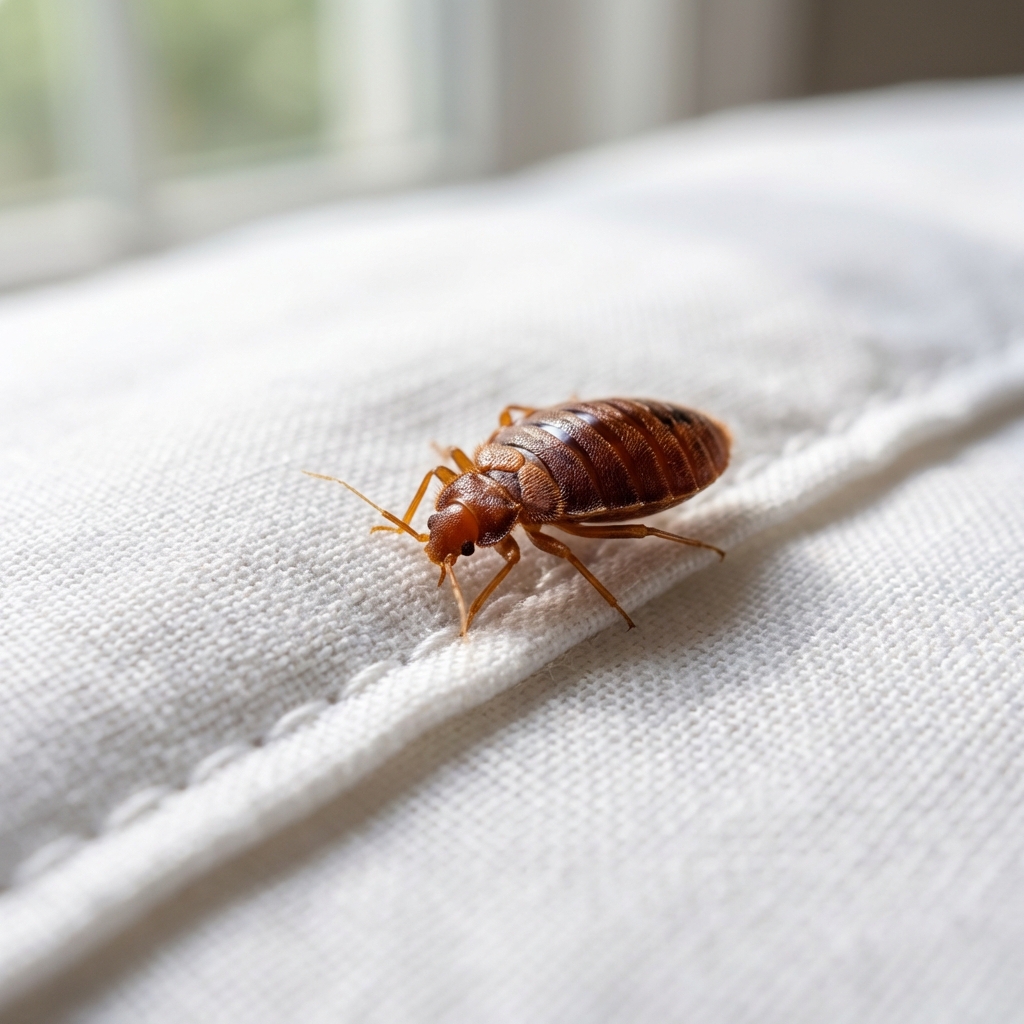
Image cue: flat, oval body with visible abdominal segments and no functional wings.
Adult bed bugs (most common in photos)
- Size: typically 4–7 mm (about 3/16 inch), up to about 1/4 inch when fully grown.
- Shape: oval and very flat when unfed, more swollen and longer-looking after feeding.
- Color: light brown to reddish brown. After feeding they can look darker and more red-brown.
- Texture: smooth, not fuzzy, not shiny like a beetle.
- Wings: they do not fly. In photos you will not see functional wings.
Nymphs (young bed bugs)
Nymphs are smaller and harder to spot in photos. They can look pale or translucent, especially before a meal.
- Size: from pinhead size up to about 1/8 inch as they grow.
- Color: pale straw to light brown, sometimes almost clear.
- Clue in photos: after feeding, the abdomen may look darker or reddish.
Eggs and shed skins
People often miss these in photos because they blend in with fabric and wood grain.
- Eggs: pearly white, elongated-oval, about 1 mm (roughly pinhead-sized), often tucked into cracks.
- Shed skins: light tan shells that look like hollow versions of the bug.
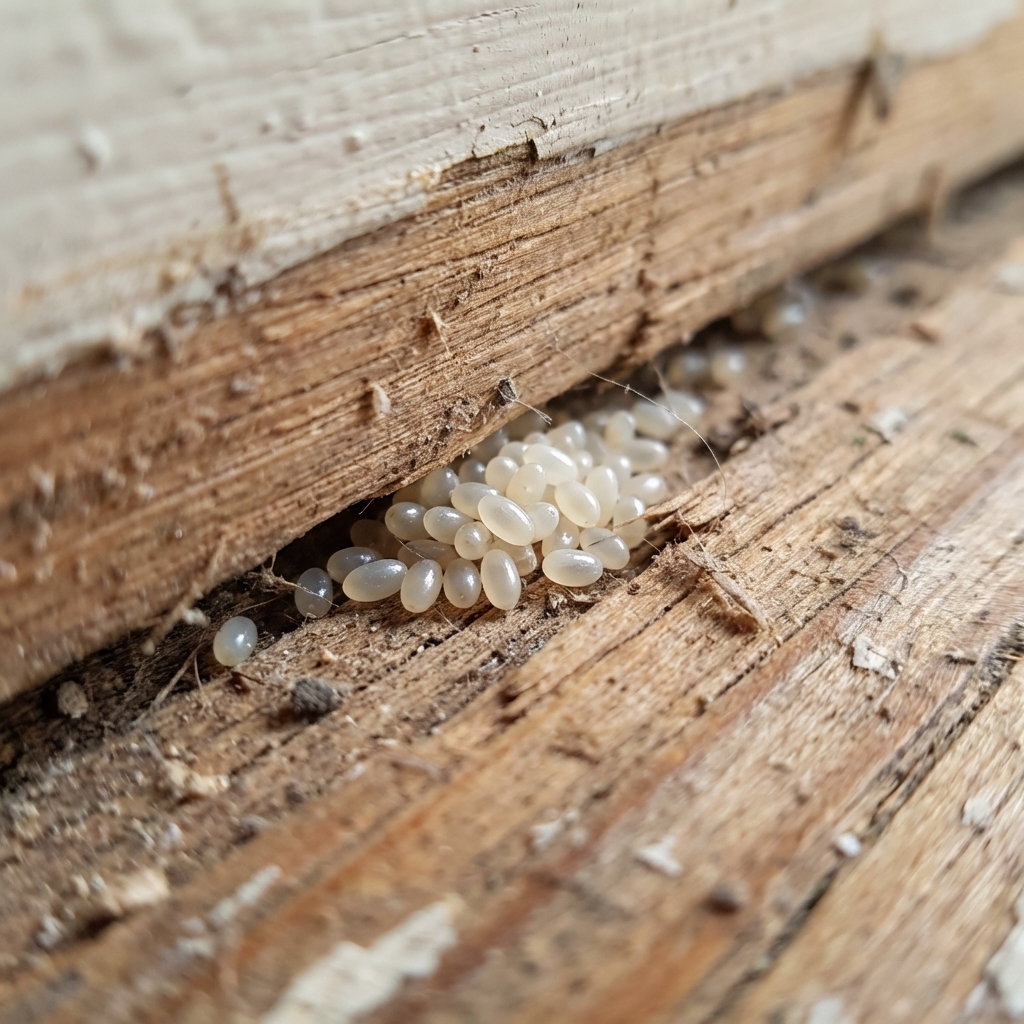
Image cue: pinhead-sized, pearly eggs tucked into a tight crack, not large “rice-like” grains.
Why gardeners think they found bed bugs outdoors
Most outdoor “bed bug sightings” come from one of these situations:
- Outdoor seating and cushions: patio furniture, porch swings, outdoor rugs.
- Gardening gear: tote bags, gloves, kneeling pads, harvest baskets stored in sheds or garages.
- Wood piles and storage: places with lots of cracks where insects hide.
- People bring them out: bed bugs hitchhike on clothing or bags and end up outside temporarily.
So yes, you might spot a bed bug outdoors, but if you are seeing lots of similar bugs around plants, it is usually something else.
Common garden look-alikes (photo cues)
This is where most ID mistakes happen. Below are the usual suspects that show up in backyards and get labeled as bed bugs in photos.
1) Bat bugs and swallow bugs
These are the toughest to separate from bed bugs in images. They look extremely similar.
- Where found: attics, chimneys, eaves, near bat roosts or bird nests.
- Photo clue: bat bugs often look slightly hairier in close-up. A more specific lab-level cue is that the hairs (setae) on bat bugs are often longer than the width of the eye, while bed bug hairs are shorter. In practice, a clear macro photo or a professional ID is usually needed.
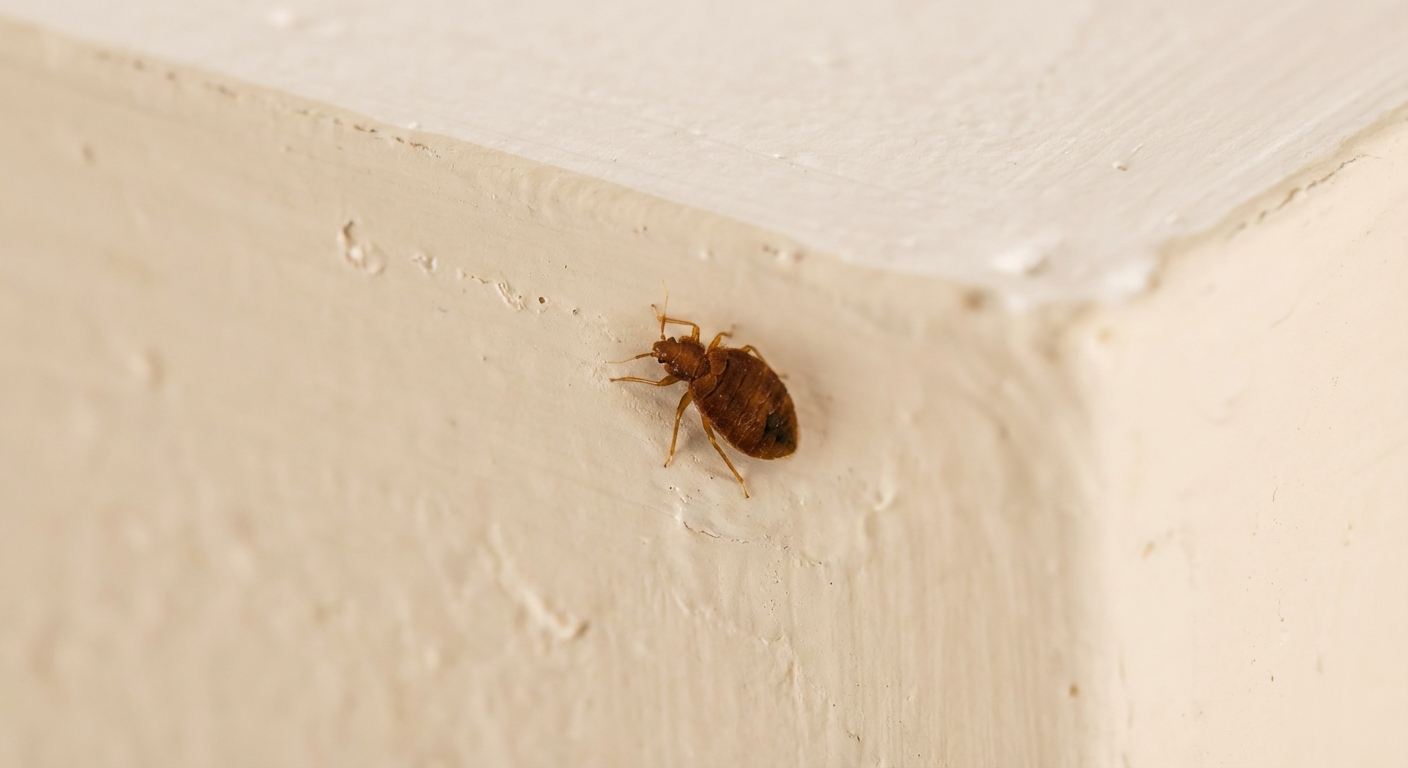
Image cue: very similar body shape to bed bugs, sometimes with a faintly fuzzier outline in sharp close-ups.
2) Carpet beetles (adults and larvae)
Carpet beetles are common around homes and can wander near doors and windows. They do not blood-feed like bed bugs.
- Where found: indoors near windowsills, lint, stored fabrics, sometimes on outdoor sills.
- Photo clue: adult carpet beetles often look more rounded and shiny with hard wing covers. Larvae are fuzzy or bristly, not flat and smooth.
- Important note: some people get itchy rashes from carpet beetle larval hairs and interpret that as “bites.”
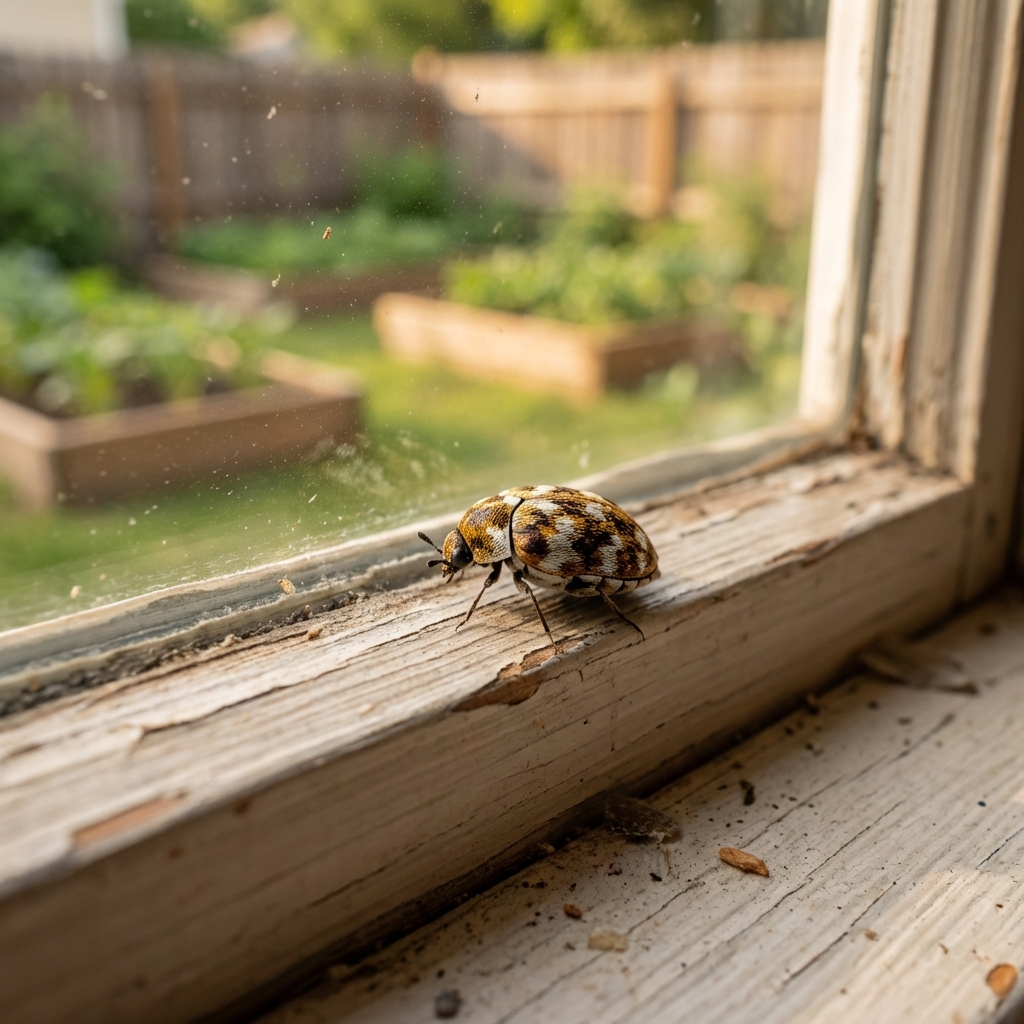
Image cue: beetle-like shine and wing covers (not a flat, segmented, wingless look).
3) Spider beetles
Spider beetles can look bed bug-ish in a quick glance, but they have a different body plan.
- Where found: pantries, sheds, garages, stored seed, pet food.
- Photo clue: rounder body, longer legs, more of a “tiny spider with a beetle body” look.
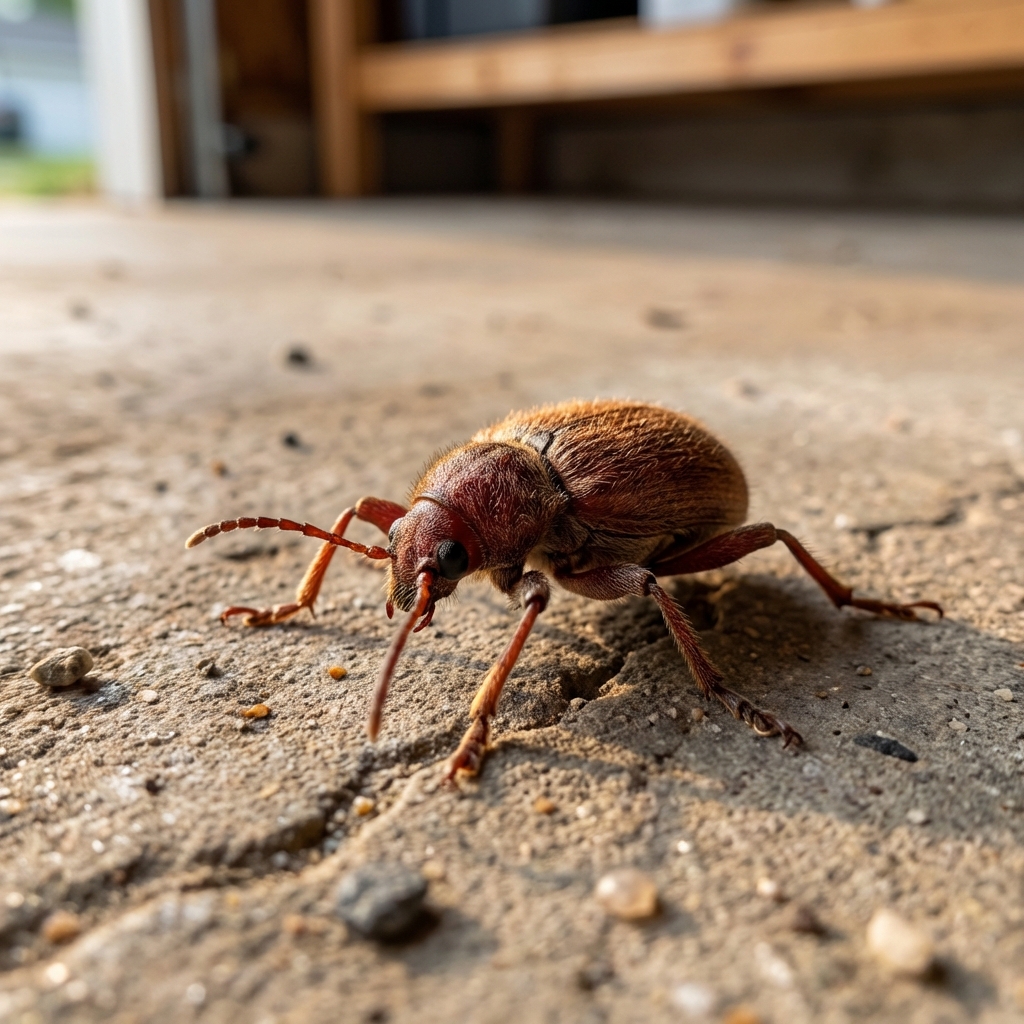
Image cue: long legs and a rounder, more domed body than a bed bug.
4) Stink bug nymphs
These show up on plants all the time and get blamed for bites. They are plant feeders, not human feeders.
- Where found: on stems, undersides of leaves, especially vegetables and ornamentals.
- Photo clue: more shield-shaped as they grow, often patterned or with bright markings.
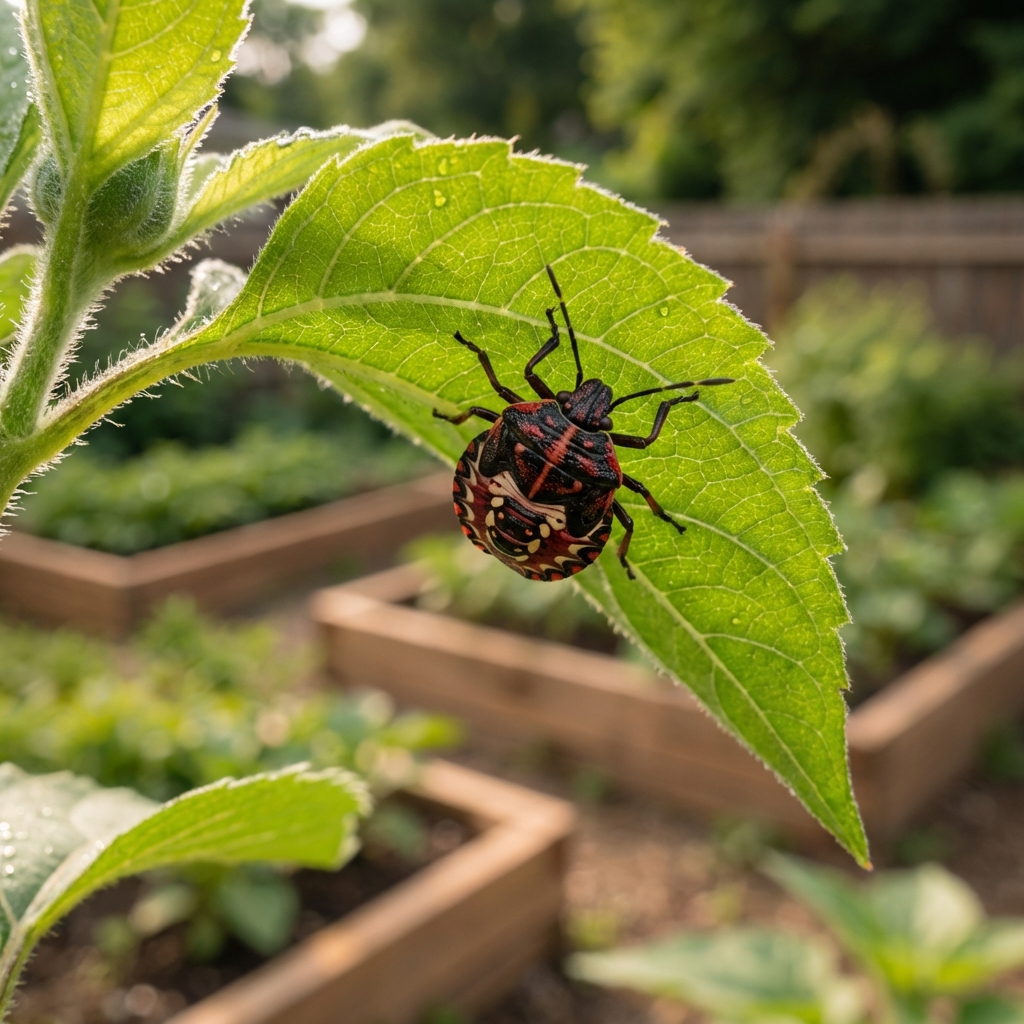
Image cue: a chunkier, shield-like shape and often visible patterning.
5) Aphids and scale insects (tiny, but misread in bad photos)
Aphids are usually too small to be bed bugs, but blurry images can confuse people.
- Where found: clustered on new growth, buds, and stems.
- Photo clue: groups or colonies on plants, often green, yellow, or black, and you may see sticky honeydew.

Image cue: clustered insects on plant tissue with a “colony” look, not single flat bugs hiding in seams.
Quick ID checklist at home
If you have a bug in hand (or trapped in tape), these checks can help before you go down a rabbit hole.
Step 1: Where did you find it?
- On bedding, mattress seams, couch seams: bed bug suspicion goes up.
- On a tomato plant, basil, or flowers: it is almost certainly a garden insect, not a bed bug.
- Near a bird nest or bat roost: bat bug or swallow bug becomes more likely.
Step 2: What does the body look like?
- Very flat, oval, smooth: matches bed bug profile.
- Hard shell, shiny, clearly a beetle: not a bed bug.
- Fuzzy or hairy: not a bed bug.
- Long antennae and a fast runner like a roach nymph: not a bed bug.
Step 3: Are there signs nearby?
Bed bugs usually leave a trail of evidence where they live.
- Dark specks that look like ink dots along seams or cracks (fecal spots).
- Shed skins in hiding spots.
- Small blood smears on sheets or pillowcases.
Not bed bugs, but you still have bites?
If the bug does not match bed bug features and you are dealing with itchy welts after gardening, these are common culprits:
- Mosquitoes: bites often happen outdoors in the moment, especially at dusk or near standing water.
- Chiggers: intense itch after walking through tall grass or weedy edges, often around sock lines or waistbands.
- Fleas: more common if pets or wildlife visit the yard, bites often cluster around ankles and lower legs.
- Biting midges (no-see-ums): tiny bites that can feel like “sudden itching” outdoors, often near damp areas.
Bed bug bites are not a reliable stand-alone ID. Many skin reactions look the same across pests.
Garden-friendly response
If you truly suspect bed bugs, the goal is to avoid spreading them and confirm the ID without bringing extra chemicals into your yard.
Contain first
- Capture the bug with clear tape or in a small jar or zip bag.
- Take a sharp photo in good light, as close as your phone can focus.
- If it came from clothing or a gardening apron, put those items in a sealed bag until you can wash and dry them.
Use heat, not garden sprays
Most outdoor insect sprays are not reliable for bed bugs, and they are a poor fit for patios and gardens. Bed bug control usually requires an indoor, integrated approach, and many over-the-counter sprays perform poorly.
- Dryer heat: for clothes and washable fabrics, run a dryer on high heat for about 30 to 60 minutes (adjust for load size and fabric). The dryer is often the most important part.
- Hot wash helps, but heat from drying is typically what finishes the job.
- Steam: can help on seams and cracks for certain items, if used carefully and slowly enough to heat the surface.
Where bed bugs actually hide indoors
Focus on seams, folds, and cracks. It is not just mattresses.
- Mattress seams and box spring edges
- Couch seams, recliners, and throw pillows
- Bed frame joints, headboards, baseboards
- Nightstands and drawer corners near the bed
- Curtain hems and fabric folds near sleeping areas
- Behind picture frames near beds
- Outlet plates and gaps in trim (turn power off before removing covers)
Simple confirmation tools (DIY-friendly)
- Interceptor cups under bed and sofa legs can help detect activity over time.
- Passive monitors placed near sleeping areas can help confirm presence without spraying.
- Re-check weekly and document what you find with photos.
When to call a pro
If you find multiple bugs, eggs, or fecal spotting indoors, that is when professional help is worth it. A single suspicious bug outdoors is not enough to confirm an infestation. If you are stuck between look-alikes (especially bat bugs versus bed bugs), a licensed pest professional or local extension office can help confirm the ID.
Can bed bugs live in mulch or compost?
In normal backyard conditions, bed bugs do not establish in soil, compost, or mulch. They prefer stable indoor environments near a regular blood meal.
That said, here are realistic scenarios gardeners run into:
- They can hitchhike on bags, blankets, or cushions brought outside.
- They can hide temporarily in cracks of outdoor furniture, especially if it is stored close to the house.
- They do not feed on plants, so plant damage is not a bed bug clue.
Better photos for a confident ID
If you want a confident ID, photo quality matters more than you might think.
- Use daylight near a window or outside in shade.
- Place the bug on a plain surface like white paper.
- Get one photo from above and one from the side.
- Include a size reference like a coin next to it (not covering it).
- Avoid heavy zoom. Move the phone closer until it focuses, or use a simple clip-on macro lens if you have one.
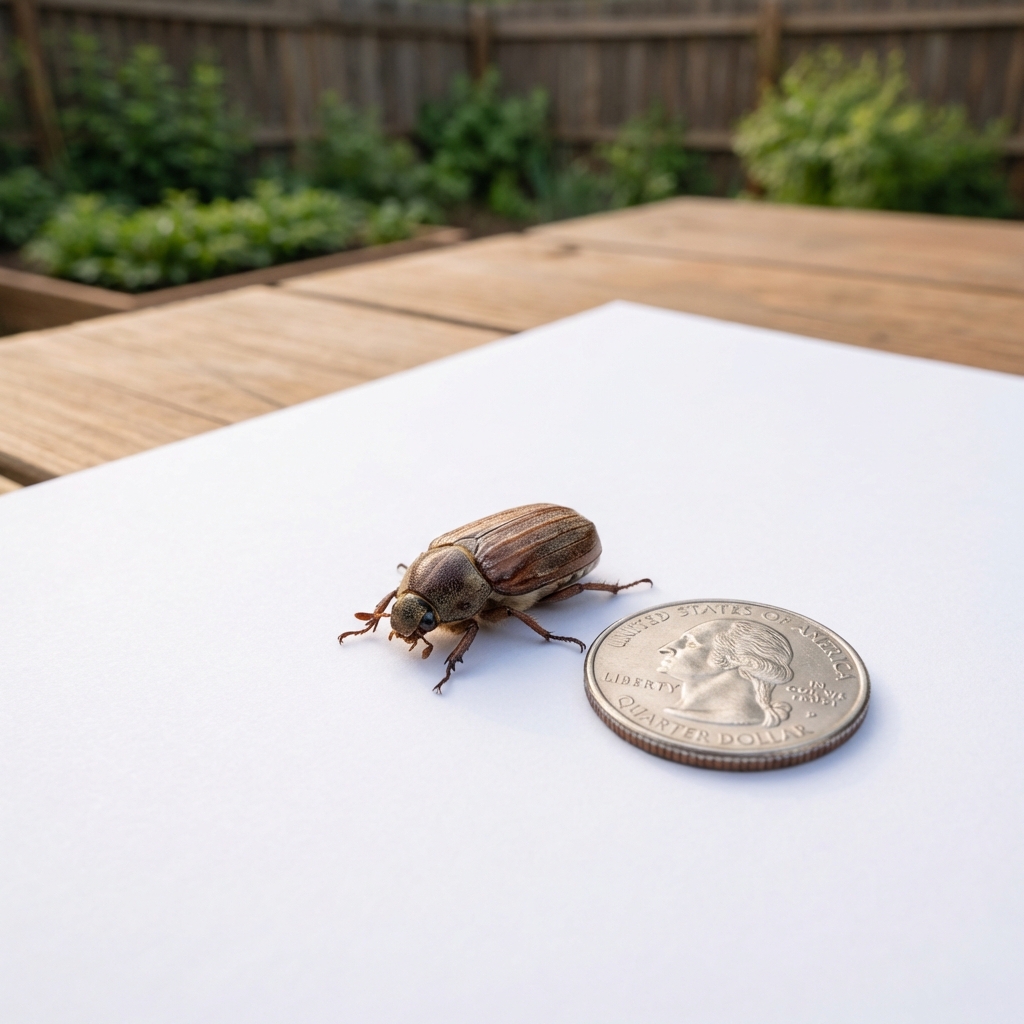
Image cue: clear top view plus size reference makes it much easier to separate bed bugs from beetles and nymphs.
Prevention tips for gardeners
You do not need to treat your yard for bed bugs. Instead, aim for a few simple habits that reduce hitchhiking risk while keeping things practical.
- Keep kneeling pads and fabric gloves washable, and run them through the dryer after heavy use if you are concerned.
- Store cushions and outdoor textiles in sealed bins when not in use, especially if you travel often.
- Be cautious with secondhand items like patio chairs, benches, and wicker pieces. Inspect seams and joints before bringing them home.
- Do not spray pesticides just in case. It rarely solves the problem and can create new ones in your garden.
FAQ
Do bed bugs bite outside?
They can bite if they are on you, but they are not an outdoor hunting insect like mosquitoes. Most outdoor “bed bug bite” assumptions turn out to be mosquitoes, fleas, chiggers, or biting midges.
If I find one bug on my porch, does that mean I have bed bugs?
Not necessarily. Confirm the ID and inspect indoors where bed bugs actually live. One outdoor find is often a look-alike.
What is the fastest way to confirm bed bugs?
Clear photos plus physical evidence indoors (spots, shed skins, multiple bugs) are the fastest clues. If you are unsure, interceptor cups or passive monitors can help. A licensed pest professional can confirm if you need a definitive answer.
Bottom line
For home growers, the most garden-friendly approach is simple: identify first. Bed bugs are real and stressful, but they are also overdiagnosed outdoors. Use the photo cues above, rule out common garden look-alikes, and focus inspections on seams and cracks inside the home, not your raised beds.

Jose Brito
I’m Jose Britto, the writer behind Green Beans N More. I share practical, down-to-earth gardening advice for home growers—whether you’re starting your first raised bed, troubleshooting pests, improving soil, or figuring out what to plant next. My focus is simple: clear tips you can actually use, realistic expectations, and methods that work in real backyards (not just in perfect conditions). If you like straightforward guidance and learning as you go, you’re in the right place.