Fungus gnats are one of those pests that make you feel like your plants are doomed, even when the plants are mostly fine. The tiny black flies buzzing around pots are annoying, but the real problem is the larvae living in consistently damp potting mix. If you only swat the adults, they will be back in days.
This is a simple home-remedy approach that works in real homes and seed-starting setups: you will trap adults, treat the soil for larvae, and adjust watering so the life cycle breaks.
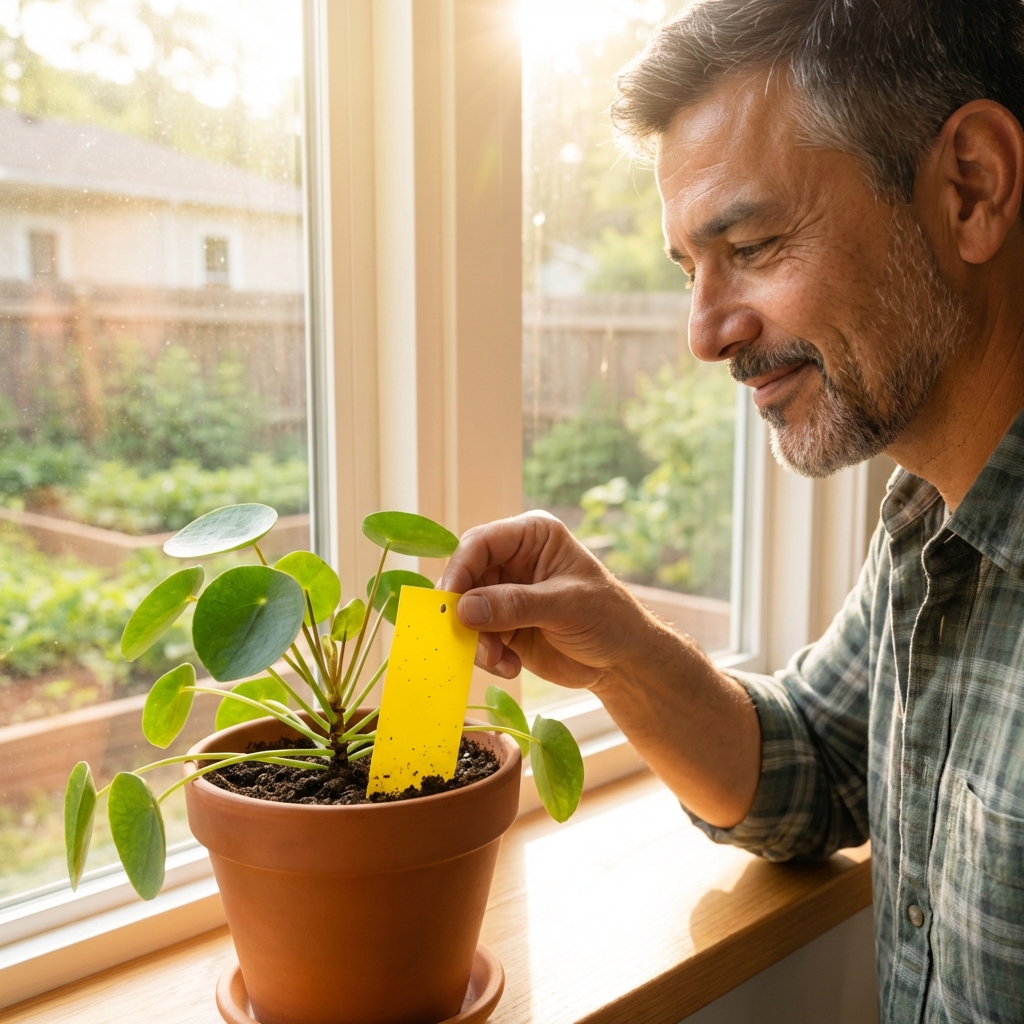
Know what you are dealing with
Fungus gnats are small, dark, mosquito-like flies that tend to run across soil and flutter when disturbed. They love moist potting mix with decaying organic matter. The adults are mostly a nuisance, but the larvae can chew on tender roots, especially on seedlings and cuttings.
Quick signs it is fungus gnats
- Small black flies hovering around pots, especially after watering.
- More gnats near seed trays, propagation domes, or self-watering planters.
- Seedlings that stall, wilt, or fall over despite “good” watering habits.
Extra confirmation (if you want to be sure)
- Larvae: tiny, translucent worms with a distinct black head, usually in the top inch of damp mix.
- Adults: weak fliers that often run on the soil surface before taking off.
Rule out lookalikes
- Fruit flies: hover around fruit, drains, trash, and sticky spills more than soil.
- Drain flies: fuzzy, moth-like, usually hang out in bathrooms and sinks.
Why home remedies work
Fungus gnats have a fast life cycle. Adults lay eggs in damp soil. Larvae feed near the surface, then pupate and emerge as new adults. If you do not address the soil stage, you are stuck in a loop.
So the winning strategy is:
- Catch adults so fewer eggs get laid.
- Kill larvae with a safe soil treatment.
- Dry the top layer so eggs and larvae do poorly.
Step 1: Dry the top of the soil
If the plant can handle it, let the top 1 to 2 inches of potting mix dry before watering again. Fungus gnat larvae need moisture near the surface. Drying that zone breaks the “nursery.”
How to do it without stressing plants
- Water thoroughly, then wait longer than you think before the next watering.
- Empty saucers after watering so pots are not sitting in water.
- Increase airflow with a small fan nearby (gentle movement is enough).
- For moisture-loving plants, dry only the top layer and keep deeper soil evenly moist.
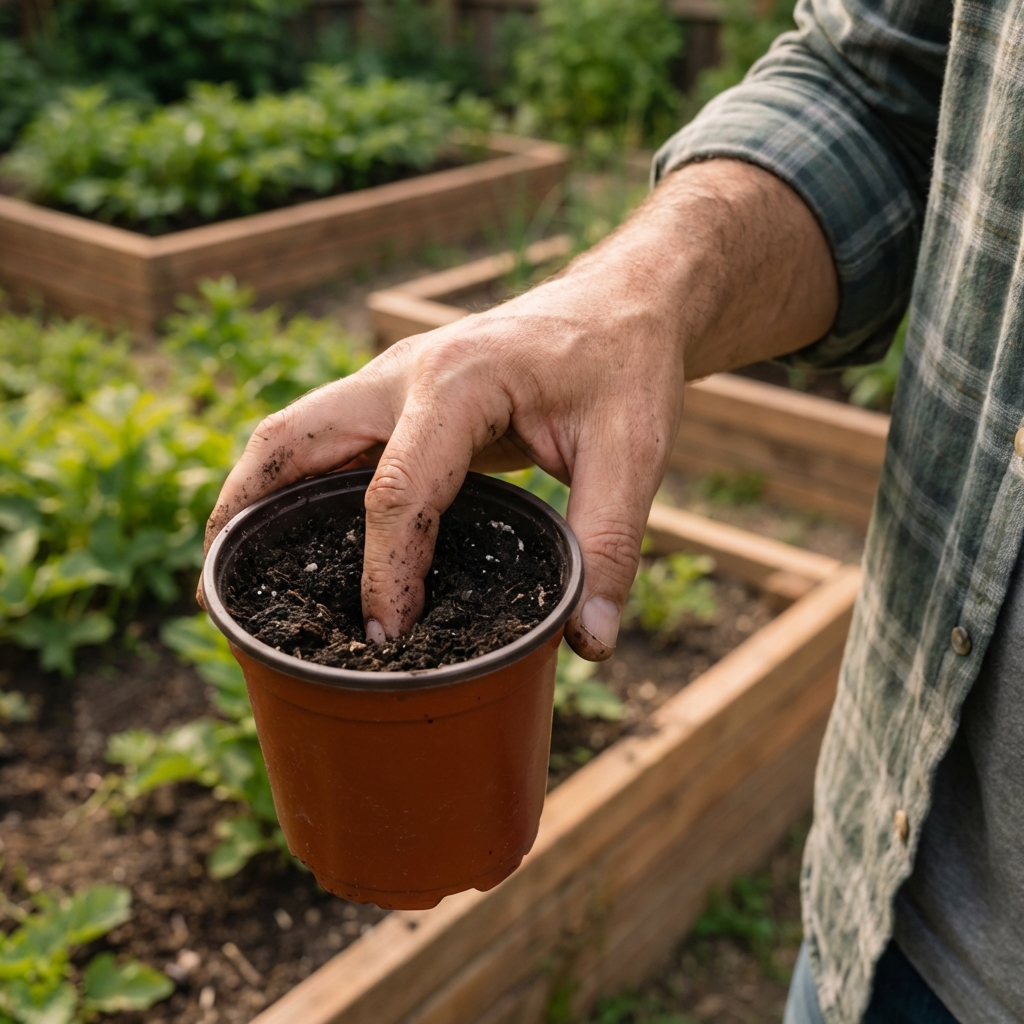
Step 2: Trap adults with sticky cards
Sticky traps will not solve an infestation on their own, but they make a big difference fast. They reduce the adult population and tell you if your treatment is working.
How to use them
- Place a trap in each affected pot, close to the soil surface.
- Replace when covered with insects or dust.
- Use extra traps near seed trays and propagation areas.
Tip: If you see lots of gnats on the traps within a day or two, it usually means that pot or area is a major breeding spot, or at least very close to one.
Quick safety note: Place sticky cards where pets and kids cannot brush against them. The glue is messy and the cards are tempting to curious noses.
Step 3: Use BTI for larvae
If you want one soil treatment that consistently works, use BTI, short for Bacillus thuringiensis israelensis. It is a naturally occurring bacteria used to control mosquito and fungus gnat larvae. You can find it as mosquito dunks or mosquito bits.
How to apply BTI in pots and seed trays
- Soak method: Soak a piece of a mosquito dunk in a watering can for a few hours or overnight, then water as usual.
- Bits method: Sprinkle mosquito bits on the soil surface, then water lightly to move BTI into the top layer (follow label directions). Note: the bits can grow a harmless white fuzz as the carrier breaks down. It looks alarming, but it is common and not a plant disease.
What to expect
- Adults may still fly around for a week or two while the life cycle collapses.
- Reapply with regular watering for 2 to 3 weeks to catch new hatchlings.
Seedling-friendly note: BTI is commonly used around delicate starts. Still, follow the product label and avoid over-saturating seed trays.
Bonus option: Beneficial nematodes
If you want a biological tool that can work alongside BTI (or instead of it), look for beneficial nematodes, usually Steinernema feltiae. They hunt fungus gnat larvae in moist media and are popular with indoor growers and greenhouse folks.
How to use them well
- Apply to already-moist soil and keep the mix lightly moist for the first week so they can move.
- Follow storage and mixing instructions carefully. They are living organisms.
- Pair with sticky traps so you still reduce egg-laying adults.
Step 4: Hydrogen peroxide drench
A diluted hydrogen peroxide drench can knock back larvae on contact. As it breaks down, it releases oxygen and water. It can be a useful quick hit, but it is not my first pick for routine use because it can also impact beneficial microbes in the potting mix. Evidence and results are mixed, and some plants can react poorly if it is overused.
Common dilution gardeners use
Many gardeners use 3% hydrogen peroxide diluted 1 part peroxide to 4 parts water as a one-time drench. Pour it through the soil until it drains out the bottom, then let the pot dry appropriately.
Important cautions
- Test on one plant first if you are unsure.
- Avoid frequent applications. Repeated drenches can irritate fine roots and disrupt soil biology. If you need ongoing control, BTI or nematodes are usually the better long-term tools.
- Do not use stronger peroxide concentrations unless you truly know what you are doing.
- Store peroxide sealed, away from heat and light, and out of reach of kids and pets.
Step 5: Top-dress to block egg laying
Fungus gnats prefer to lay eggs in moist, organic material. A dry barrier on top makes the surface less inviting and reduces survival of eggs and young larvae. Think of this step as a helper, not a standalone fix. If the mix stays wet underneath, gnats can still thrive.
Good top-dressing options
- Coarse sand in a layer about 1/4 to 1/2 inch deep.
- Fine gravel or small aquarium gravel in a layer about 1/4 to 1/2 inch deep.
- Horticultural grit in a layer about 1/4 to 1/2 inch deep.
Tip: If you water from the top, pour gently so you do not mix the barrier down into the potting soil. Bottom watering makes top-dressings work better.
What I would skip
- Thick mulch indoors: it can hold moisture and make things worse.
- Compost top-dressing: great for nutrition, but it can attract gnats when used on already-wet pots.
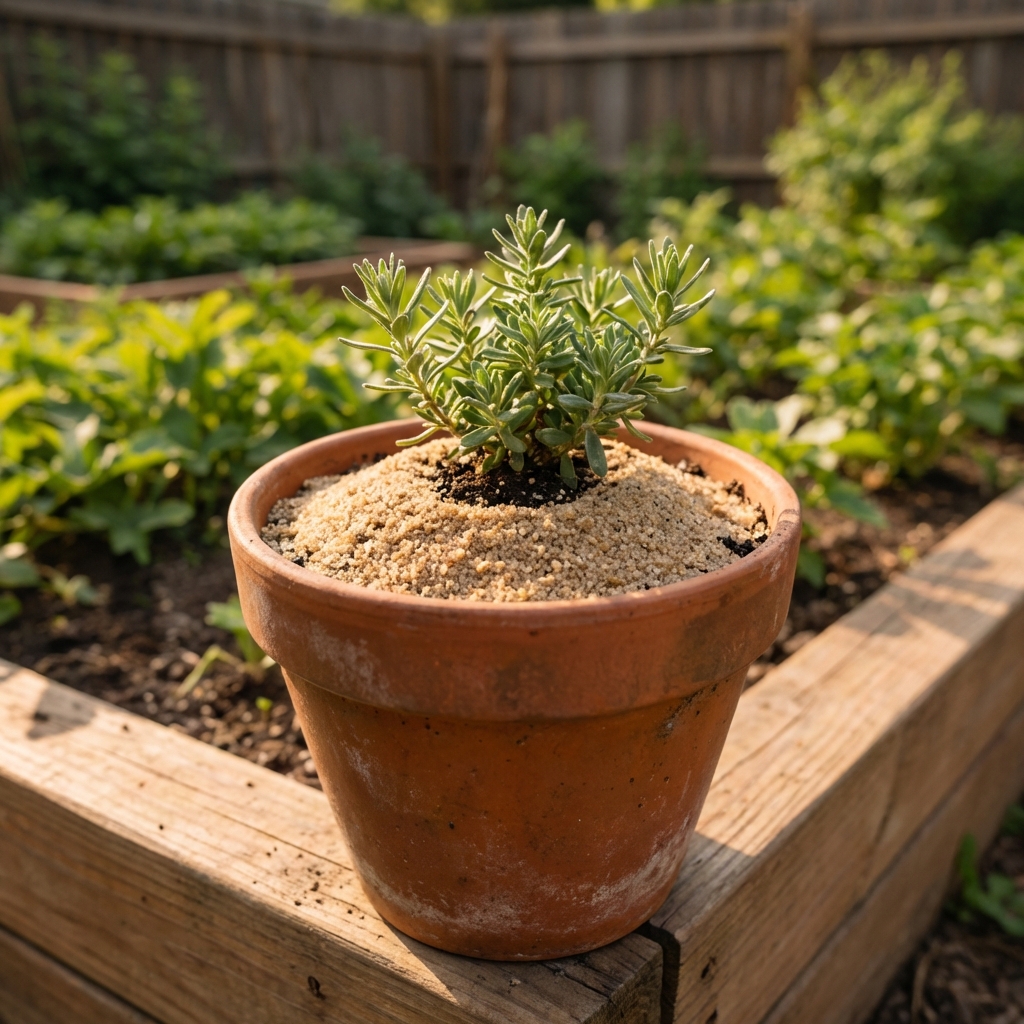
Do vinegar traps work?
Sometimes, but they are better for fruit flies than fungus gnats. Fungus gnats are more attracted to moisture and soil conditions than to fermented bait. If you try a trap, use it as a bonus tool, not your main plan.
If you want to try a simple trap
- Use a small cup with apple cider vinegar plus a drop of dish soap.
- Place it near the worst pot or seed tray.
- Still use sticky traps and soil treatment.
Special situations
Seedlings and propagation trays
- Bottom water only when possible, and let the surface dry between waterings.
- Use BTI in the watering water for 2 to 3 weeks.
- Improve airflow and avoid keeping humidity domes on longer than needed.
Self-watering pots
These can be fungus gnat magnets because the mix stays evenly moist. If gnats are persistent, consider switching that plant temporarily to a standard pot, or keep the reservoir dry for a period while treating with BTI and traps.
Outdoor containers and raised beds
Outdoors, fungus gnats are usually less of a big deal because natural predators help. If they are swarming around containers, it is still almost always a moisture issue. Let the top dry, reduce organic “sludge” at the surface, and use BTI if needed.
Prevention that sticks
- Do not overwater: water on plant needs, not on a schedule.
- Use well-draining potting mix: heavy mixes stay wet too long, especially indoors.
- Quarantine new plants: keep them separate for a week and use a sticky trap as a monitor.
- Clean up: remove dead leaves sitting on soil, wipe algae or moss from the surface, and empty drip trays and cache pots.
- Store potting mix sealed: open bags in humid areas can become breeding sites.
Quick 7-day plan
- Day 1: Put sticky traps in every affected pot. Let the surface dry more than usual.
- Day 2 to 3: Start BTI watering or apply bits per label.
- Day 4 to 7: Continue drying the top layer, improve airflow, and remove decaying debris.
- Week 2 to 3: Keep using BTI with watering. Replace traps as needed.
If you do those steps together, you will often see a big drop in adults within a week and a noticeable “reset” by week two. Heavy infestations, self-watering setups, or constantly damp rooms can take longer, so stay consistent for a few weeks.
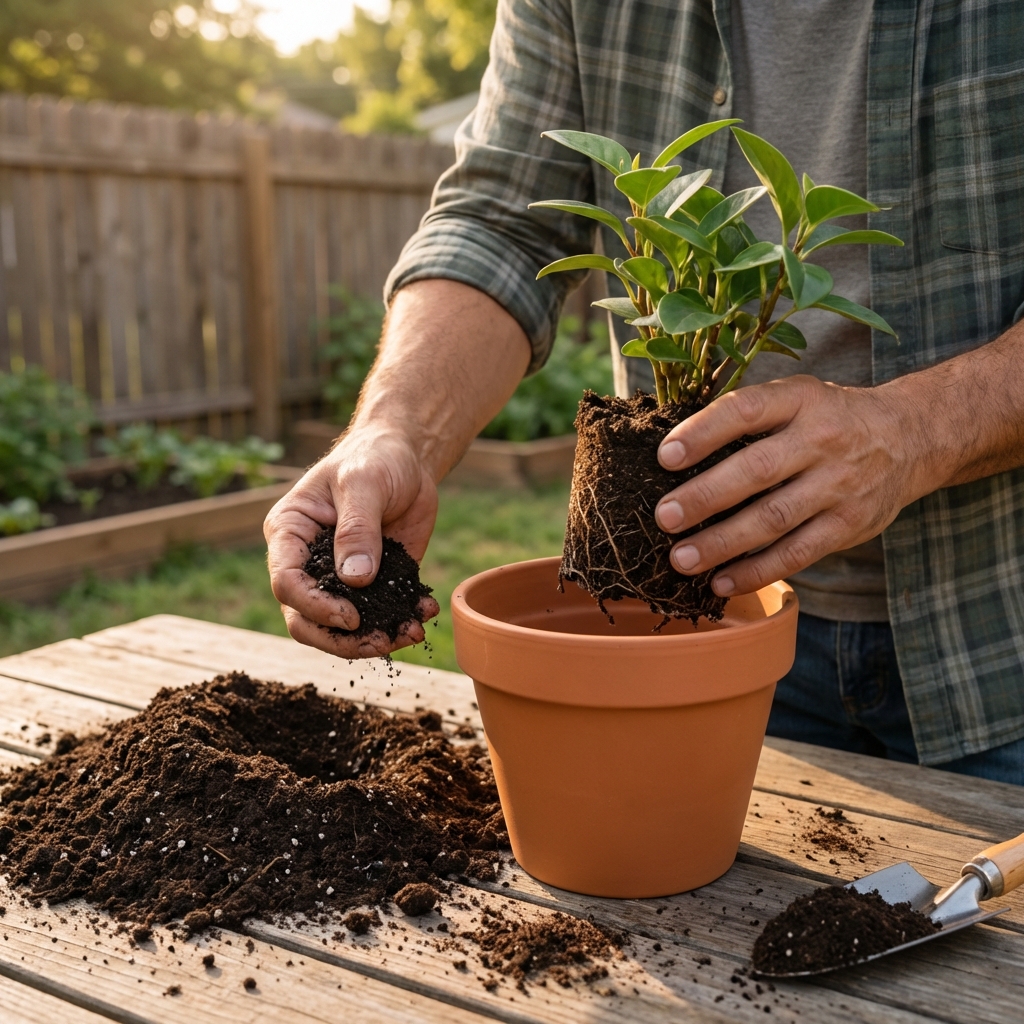
When to repot
If the potting mix is staying soggy for days, smells sour, or is breaking down into a dense muck, repotting can be the most effective fix. Use fresh, well-aerated mix, check that drainage holes are open, and avoid oversized pots that hold water too long.
FAQ
Are fungus gnats harmful to humans or pets?
They are mostly a nuisance and do not bite like mosquitoes. The bigger risk is plant stress from larvae in very wet soil, especially for seedlings.
How long does it take to get rid of them?
With sticky traps plus BTI and better watering, most people see strong improvement in 7 to 14 days. Full cleanup can take 3 to 4 weeks if the infestation was heavy or conditions stay damp.
Why do they keep coming back?
Usually one of these: soil stays wet too long, organic debris builds up on the surface, algae is growing on the mix, a bag of potting mix is hosting them, or a self-watering setup stays constantly damp.

Jose Brito
I’m Jose Britto, the writer behind Green Beans N More. I share practical, down-to-earth gardening advice for home growers—whether you’re starting your first raised bed, troubleshooting pests, improving soil, or figuring out what to plant next. My focus is simple: clear tips you can actually use, realistic expectations, and methods that work in real backyards (not just in perfect conditions). If you like straightforward guidance and learning as you go, you’re in the right place.