Skunks are one of those backyard visitors that usually mind their business until they do not, or until they start causing trouble. In many gardens, the “problem” is not aggression. It is digging up turf for grubs, tipping compost, raiding pet food, or setting up a cozy den under a shed. The good news is you can repel skunks humanely by making your yard less rewarding and a lot less comfortable.
This page focuses on practical, realistic steps that work for home growers. Start with the easy wins, then tighten things up with exclusion.
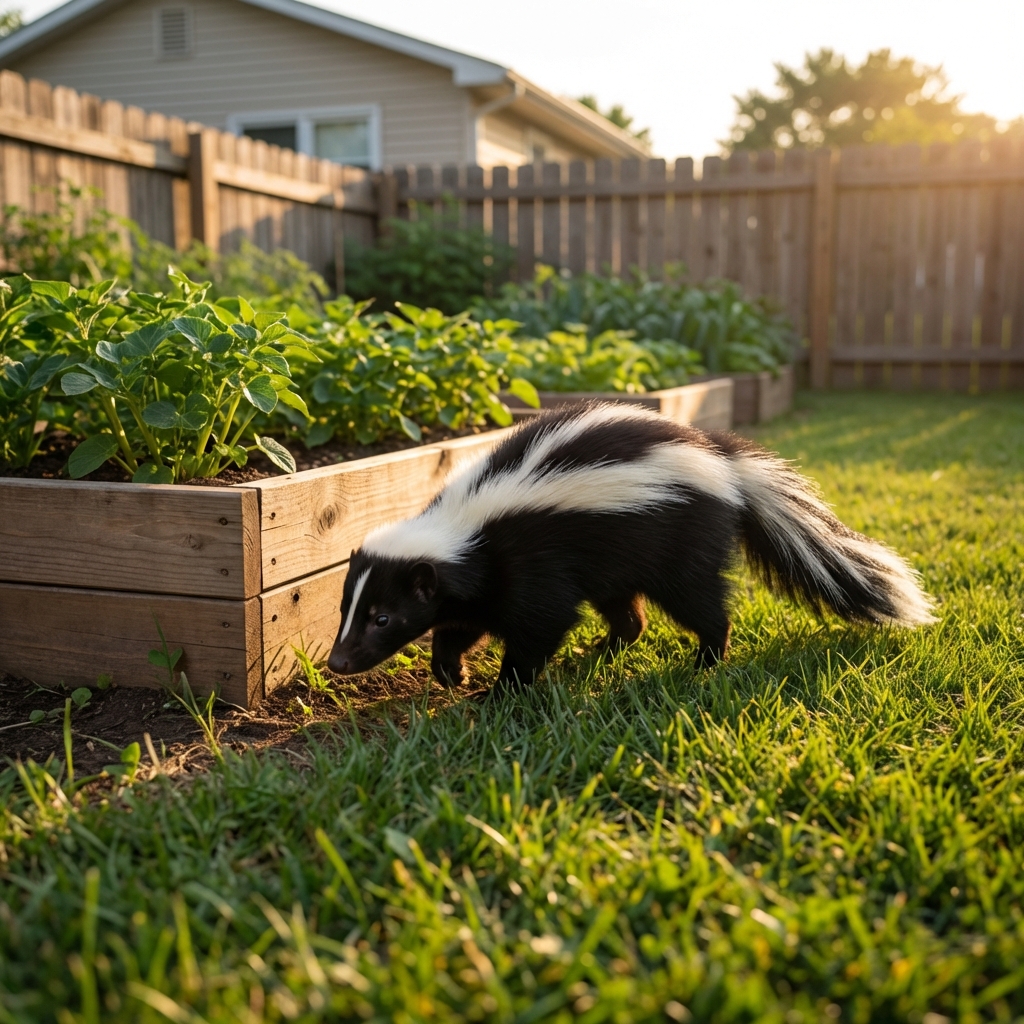
First: Make Sure It Is Really Skunks
Before you buy repellents or start sealing up gaps, look for signs that match skunk behavior. A quick ID saves time and helps you pick the right fix.
Common skunk signs in yards
- Small, shallow cone-shaped holes in lawn or beds, often a few inches across, where they are hunting grubs and insects.
- Rolled-back patches of turf after a night of grub hunting.
- Musty skunk smell near sheds, decks, porches, or brush piles.
- Tracks with five toes on both front and hind feet (often with visible claw marks).
If you see large, deep holes or chewed wood, you might be dealing with raccoons, groundhogs, or squirrels instead. The prevention steps overlap, but grub control and den blocking are especially important for skunks.
Why Skunks Come Into Gardens
Skunks do not show up because they love tomatoes. They show up because your yard offers food, water, or shelter with very little risk.
Top skunk attractants
- Grubs and insects in lawns and garden beds.
- Pet food left outside, including cat food on porches.
- Open compost with kitchen scraps, especially meat, grease, dairy, or fish.
- Fallen fruit from trees and bushes.
- Easy shelter under decks, sheds, steps, wood piles, or dense brush.
- Water sources like dripping hoses, bird baths, and low spots that stay damp.
Repelling skunks is mostly about removing these “rewards” and blocking the places that feel safe.
The Fastest Fixes That Actually Help
If you want the quickest improvement, focus on the things that feed skunks. You can do these today and often see results within a week.
1) Clean up food sources
- Bring pet food indoors, especially overnight.
- Use tight-fitting lids on garbage cans. If trash is not secured, skunks can take advantage of it too.
- Pick up fallen fruit daily during peak drop.
- Feed birds in a way that minimizes seed on the ground, or pause feeding for a couple weeks if skunks are active.
- Store birdseed and feed in sealed containers so it does not spill and attract nighttime scavengers.
2) Tighten up compost
Open compost piles are basically skunk buffets. Switch to a closed bin, and avoid adding meat, oil, dairy, or heavily seasoned foods. If you compost kitchen scraps, bury them in the center of the pile and keep a thick “brown” cover layer on top.
3) Water earlier when you can
Skunks are most active after dusk. If possible, water in the morning so the yard is less attractive at night. Do not rely on irrigation timing as a primary “insect control,” but it can be a helpful, low-effort tweak while you address the bigger attractants.
Stop the Digging: Handle Grubs the Smart Way
In many yards, the digging is not random. Skunks are hunting grubs and other soil insects. You can chase skunks for weeks, but if the buffet stays open, they keep coming back.
How to tell if grubs are the issue
- Digging is mostly in the lawn, especially in patches.
- Turf feels loose or lifts like a rug in damaged areas.
- Damage spikes late summer into fall in many regions.
If you suspect grubs, consider confirming with a small inspection cut in the turf. A local extension office can also help you time treatment for your area, which matters a lot for results. In general, grub control success is highly timing-dependent, and the “best window” varies by pest and region.
Grub control options that fit a home garden mindset
- Beneficial nematodes (timed and applied correctly) can reduce grub populations without harsh broad-spectrum chemicals.
- Milky spore can be useful in some regions for Japanese beetle grubs, but it is not a quick fix and results vary.
- Healthy turf practices (proper mowing height, deep but less frequent watering, and good soil health) can reduce chronic infestations.
Once the food source drops, skunks often move on without drama.

Block Den Sites: The Most Reliable Long-Term Move
Repellents help, but exclusion is what makes your yard consistently skunk-free. The key is to do it safely so you do not trap a skunk inside or separate a mother from babies.
Common den spots
- Under decks and porches
- Under sheds and steps
- In crawl spaces or open foundation gaps
- In brush piles, wood piles, or thick groundcover
How to exclude skunks (basic approach)
- Confirm the space is empty by watching at dusk for a few evenings. For extra caution, sprinkle flour or smooth soil at the entrance and check for fresh tracks. If there is activity, do not seal yet.
- Consider a one-way door (temporary wildlife excluder) on the main opening so an animal can exit but not re-enter. After a few consecutive nights of no signs, you can remove it and seal permanently.
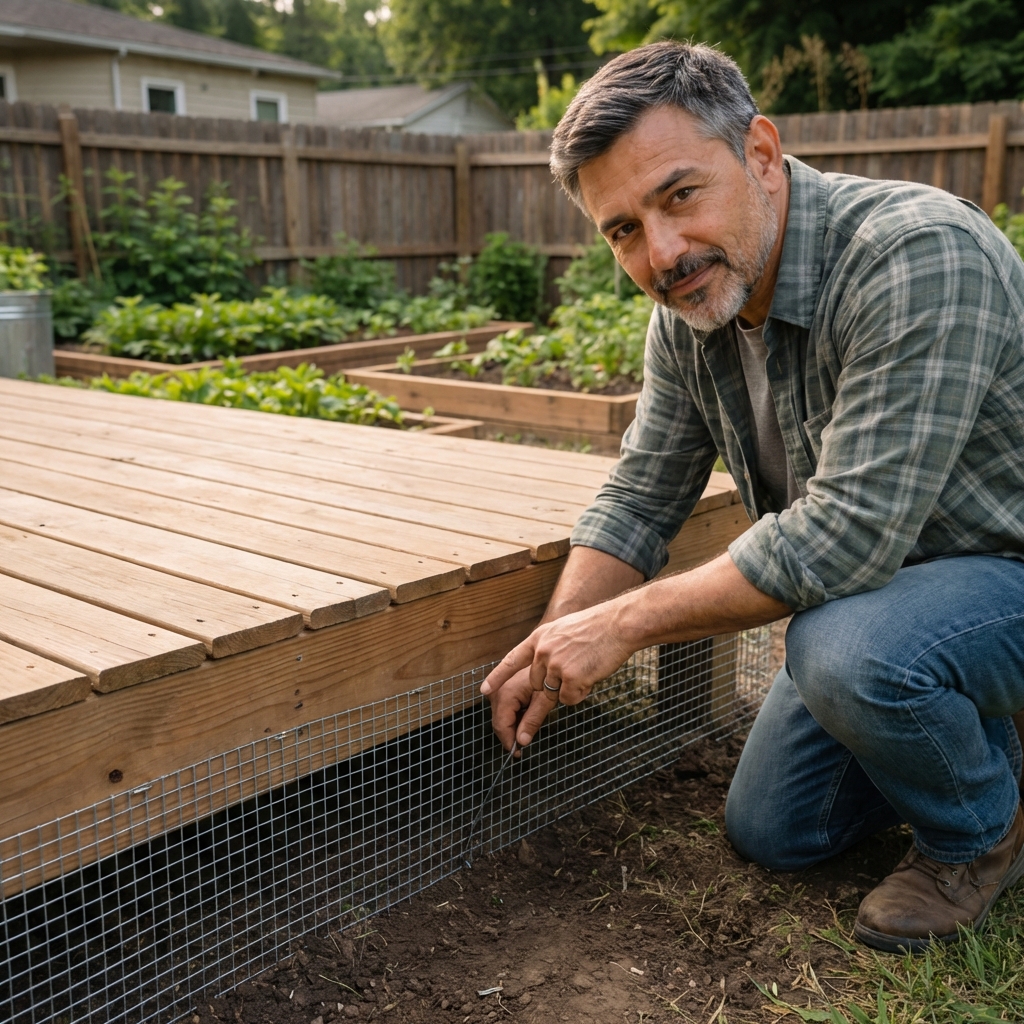
- Use sturdy wire like hardware cloth or welded wire. A 1/2-inch (or smaller) mesh is typically sufficient for skunks and easier to work with than ultra-fine mesh. Chicken wire is usually too flimsy long-term.
- Bury the barrier at least 6 inches (8 to 12 inches is even better in loose soil) and bend the bottom outward in an L-shape to discourage digging.
- Seal gaps along edges with staples, screws with washers, or appropriate fasteners for the structure.
If you suspect babies (often spring through summer), it is worth calling a wildlife professional. Skunks are not usually hard to deal with, but this is the situation where people accidentally make things worse.
Easy Deterrents: What Helps and What Is Overhyped
Deterrents work best as a support tool while you remove food and block shelter. If you rely on deterrents alone, skunks tend to adapt.
Motion-activated lights and sprinklers
These can work well for skunks because they are mostly nighttime visitors. Aim them at common travel routes along fences, the edge of garden beds, or near a suspected den entrance. Rotate positions every so often so it stays unpredictable.
Scent repellents
Commercial repellents often use ingredients like predator urine or strong essential oils. Results vary. If you try them, treat them as temporary and reapply after rain. Place them where skunks enter and where they dig, not randomly around the yard. Follow label directions closely, and keep in mind some essential oils can irritate pets or be harmful if ingested.
- Pros: easy to apply, can discourage repeat visits in mild cases.
- Cons: needs frequent reapplication, can bother pets and people, not a guarantee.
Ammonia or mothballs?
These get mentioned a lot online. They are not recommended. Ammonia is unpleasant and can be unsafe in enclosed spaces, and mothballs are pesticides that can harm children, pets, and wildlife and are not appropriate for outdoor “repellent” use. Stick to exclusion and habitat changes instead.
Protect Garden Beds and New Plantings
If skunks are digging in your beds, they are usually after grubs, beetles, worms, or freshly amended soil that is easy to toss around. A few physical protections can save a lot of frustration.
Simple bed protections
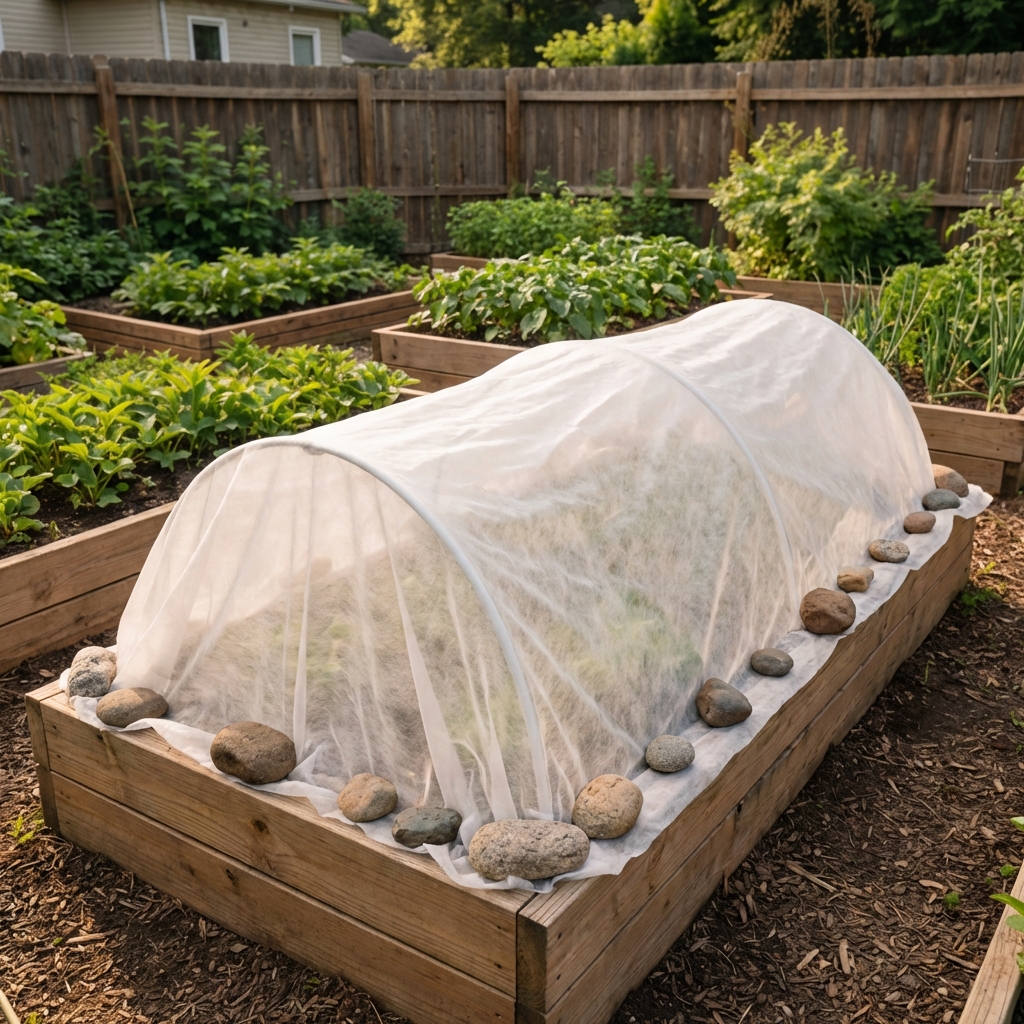
- Row cover or netting over hoops can reduce nighttime access, especially for seed beds.
- Hardware cloth “skirts” laid flat on the soil surface temporarily can stop digging in a hotspot. Pin it down with landscape staples.
- Mulch choices matter. Chunkier mulch is sometimes less inviting to dig than fine, fluffy material. If you just top-dressed with compost, cover it with mulch to make it less attractive.
What Not to Do
When skunks are involved, the goal is to avoid turning a manageable nuisance into a stressful mess.
- Do not corner a skunk or chase it. Slow movement and giving it space reduces the chance of spraying.
- Do not block a den opening unless you are confident it is empty.
- Do not use poisons intended for other pests as a workaround. This can harm pets, predators, and the local ecosystem.
- Do not leave easy meals out at night, even “just this once”. Consistency matters.
If You Smell Skunk: Keep It From Becoming a Habit
A single visit is common. Repeated visits usually mean the yard offers something skunks want every night.
Quick routine for the next 7 to 10 days
- Remove all outdoor food and secure trash.
- Pick up fallen fruit.
- Check for den access under structures and start planning exclusion.
- Place a motion sprinkler or light along the main entry path.
- Inspect for grubs if you see repeated lawn digging.
If you do those steps, most skunk problems fade out without needing traps or heavy intervention.
When to Call a Pro
Sometimes it is smarter to get help, especially if you suspect a den with babies, if the skunk appears injured or sick, or if it has taken up residence in a tricky location like a crawl space.
- Repeated daytime activity plus signs like disorientation, stumbling, paralysis, unusual aggression, or lack of fear (more concerning than daytime movement alone)
- A skunk den under your house or in an enclosed space
- You cannot safely access the area to exclude it
Look for a licensed wildlife control operator who focuses on humane exclusion, not just removal.
Trapping and Relocation Notes
Skunks are wildlife, and rules vary by state and province. In many places, trapping and relocating skunks is restricted or illegal, and relocation often does not solve the underlying attractant problem. If you are considering trapping, check local regulations first and consider professional help.
Skunk Repellent Checklist
- Remove pet food and secure garbage
- Switch to closed compost and avoid smelly scraps
- Pick up fallen fruit
- Store birdseed in sealed containers and reduce spilled feed
- Reduce grub populations with appropriate methods
- Exclude access under decks and sheds using wire mesh and an outward apron
- Add motion-activated deterrents as backup
Do the basics well and you usually do not need anything fancy. Most skunks are simply passing through, and your job is to make your yard a place they do not want to linger.

Jose Brito
I’m Jose Britto, the writer behind Green Beans N More. I share practical, down-to-earth gardening advice for home growers—whether you’re starting your first raised bed, troubleshooting pests, improving soil, or figuring out what to plant next. My focus is simple: clear tips you can actually use, realistic expectations, and methods that work in real backyards (not just in perfect conditions). If you like straightforward guidance and learning as you go, you’re in the right place.