If you are trying to keep a patio, driveway, or gravel path looking tidy without pulling weeds every weekend, the Dawn and vinegar combo is one of those home remedies that can actually help. It is not magic, and it is not selective, but it can be a useful tool when you use it in the right place and with the right expectations.
You will learn what the mix does, how to make it, where it works best, and how to avoid the most common mistakes.
Quick note: Rules vary by location. In some regions, using household products as herbicides may be restricted or treated like pesticide use. Check local regulations and always follow product labels.
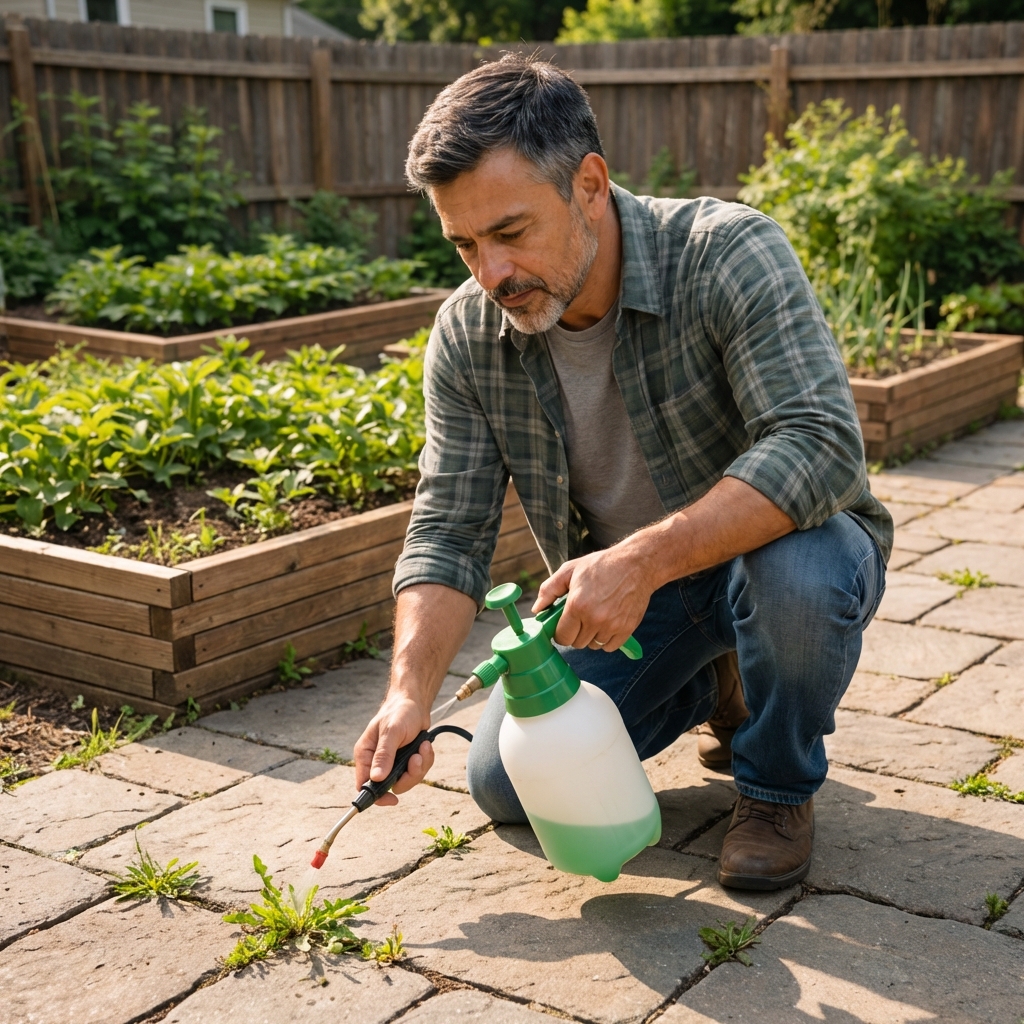
What Dawn and vinegar do to weeds
Vinegar is an acid (acetic acid). When it hits green plant tissue, it damages the leaf cuticle and cell membranes, which can cause rapid drying and burn. That is why weeds can look wilted within hours on a hot, dry day.
Dawn dish soap is not the weed killer by itself. It mainly acts as a surfactant, meaning it helps the vinegar spread out and stick to waxy leaves instead of beading up and rolling off.
What results to expect
- Fast leaf burn on small, tender weeds.
- Best on small annual broadleaf weeds. Grasses can be more hit-or-miss and often need repeat applications.
- Weak control on established perennials that can regrow from roots, rhizomes, bulbs, or crowns.
- No prevention. It does not stop new weed seeds from germinating later.
Easy mixes you can use
There are a few common recipes online. The safest place to start is plain household vinegar (5 percent acetic acid) because it is easier to handle and less likely to cause serious burns than stronger horticultural vinegar.
Option 1: Basic spot spray
- 1 gallon household white vinegar (5%)
- 1 to 2 teaspoons Dawn (or another grease-cutting dish soap)
Mixing tip: Add the vinegar to your sprayer first, then add soap last. Swirl gently. Shaking hard makes foam and can mess with sprayer pressure.
Option 2: Stronger burn
If you choose horticultural vinegar (typically 15 to 30 percent acetic acid), treat it like a serious chemical. Wear eye protection and gloves, avoid drift, and keep it off skin. In many home gardens, it is more strength than you need for routine path weeds.
Should you add salt?
A lot of recipes include salt. Salt can make the burn look more dramatic, but it also builds up in soil and can damage nearby plants for a long time. I do not recommend it anywhere you might want to grow something later, or near tree roots, lawn edges, or beds.
Where this weed killer works best
Think of Dawn and vinegar as a hard-surface tool, not a garden-bed tool.
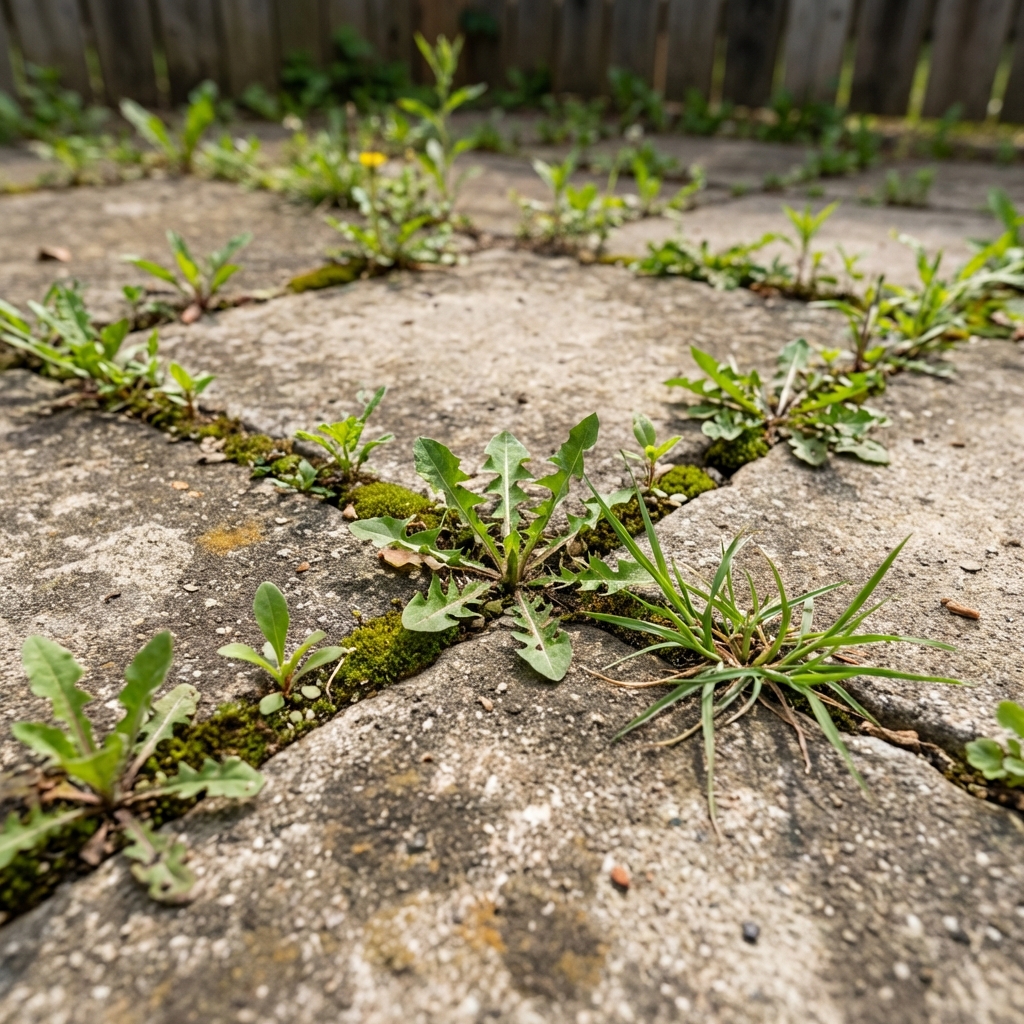
- Weeds in driveway cracks
- Between pavers
- Gravel paths
- Along fences where you can spray carefully and avoid desirable plants
It works best on young weeds that have not built a strong root system yet.
Where it can backfire
This mix is non-selective. It can injure or kill any plant tissue it touches, including your flowers and vegetables.
- In garden beds: one gust of wind can hit nearby seedlings.
- On lawns: you will get brown spots fast.
- Near prized perennials: splash and drift are easy to underestimate.
- On certain stone and concrete: vinegar can etch or dull surfaces over time, especially carbonate stones like limestone, marble, and travertine, and some concrete finishes. Test a small area first.
- Near storm drains and water: avoid spraying anywhere runoff can wash into storm drains, creeks, or ponds.
How to apply it
Timing matters
- Choose a hot, sunny, dry day. Heat speeds up leaf damage and helps plants dry out.
- Avoid spraying before rain or irrigation. You want it to stay on leaves for several hours.
- Spray when weeds are actively growing, not drought-stressed and already half crispy.
Technique that saves nearby plants
- Spot spray instead of blanket spraying.
- Do not spray on windy days.
- Use a coarse spray setting to reduce drift.
- Shield desirable plants with a piece of cardboard if weeds are close to bed edges.
- Spray just to wet the leaves. A good rule of thumb is evenly coated, not dripping. Runoff mostly wastes mix and increases the risk of damage.
- Avoid saturating soil, especially near the roots of plants you want to keep.
What to do after spraying
Check weeds after 24 hours. If you see wilt and browning, you are on track. For tougher weeds, a second application a few days later is common. If a perennial keeps returning, you are seeing regrowth from the root system, not failure on your part.
Tool care
When you are done, rinse your sprayer with clean water and run a little water through the wand and nozzle. It helps cut down on vinegar smell and can reduce wear on seals over time.
Safety and handling
Even household vinegar is still an acid, and spraying anything has drift risks. Use common-sense protection.
- Wear gloves and closed-toe shoes.
- Wear eye protection if you are using a pump sprayer.
- Keep kids and pets off the area until it dries.
- Do not mix with bleach or other cleaners.
- Label your sprayer clearly and store it out of reach.
If you opt for horticultural vinegar, step up protection. Eye and skin exposure can be serious.
Why weeds come back
The biggest limitation of vinegar-based sprays is that they are mostly top-kill. Many common backyard weeds store energy underground and can resprout.
Use the spray as step one
- Pull after wilting: once the plant is weakened, roots often come out easier.
- Scrape cracks clean: remove built-up soil in paver joints where seeds germinate.
- Refill joints: brush polymeric sand or fresh gravel into gaps to reduce new sprouting.
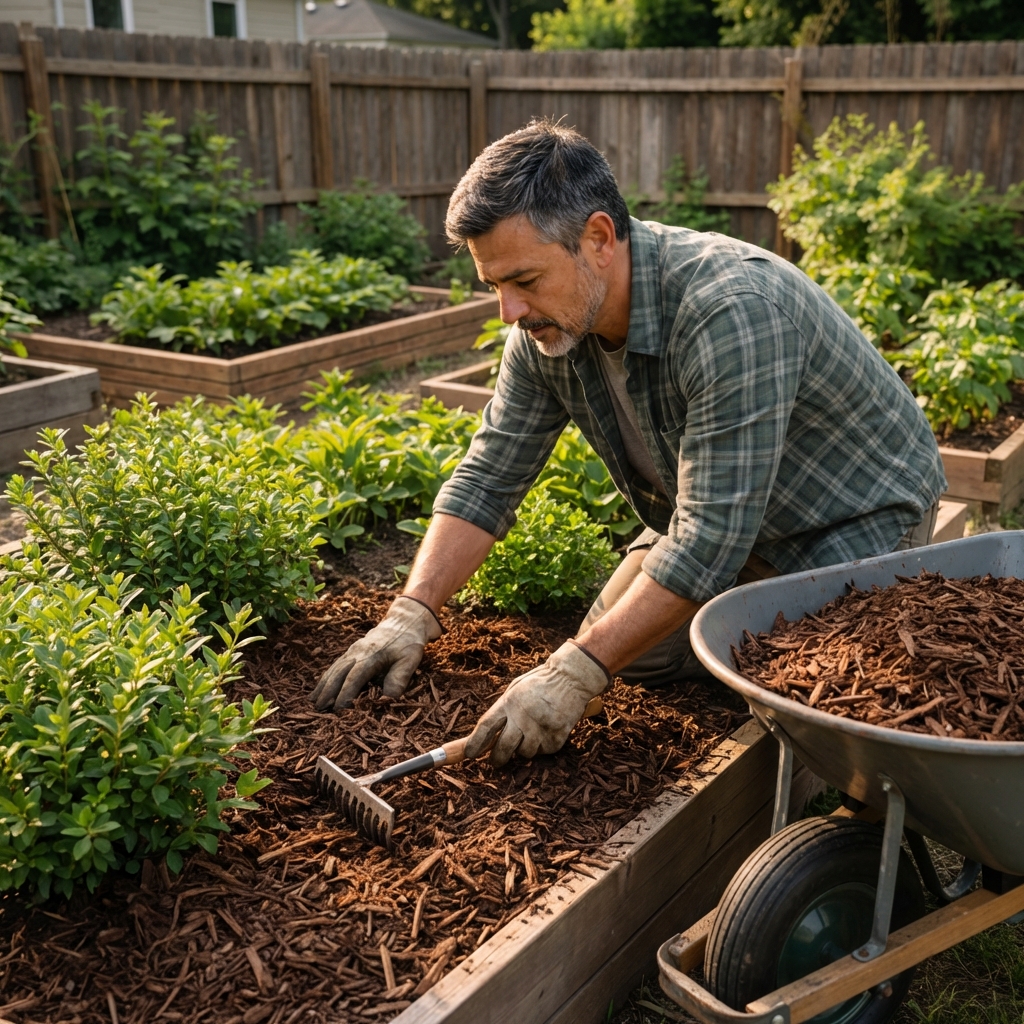
- Mulch beds properly: 2 to 4 inches of mulch blocks light and cuts down germination.
- Edge and tidy: a clean border reduces creeping weeds from lawn into beds.
What not to do
- Do not spray on windy days or when desirable plants are close by.
- Do not soak the ground, especially near roots you want to keep.
- Do not add salt if you care about the soil or nearby plants.
- Do not spray near storm drains, waterways, or ponds where runoff can carry it.
- Do not use on sensitive stone without testing first.
- Do not mix vinegar solutions with bleach or other cleaners.
Common questions
Will Dawn and vinegar kill weeds permanently?
It can kill small annual weeds outright, but many perennials will regrow. For long-lasting results, you usually need repeated treatments plus physical removal or prevention steps like mulching and sealing cracks.
Does it kill the roots?
Most of the action is on leaves. Stronger vinegar can damage more tissue, but deep roots and rhizomes are often unaffected, especially on mature weeds.
Can I use apple cider vinegar?
You can, but distilled white vinegar is cheaper and more consistent. Apple cider vinegar may leave a little more residue than white vinegar, depending on the brand.
Will it harm soil?
Small, careful spot treatments on hard surfaces usually do not matter much. Repeated heavy applications into soil can temporarily lower pH at the surface and harm nearby plants. Avoid soaking garden beds.
Bottom line
If you keep Dawn and vinegar in the lane it is best at, it is a handy, low-cost way to knock back young weeds on hard surfaces. Use it on hot, dry days, spray carefully, and pair it with prevention like crack cleaning and mulching. That combo is what makes your yard look better for longer, not just for the next 24 hours.

Jose Brito
I’m Jose Britto, the writer behind Green Beans N More. I share practical, down-to-earth gardening advice for home growers—whether you’re starting your first raised bed, troubleshooting pests, improving soil, or figuring out what to plant next. My focus is simple: clear tips you can actually use, realistic expectations, and methods that work in real backyards (not just in perfect conditions). If you like straightforward guidance and learning as you go, you’re in the right place.