Let’s clear up the biggest misconception right away: bed bugs are not a “garden pest” in the way aphids, slugs, or squash bugs are. They do not feed on plants. They feed primarily on humans, but they can also feed on pets opportunistically, and they prefer stable indoor conditions. Still, you can run into bed bugs outside in certain situations, usually when they hitchhike on furniture, cushions, storage items, or anything that recently came from an infested indoor space.
This page walks you through the real signs of bed bugs you might see around a patio or yard, how to inspect the places they could hide, and what to do if you find evidence. I’ll also point out the common look-alikes that send gardeners down the wrong rabbit hole.

Quick reality check: can bed bugs live in a garden?
Bed bugs can survive outside for a while, but most yards are not ideal for them long-term. Sunlight, temperature swings, and rain are hard on them, and open areas do not offer the kind of reliable hiding spots they get indoors. That said, outdoor clutter and sheltered cracks (furniture seams, storage piles, structural gaps) can provide temporary harborage.
Outdoor bed bug sightings tend to happen when:
- Infested items are moved outside, like mattresses, couches, cushions, rugs, backpacks, or storage bins.
- Secondhand patio furniture is brought home and set up without inspection.
- Travel items like luggage are stored in a shed, garage, or mudroom that opens to the yard.
- Multi-unit housing has an ongoing issue and belongings are temporarily staged outside.
If you are only noticing bites after gardening, it is worth checking for bed bugs, but keep an open mind. Outdoor bites are often from mosquitoes, fleas, chiggers, or biting midges. Also, bite timing can be delayed, so bites alone are not a reliable way to confirm bed bugs.
Bed bug signs you might notice outside
Bed bugs leave the same basic evidence outside as they do indoors. The difference is that weather and dirt can hide it, and other insects can create confusing “signals.” Here is what to look for.
Quick checklist (most reliable signs):
- A live bug (or several) found in a tight hiding spot
- Fecal spotting that looks like ink and may smear brownish on fabric or unfinished wood
- Multiple shed skins in the same protected area
1) Live bed bugs (adults or nymphs)
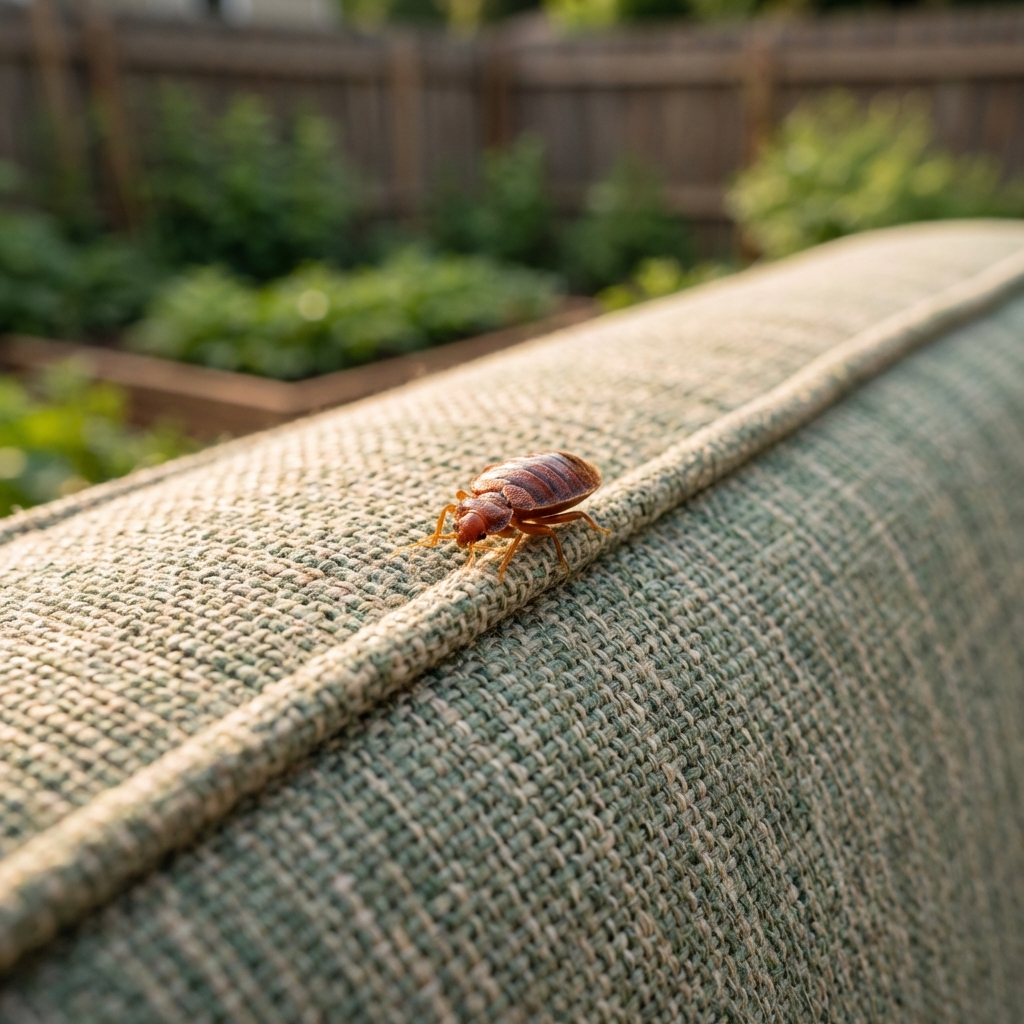
An adult bed bug is about the size of an apple seed, flat, oval, and reddish-brown. After feeding, it looks more swollen and deeper red. Nymphs are smaller and paler, sometimes almost translucent.
Outside, bed bugs are most likely to be found in protected cracks and seams near where people sit, nap, or store items.
2) Shed skins (molts)
As bed bugs grow, they shed their outer skin. These molts look like papery, tan shells shaped like a bed bug. If you find several in one area, that is more concerning than a single random shell.
3) Fecal spots (dark, ink-like dots)
Bed bug droppings look like tiny black or very dark brown dots that can “bleed” into fabric or unfinished wood like a marker stain. Around a patio or yard setup, you might see them:
- Along cushion seams and zipper edges
- In cracks of wood benches
- At joints of wicker or rattan-style furniture
- In folds of outdoor umbrellas or canopies stored closed
Tip: Dab suspected spots with a lightly damp cotton swab. Bed bug fecal staining may smear brownish. Dirt usually just lifts off as grit. (Other stains can smear too, so use this as a clue, not a final confirmation.)
4) Eggs (tiny, white, and stuck in crevices)
Bed bug eggs are small, whitish, and about 1 mm long. They are often cemented into place in sheltered cracks. In outdoor settings, eggs are less commonly spotted because they are easy to miss and more exposed to the elements.
5) Blood smears on fabric
Blood smears can happen when a fed bug gets crushed, or from bites scratched while sleeping on cushions. Outside, this sign is less reliable because lots of things stain fabric, but it is still worth noting if it appears along seams where you also see dark spotting or shed skins.
Where to look in a yard (high-probability spots)
If bed bugs show up outside, they typically stay close to where people rest, where items are stored, or where there are tight hiding places. Use this checklist to focus your time.
Patio and seating areas
- Cushion seams, piping, zippers, and Velcro closures
- Underside of chairs and benches, especially stapled fabric and corner blocks
- Crevices in wicker, rattan-style furniture, and joints where pieces meet
- Outdoor throw pillows and folded blankets
- Hammocks, especially gathered ends and stitched channels

Sheds, garages, and garden storage
- Stored cushions and covers in bins
- Cardboard boxes, especially if they came from a move or delivery
- Backpacks, sports bags, and luggage stored near yard gear
- Workbench cracks, tool cabinet seams, and cluttered corners
Planters and raised beds (usually low probability)
Bed bugs do not feed on plants and do not infest soil, compost, or mulch. A bed bug could hide temporarily in a protected crack nearby, but if your concern is centered on the garden bed itself, you are more likely dealing with another insect.
How to inspect safely (step-by-step)
If you suspect bed bugs around your outdoor space, a careful inspection is more useful than spraying random pesticides. Here is a simple approach that works.
What you need
- Flashlight or headlamp
- Disposable gloves
- Old credit card or thin plastic scraper for seams
- Zip-top bags or small containers for samples
- White paper towels (good for seeing small bugs)
- Optional: clear tape to lift tiny eggs or skins
Before you start (quick safety note)
- Avoid bringing suspect items through the house.
- If you lean on or handle questionable cushions, consider changing clothes afterward and tossing them straight into the wash or dryer (high heat if safe for the fabric).
- Keep anything you collect in a sealed bag or container.
Step 1: Start at the people-contact zone
Inspect any place where someone sits, naps, or stores a blanket. Bed bugs often stay close to where hosts rest, especially when they have reliable hiding spots. Outdoors, that usually means cushions and furniture joints, plus nearby bins or piles.
Step 2: Check seams thoroughly
Run the card along cushion seams and zipper tape, then wipe the edge on a white paper towel. Look for:
- Reddish smears
- Dark ink-like specks
- Small pale shed skins
Step 3: Bag anything suspicious
If you find a bug, shed skin, or eggs, capture it. A photo is helpful, but having a sample is better for identification by a pest professional or (where available) a local extension office.
Step 4: Expand outward
Move to storage areas next: cushion bins, shed shelves, garage corners, and anything recently brought in from travel, a move, or a secondhand purchase. Keep in mind that in established infestations, bed bugs can disperse farther than you would expect, so do not stop at a strict distance rule if you are finding real evidence.
Common yard look-alikes (what people confuse with bed bugs)
A lot of insects are flat, brown, and fast. Before you panic, compare what you are seeing to these common outdoor culprits.
Stink bug nymphs
Often rounded with distinct markings. They show up on plants, not in cushion seams.
Carpet beetles
Adults are small and patterned. Larvae are fuzzy and bristly. They can show up in sheds and garages because they feed on natural fibers, but they do not bite like bed bugs.
Bat bugs or bird bugs
These are close relatives of bed bugs and can look nearly identical without magnification. They are tied to bat or bird nests in attics, eaves, or wall voids. If you have nesting activity near your roofline, this is worth considering.
Ticks
Ticks are common in yards and can latch on during gardening. They do not leave ink-like fecal spotting on cushions. If you are finding attached pests, think tick checks first.
Chiggers and mosquitoes
These cause many “I got bitten in the yard” reports. They rarely leave physical evidence on furniture. Bites tend to be the main clue.
If you confirm bed bugs outside: what to do next
When bed bugs show up outside, the goal is to stop them from moving indoors and remove hiding places. Here are practical steps that work.
1) Isolate the item
Do not carry cushions or furniture through the house. If possible, move suspect items away from doors and entry points and keep them contained (sealed bags for small items, or wrapped in plastic for larger ones).
2) Use heat for fabrics (when safe)
For removable covers, blankets, and washable items:
- Wash on hot if the fabric allows
- Dry on high heat until everything is heated through (often 45 to 60 minutes or more, depending on the load and dryer)
- Store clean items in sealed bags or bins
For items that cannot be washed, a dryer-only high heat cycle can still help if the item is safe to tumble. The key is reaching a lethal temperature throughout the item, not just warming the surface.
3) Vacuum cracks and seams
Vacuum seams, joints, and crevices. Immediately seal and discard the vacuum bag, or empty the canister into a sealed bag and take it outside to the trash.
4) Reduce outdoor clutter near the house
Stacks of cushions, cardboard, and stored textiles close to doors make it easier for hitchhikers to get inside. Keep storage tidy, sealed, and ideally off the ground.
5) Skip broad pesticide spraying
Spraying the yard rarely solves bed bugs and can create new problems for beneficial insects. Bed bugs are good at hiding, and many outdoor products are not labeled or effective for this use.
6) Consider indoor monitoring too
If you found bed bug evidence outside, it is smart to do a quick check indoors, especially sleeping areas and rooms closest to the patio, garage, or entry doors. If you have concerns, consider passive monitors or interceptors near beds and sofas to catch early activity.
7) Discard carefully when it makes sense
Sometimes the simplest option for heavily infested, hard-to-treat items is disposal. If you throw something out:
- Wrap or bag it before moving it through any shared space
- Label it clearly (for example: “Bed Bugs”) to prevent someone else from taking it
- Follow local disposal rules when possible
8) Call a licensed pest professional when needed
If you are finding multiple bugs, recurring evidence, or signs inside the home, bring in a pro. Bed bugs are easiest to eliminate early, and the right plan depends on where they are established.
When it is probably not bed bugs
In my experience, these situations are usually not bed bugs:
- You only notice bites while gardening and there are no stains, skins, or bugs in seating areas or storage.
- You find insects on plants during the day. Bed bugs are not plant feeders.
- The bugs jump. Bed bugs do not jump. Fleas do.
- You see damage to leaves. Bed bugs do not chew or suck plant sap.
If bites are your only symptom, do a tick check, consider chiggers or mosquitoes, and inspect indoor sleeping areas too. Bed bug evidence is usually strongest where people sleep and rest.
Prevention tips for gardeners and patio owners
A little prevention goes a long way, especially if you bring things in and out of sheds, garages, and guest spaces.
- Inspect secondhand patio furniture before it comes home, especially cushions and wicker.
- Store cushions in sealed bins when not in use, and keep bins off the ground if possible.
- Be careful with curb finds. A “free” chair can cost you weeks of hassle.
- After travel, keep luggage out of bedrooms and off upholstered furniture until it is inspected and cleaned.
- Keep seating areas clean and uncluttered so inspections are quick and obvious.
Bed bug yard FAQ
Can bed bugs live in mulch or soil?
They can hide temporarily in protected spots, but they do not live in soil the way soil insects do, and they do not feed on plants. If the problem seems centered in mulch, look for other insects first.
Do bed bugs bite during the day outside?
They prefer to feed when hosts are resting and still. In outdoor settings, bites are more often from mosquitoes or other biting pests, but a bed bug can bite at any time if it is trapped close to a host.
Will rain or sun kill bed bugs?
Weather stresses them, but it is not a dependable control method. Bed bugs can tuck into shaded cracks and survive long enough to hitchhike again.
What is the fastest way to confirm bed bugs?
Find and capture a specimen or clear evidence like shed skins and fecal spotting in a hiding spot. If you can, get an ID from a pest pro or (where available) a local extension office rather than relying on bite patterns.
Bottom line
Bed bugs in the yard are usually not “living in the garden.” They are usually hiding in outdoor items that came from indoors or travel, especially cushions, benches, storage bins, and shed clutter. Focus your inspection on seams and cracks, look for the classic ink-like spotting and shed skins, and use heat and isolation to keep the problem from moving into the house.
If you want, tell me what you found and where you found it, and I can help you narrow down whether it sounds like bed bugs or one of the common outdoor look-alikes.

Jose Brito
I’m Jose Britto, the writer behind Green Beans N More. I share practical, down-to-earth gardening advice for home growers—whether you’re starting your first raised bed, troubleshooting pests, improving soil, or figuring out what to plant next. My focus is simple: clear tips you can actually use, realistic expectations, and methods that work in real backyards (not just in perfect conditions). If you like straightforward guidance and learning as you go, you’re in the right place.